In conversation with Taoiseach Micheál Martin: 'Civil War politics ended with the Civil War'
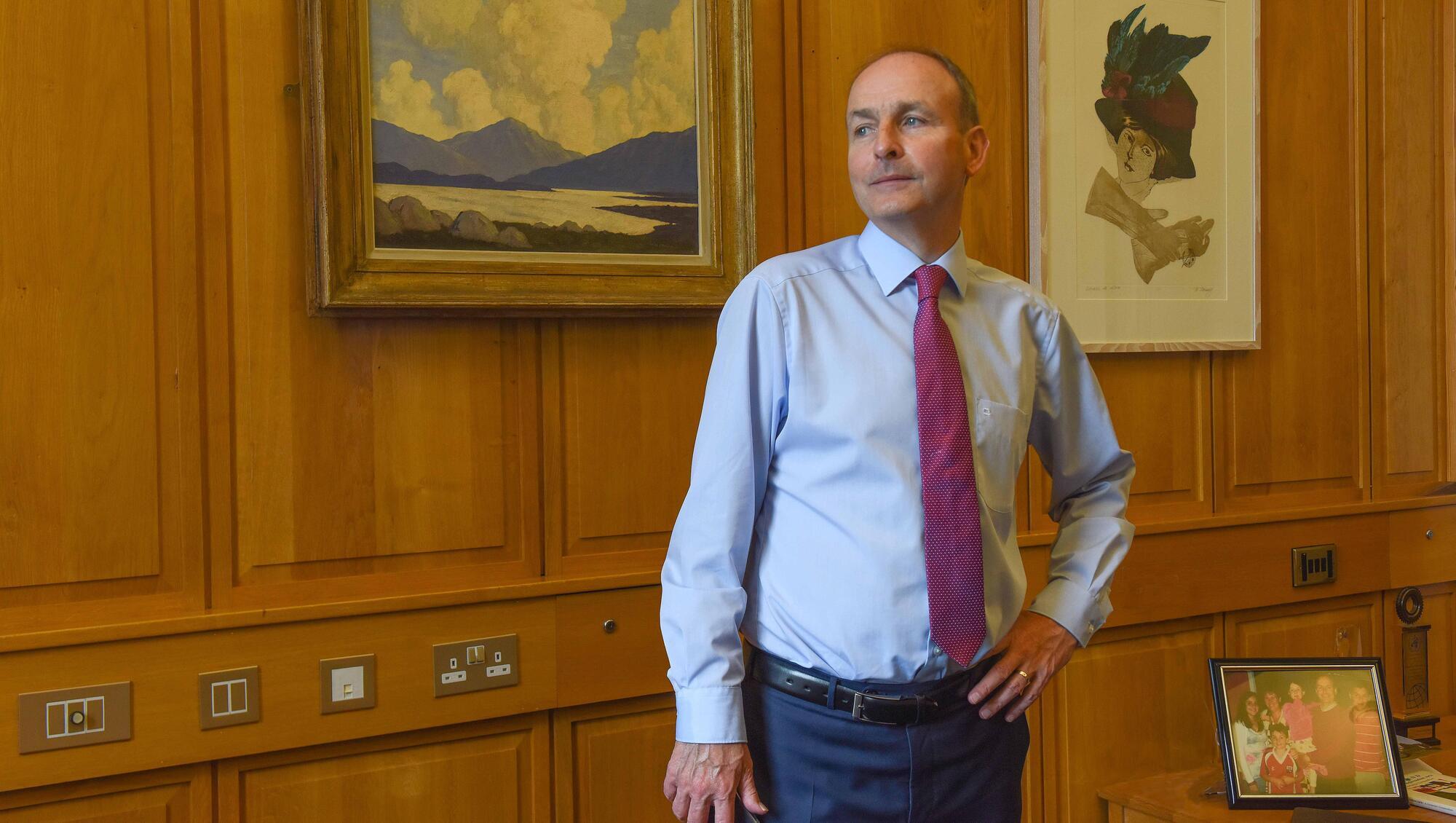
Taoiseach Micheál Martin says that he doesn't listen to the "chat" around politics.
He is, he says, a man far more interested in policy than political gossip. Unfortunately for him, Leinster House is a fairly gossipy place — and the larger your profile, the more gossip you attract.
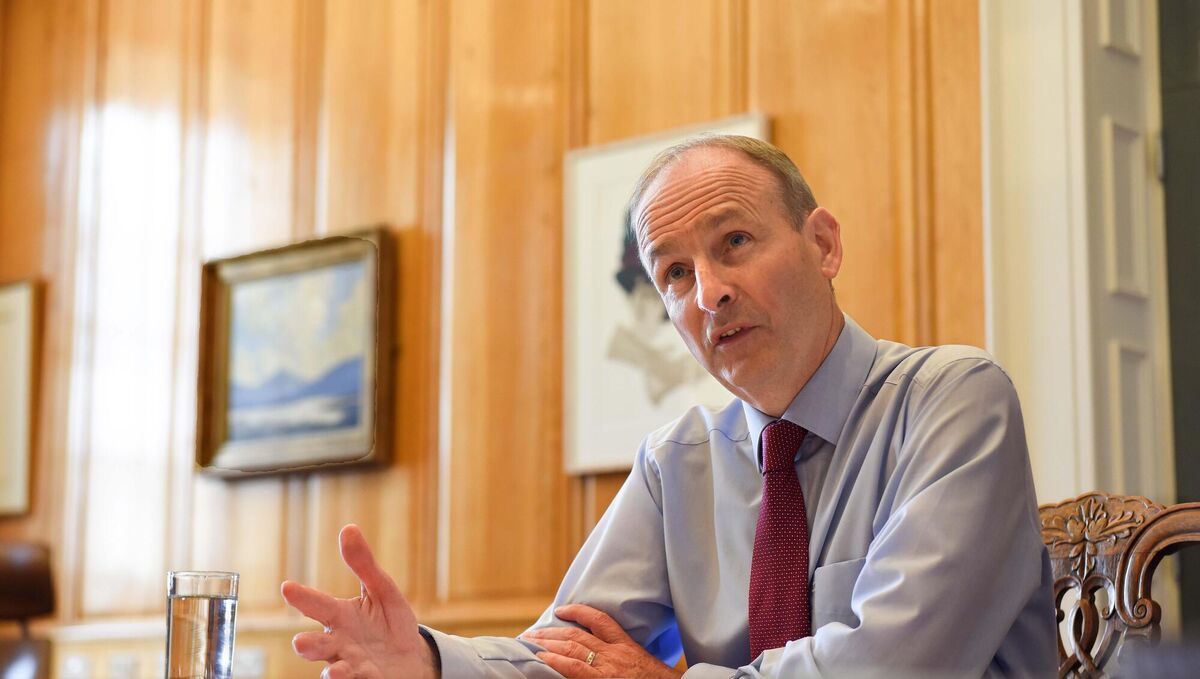
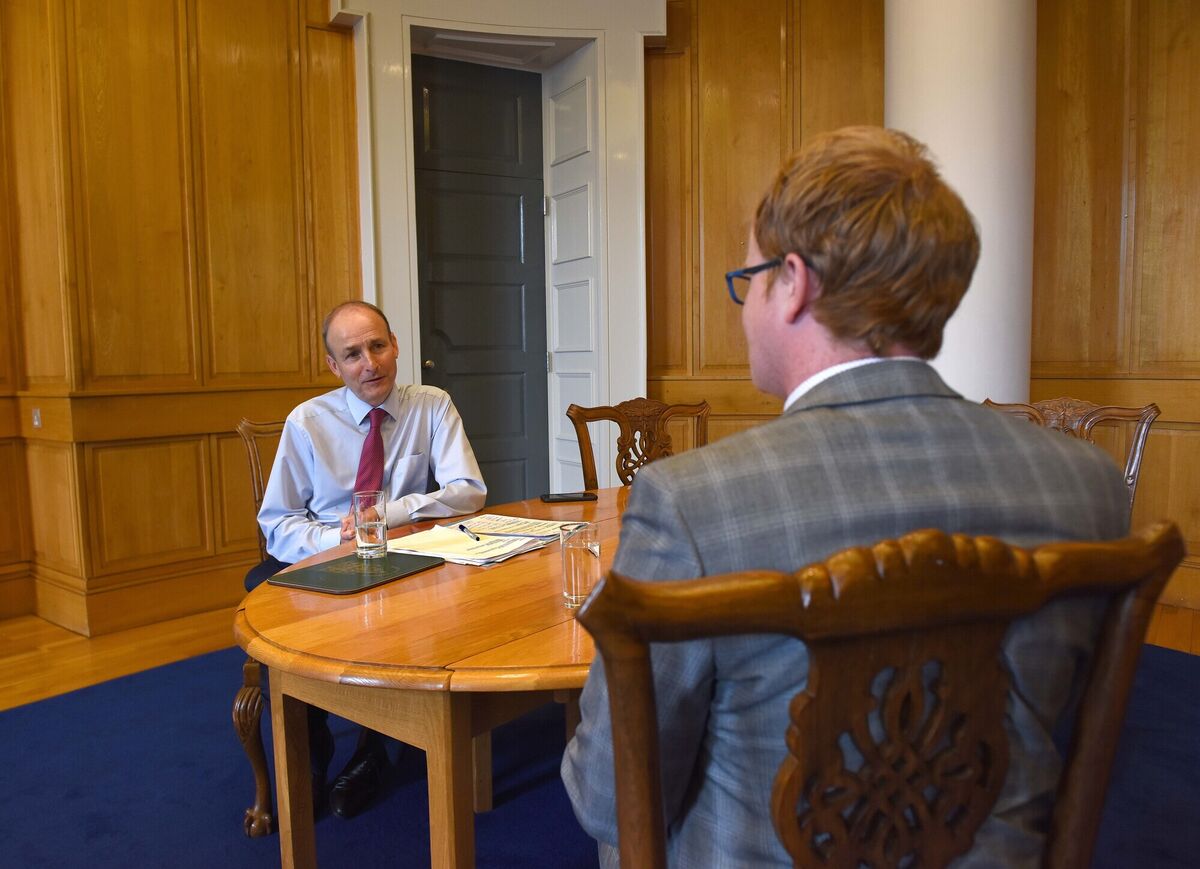
"I sometimes read who said what and who's leaking what, sure, what is that about? I mean, it's not the substance of why I'm in Government," he told the Irish Examiner in an interview this week.
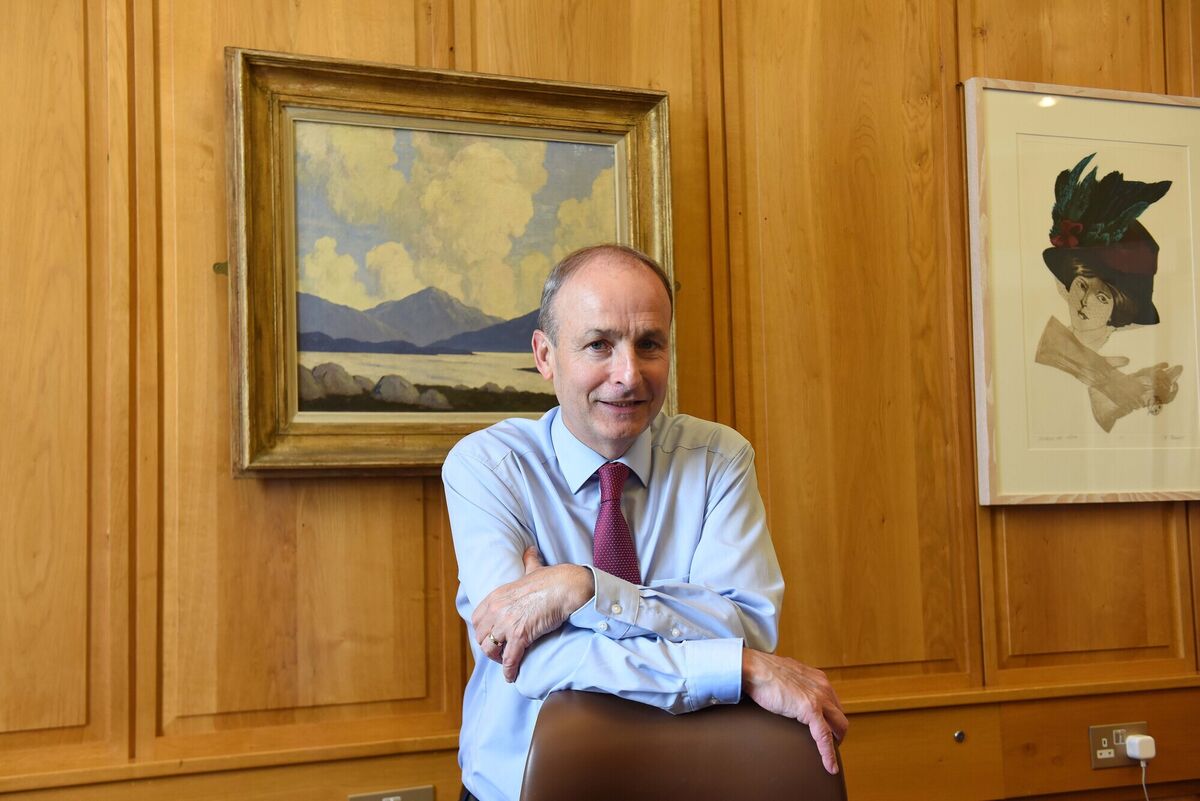
As a testament to this, he is breaking with tradition and hanging portraits of both Michael Collins and Éamon de Valera in his office, while a portrait of Lemass watches over his desk — serious men for a serious time — and Mr Martin is genuine in his belief that Civil War politics ended with the Civil War. He does not see the hanging of the portraits as a tokenistic sop to the coalition Government — that would distract from the business of government.
But Mr Martin is also a curio in Irish politics — a Taoiseach who will not be Taoiseach in two and a half years, but who aims to then ask the public to make him Taoiseach in another two and a half.
For that reason, and others, the "chat" around Mr Martin is going nowhere and will only gain momentum as Mr Martin's time as Taoiseach runs down.
He told the Irish Examiner that he wants to lead the party beyond the current Government. He relishes the job, and seems to find particular satisfaction in passing legislation. He can reel off his own previous laws and the benefits each one brought about.
But this is a different world for Mr Martin, as the pressure will come from all directions. Within his own party, there are two high-profile, ambitious men — who, in another world, would be ministers — who find themselves as backbenchers in a tri-party coalition with more time on their hands.
When Jim O'Callaghan wasn't made a minister, it didn't come as a huge surprise. He and Mr Martin are not close, the Justice ministry was staying with Fine Gael, and there were many people looking for not a lot of jobs at the top table. Mr O'Callaghan's rejection of a junior ministry, however, came with a statement of ambitions less cryptic, more simplex. He said he would "devote more time to strengthening our great party by making it a more attractive option for young voters", effectively firing the starter's pistol on a leadership race. Or, given the timeline, a leadership slow-bicycle race.
And then Barry Cowen was sacked, turning a key Martin ally into a potential replacement. The Offaly man said in the days after his sacking that he would remain in the party and hinted that he would embark on a tour of the country to speak to members, a move many took to signal his ambitions to lead the party as his brother Brian once had.
Mr Martin has remained leader of his party through three elections — 2011 when the party took a well-signposted drubbing, 2016's recovery which ended in the party agreeing a confidence and supply arrangement with Fine Gael, and February's disappointment, which saw Fianna Fáil end as the largest party in the Dáil, but down six seats. That he lasted nearly a decade as leader of the party before ascending to the Taoiseach's office speaks to the changing landscape, to a lack of real challengers, and to Mr Martin's ability to hold the different strands of the party together.
Now, though, he is the Taoiseach. He will not be able to work on keeping his party together as he marshalls three parties in Government. Mr O'Callaghan and Mr Cowen can, and may very well be, loud voices outside the Government tent, all the while building support from grassroots members who may be feeling the economic impacts of the crisis or who may not relish the prospect of a Fine Gael taoiseach.
Outside of his party, Mr Martin's Tánaiste is not a trusted lieutenant. He was the Taoiseach until moments before he handed over the reins in the midst of a global health emergency, having narrowly finished behind Fianna Fáil in February's election. So, it's complicated.
A public narrative has taken hold in some corners which suggests that Leo Varadkar is still running the country and his every move is now dissected under that microscope. Mr Martin says that narrative doesn't bother him.
"I think that's all just chit-chat. I let the commentariat go on about it and frankly, some of that has been, over-read and over-interpreting what happens," he said, adding that the issue is "overstated" in commentary.
But Mr Varadkar will be Taoiseach again in December 2022, barring anything bringing this Government down. For Mr Martin to do the things he wants in Government, he will have to navigate that unique circumstance.
Mr Martin is a man who genuinely seems unencumbered by the weight and history of his position and of the seeming turbulence of his first few weeks in office, appearing to genuinely enjoy the prospect of formulating and passing laws. His priorities are wide, but sometimes non-specific. Overhauling housing and health, tackling climate change, navigating Covid-19. But he is a man who believes in the transformative ability of well-written legislation.
He rejects the notion that the Government has only had problems, saying that idea "ignores a completely more substantial story about the first 40 days" of the coalition, a Government which passed 11 bills, including a massive July Stimulus package.
Mr Martin accepts there have been issues on the "political side" — from the Barry Cowen affair to two Green TDs voting against the Government — something he says came from the "proactive and intense" work of the Dáil.
But as much as Mr Martin wants to elevate himself, and his office, above the "chit chat", above the gossip and whispers of the halls of Dublin 2, that may not be a luxury he is afforded over the next 28 months.
Of course, his job will be to legislate, but with a Green Party already looking likely to lose TDs, a Fine Gael party that some of his own TDs don't trust, and with movement for his own job likely to come from within, that gossip may take over proceedings for the Cork man.
Not that he seems unduly worried about the last one.
"Sure, I've been told that since I became leader in 2011, these things don't bother me," he says. "It's natural you're going to get commentary around it."
Mr Martin's balancing act will be hearing that commentary, but continuing to block it out.

CONNECT WITH US TODAY



Be the first to know the latest news and updates