We’re running out of time on climate melting pot
It's a bit like saving for your pension. You can see the merits of it, but not the urgency.

We’re running out of time on climate melting pot

It's a bit like saving for your pension. You can see the merits of it, but not the urgency. You know it’s important — that cold wash of terror running through your body tells you so. You feel that wash, the odd time, when you find yourself imagining life at 80, living on a quarter of your current salary and factoring in the cost of nearby nursing homes.

Anything to do with the climate feels the same. Change sounds great in theory, or simply in neighbourly talk, but the urgency just isn’t there.

The children feel it, we’ll leave it to them so — our unelected, unpaid officials equipping themselves with evidence so damning that it makes them skip school and take to the streets to shout about it.

The space in our brain dedicated to worry is already occupied. We fill it with concerns over housing, the cost of it, the lack of it, or maybe even others’ lack of it. We pour our frustration about local traffic into that worry space too. As we with the tightrope-like household budget, one that’s permanently getting hijacked by things like new sets of tyres, school tours, and unexpected trips to the dentist.

The odd time we’ll let foreign issues take up residence in the designated worry space, despairing about a world where families walk thousands of miles for safety and possibly even hope, only to be met by rejection at best and incarceration at worst.

This week a speaker in the European Parliament cried as she spoke. The speaker used to have severe depression, something that came on her at age 11, as well as selective mutism. She has cried before while speaking in public, and at the end of her speeches the reaction is always the same — standing ovations of not just whooping and hollering, but of high-pitched screeches of approval and appreciation.

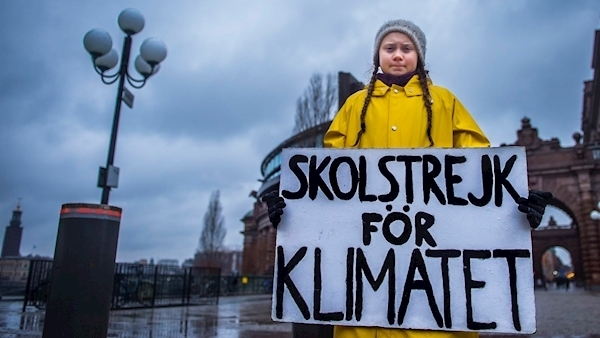
Her name is Greta Thunberg. She’s 16 and she’s the reason your child didn’t go to school on March 15, and was out protesting about the climate instead.

Greta has been sitting outside her country’s parliament every Friday since August, with the aim of bringing Sweden in line with the 2016 Paris climate agreement, which pledges to limit global warming to well below 2C.

Why care about such nominal degrees of change?

Greta sticks to the facts, citing last year’s Intergovernmental Panel on Climate Change report from the UN. In it, the world’s leading climate scientists warned that there was only 12 years for global warming to be kept to a maximum of 1.5C. After that, even half a degree will significantly worsen the risks of drought, floods and poverty for hundreds of millions of people.

Greta Thunberg.
Greta Thunberg.

In order to meet the target of keeping global warming below 2C, the world needs to cut its carbon dioxide emissions by 50% in that period, which was 12 years at the time of the report’s publication, and is now 11.

This stark fact came in the same year as two other stark facts. Last year global emissions of carbon dioxide hit a new high and the tracking of temperatures showed that the last five years have been the hottest on record since modern records began. But when we think of the climate, we still think of it in abstract terms.

Sure, some of us will endeavour to wash out our plastic yogurt pots so they won’t contaminate other things in the green bin. Others will proudly use their Keep Cup in local coffee shops and then there are those who eye-roll at the entire climate conversation.

“You can’t even burn wood anymore, sure we’ve been burning it for years,” or “I can’t even enjoy a greasy rasher nowadays.”

So when someone knocks on your door over the coming weeks as you sit down to dinner and asks you for your vote in May’s local and European elections, what will you say?

Will you ask them how their party has been voting on climate issues in the European Parliament? A new report this week from Climate Action Network Europe shows how everyone’s been voting. Let’s just say Irish MEPs didn’t come out on top — or anywhere near it.

When the canvassers knock on your door and ask you about your pressing concerns, what will you tell them?

will you search your mind looking for pot-hole problems and local traffic congestion hotspots? Or will your apathy run them from the door?

Politicians don’t elect themselves. It is up to us who sits on our local council, in the Dáil, Seanad, and European Parliament.

The issues they raise and vote for are issues we bring to them. The issues they vote against are issues we can hold them to account for.

Politicians are not working in private companies answerable to only shareholders and boards. Politicians represent and are answerable to us.

Half a degree in temperature change might seem as abstract to you right now as melting glaciers and underweight polar bears, but in 11 years’ time, our view may well change. The climate could be the only thing we read about. It could be as important as Brexit, as talked about as Donald Trump’s latest tweet. It could dominate news bulletins and dictate the quality of your day-to-day life.

Talking to your neighbour about the damage plastics do the environment is great, but until we elect politicians that will create sustainable policies that hold us and major corporations to environmental account, we are fighting a losing battle.

It’s time to join the dots and see that the climate is political, that politicians need to be taking immediate and radical action on this, that this is the issue of the day. We have 11 years within which to take action. Eleven years is a short time, it’s the equivalent period of time since our economic crash in 2008. And that only seems like yesterday.

More in this section

Revoiced

Newsletter

Sign up to the best reads of the week from irishexaminer.com selected just for you.

Cookie Policy Privacy Policy Brand Safety FAQ Help Contact Us Terms and Conditions

© Examiner Echo Group Limited