Brendan Howlin: Government should not be self-promotion
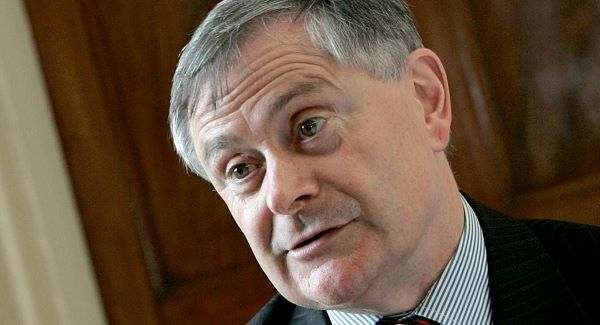
Information provided to the public should be informative and unbiased, and not political propaganda in disguise, says .
“In all healthy democracies, the government must communicate with citizens” — that is the opening line from the review of the operation of the Strategic Communications Unit, published last March.
There is little to disagree with in that statement. It is essential that information is provided to people. The challenge is ensuring that such efforts are not abused for political gain, propaganda, and self-promotion. And that the public gets value for their money.
Every year, millions are spent on communications across government departments, state agencies and bodies, on advertising, public relations, consulting and external contacts. On top of this are permanent staff, tasked with filling out these duties.
Providing the public with factual information, and dealing with media requests, is essential. Each department has its own press office, and many have appointed senior heads of communication.
Meanwhile, each senior minister has two special advisors, one of them for media. Alongside that is the Government Information Service, which runs merrionstreet.ie, while departments and agencies will regularly contract in additional PR services.
There is a case for broader oversight and reform of all this activity, but the path chosen by the Taoiseach, Leo Varadkar, and how it was implemented, was doomed to fail.
A year ago, the Fine Gael government was embroiled in controversy, because the Taoiseach had allocated €5m to fund his new Strategic Communications Unit.
It was presented to us as a noble cause, designed to streamline government communications, but also centralise responsibility within his department.
It would develop and deliver major government campaigns. The type of campaigns that were planned, and how they would be implemented, were what surprised many of us.
The appearance of Fine Gael general election candidates in Ireland 2040 advertorials, and the uproar that followed, led to the winding-down of the Taoiseach’s pet project. But the legacy of the Strategic Communications Unit lives on.
Before Christmas, I tabled questions to every department, seeking figures for the final amount spent in 2018 on public advertising, publicity, and communication campaigns.
This followed on from previous questions I’d asked on the amount spent over recent years.
As the figures published today show, few of the promised savings have materialised, but the increased use of digital advertising and the prominence given to government ministers within them is a cause for concern.
What is clear is that the wallet has been opened, and the promotion of central campaigns remains a government objective for Fine Gael.
Healthy Ireland is a hugely worthwhile campaign to boost the health and wellbeing of all our people. In 2018, the Department of Health spent €390,456 on the Healthy Ireland communications and citizens’ engagement programme.
Meanwhile, the Department of Taoiseach spent just under €290,000 on the same issue, with €8,377 on digital advertising and nearly €100,000 on ‘media partnerships’. Why would the Taoiseach need to duplicate the Department of Health’s work?
Some of the promotions are spurious. What was the pressing need to spend nearly €600 promoting online a video about the opening of a new Google building? Was this just to promote the Taoiseach or was there a serious policy initiative at stake? I’ll leave that for you to judge. You can watch it on the Merrion Street Facebook page.
There appears to be blurring of the lines between providing pure information to the public and the political promotion of ministers and their agendas.
I am concerned that we are seeing more and more attempts to appropriate government communications for political purposes.
Anyone looking at the stage-managed roadshow for the Ireland 2040 investment plan, with handpicked audiences in expensively dressed venues, would have to draw that conclusion.
In October, well after the closure and wind-down of the SCU, the Taoiseach’s department spent €30,000 promoting the budget, with a third of that for online adverts. I doubt many missed the wall-to-wall coverage of the budget at the time.
What, then, was the purpose of this government advertising, if not political promotion of the Government and those who are featured in it? One of the videos features the Taoiseach and the Minister for Finance, Paschal Donohoe, making a political pitch about why the budget is good for people.
It is clearly aimed at promoting the Government’s message, not at providing clear and unbiased information, like the Citizens’ Information website does.
At the time of the controversy last year, the Labour Party proposed a simple rule change to the standing orders of the Dáil on how departmental estimates are approved by select committees.
The motion proposed that any money allocated in a departmental vote for the development or delivery of PR or communications campaigns would have to be approved by the committee in advance. This would ensure effective oversight of these types of campaigns.
Departments would then have to outline the purpose and general content of the campaign, for consideration and approval by members. Only if the committee is satisfied that the purpose of the campaign is in the public interest would it be approved.
Such a proposal should now be reconsidered, if communications continue to be politicised.
Now, a year on from the debacle of the SCU, it’s time to look again at government communications, focused on how public information is, and should be, communicated, not who gets credit for it.