The ‘exhausted middle’ needs less outrage in 2019
The year 2018 brought about seismic change in Ireland, writes
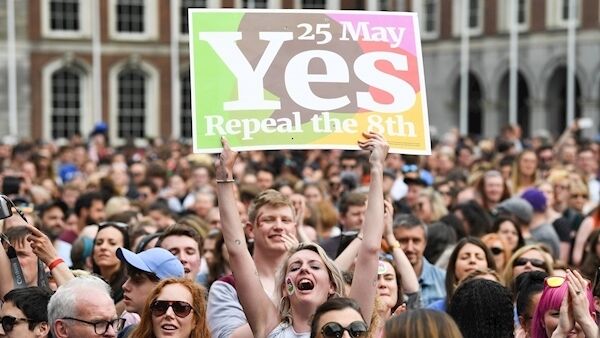
Never did we think we would remove the dogma of our country’s most dominant religion from our Constitution.
But we did: By a vote of 66.4% to 33.6%, the Eighth Amendment was repealed from Bunreacht na hÉireann on May 25.
Over the course of that campaign, the country was exposed to some brutal rhetoric.
There were metres-high posters of bloodied fetuses paraded outside maternity hospitals and university campuses.
A live TV debate descended into a shouting match interrupted intermittently by whooping and hollering.
And then there was social media, where so-called cyber debate saw Twitter users routinely spammed with images of blackened fetal corpses.
And before all of this, there was the Belfast rape trial, which heard evidence, among others things, of unsavoury WhatsApp chats peppered with phrases that do not deserve repeating.
The result of the trial, which saw Stuart Olding and Paddy Jackson found not guilty, resulted in people taking to both social media and the streets chanting “I believe her”.
This was met with threats of legal action and even more Twitter spats between the divided masses.
And then summer came.
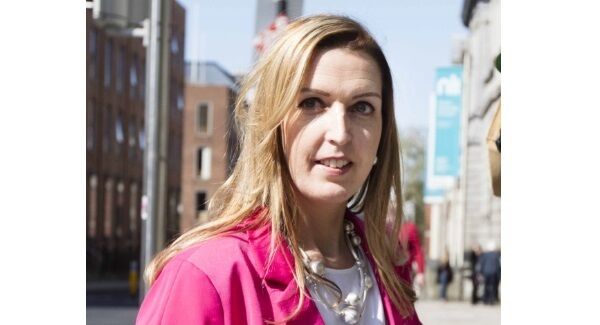
The outraged, mobilised masses turned their attention to a woman with cancer.
Vicky Phelan, the woman at the front of the cervical smear scandal campaign, was run offline.
“I will be taking a break from Twitter and from all #CervicalCheckScandal campaigning after tomorrow, some of you will be glad to know.
"I am deeply disturbed by the lack of empathy in some quarters towards the women and families affected by the scandal,” she said on July 31.
One would begin to wonder what kind of society we’re living in at all.
“I can only speak for myself here,” she wrote. “For those of you who are condemning me for ‘bringing down the cervical screening programme’, I never missed a smear and never had an abnormal smear until I was diagnosed in July 2014, with invasive cervical cancer.”
Our outrage moved on.
Attention was turned to homelessness.
A woman with several children became the dartboard at which people targeted their hate and anger.
We became overnight experts at family planning and dispensed our advice accordingly.
Never had we been so interested in dissecting the private lives of strangers, finding out who had fathered whom, and what beer the stranger down the road drank at times of celebration.
Often when we spend our energy getting exercised over the minutiae, we miss the bigger picture.
We create villains of victims.
We get distracted by those who we can accessibly criticise, remaining blind to the intricate systems and invisible polices that are the main contributors to our country’s greatest problems.
And what happens when you go after the big problem and suggest change?
More often than not, criticism followed by outrage, culminating in condemnation — that’s the name of the game.
We get caught up and lost in being empty vessels making incessant decibels of actionless noise, the status quo holds, and problems grow.
Martin Luther King Jr probably would have been a dab hand on the Twitter machine.
In 1963, the change maker, while confined in Birmingham city jail, wrote a letter to his critics: “Seldom do I pause to answer criticism of my work and ideas.
If I sought to answer all the criticisms that cross my desk, my secretaries would have little time for anything other than such correspondence in the course of the day, and I would have no time for constructive work.
“But since I feel that you are men of genuine good will and that your criticisms are sincerely set forth, I want to try to answer your statement in what I hope will be patient and reasonable terms.”
If we could all only be a bit more reasonable.
But the bringing about of change is never reasonable.
In the same letter, King said it was not the KKK that was the biggest threat to black people’s freedom.
It was, in fact, those in the moderate middle, who are more devoted to order than justice.
As we walk into 2019, there is no doubt that we have problems to face, and solutions that will require more seismic shifts in how we do things.
In Ireland, we have a dysfunctional housing market that sees young women scavenging through piles of blankets on Grafton St on Christmas Eve.
We remain unalarmed by alarm bells on the environment, having come in last in Europe two years in a row regarding tackling climate change.
And our neighbours on either side look set to have as volatile a 2019 as 2018 and 2017.
Really, we have no time for any more division.
Last November, wonderful new scientific research emerged.

It looked at the psychology of political polarisation in America.
A total of 8,000 people were interviewed, and despite what Twitter, binary arguments in the media, or Donald Trump might tell you, people are a lot less divided than you may think.
The belief that we cannot see eye to eye with our neighbour, our brother, our local councillor, in order to fix a problem, is a “distortion”.
In this research, specific to the so-called Divided States of America, it was found that 75% of people support stricter gun laws, and 79% favour
providing a pathway to citizenship for undocumented immigrants brought to the US as children.
Furthermore, 77% of Americans agree that their differences are not so great that they cannot come together.
If the Americans can unite, then the Irish can certainly agree on a thing or two.
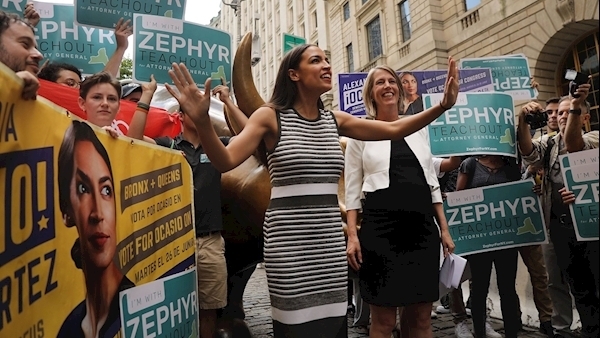
In the US, a new voice is making huge waves.
The voice belongs to 28-year-old Alexandria Ocasio-Cortez, a Bronx native of Puerto Rican parents, who has just been elected as the youngest ever woman to the US House of Representatives.
Her vision is bold and her detractors are loud.
Her vision? The ‘Green New Deal’, which aims to tackle climate change by turning the American economy green and creating loads of jobs in the process.
“This is going to be the New Deal, the Great Society, the moon shot, the civil-rights movement of our generation,” she said.
She must be on to something, because the level of scrutiny Ocasio-Cortez faces is “comparable to the kind given to a top-tier presidential contender and virtually unheard of for a congressional candidate and representative-elect”, said well-regarded political commentator Russell Berman.
If you are thinking about the problems we face in 2019, and have
solutions to table, remember that ‘More in Common’ research out of the US, despite the noise and the outrage, the “exhausted middle” is far less divided than we are led to believe.
At a time of rising inequality, and apparent political divide, never has thoughtful dialogue been more necessary.
CONNECT WITH US TODAY



Be the first to know the latest news and updates