We have come a long way in 10 years since the banking bailout
With the guarantee of September 29, 2008, the Irish taxpayer had to pay €64bn to replenish bank capital levels. Since then, we have regained our sovereignty, are experiencing robust growth, and are headed towards full employment, writes Paschal Donohoe

We have come a long way in 10 years since the banking bailout

With the guarantee of September 29, 2008, the Irish taxpayer had to pay €64bn to replenish bank capital levels. Since then, we have regained our sovereignty, are experiencing robust growth, and are headed towards full employment, writes Paschal Donohoe

This week marks the 10th anniversary of the Irish bank guarantee, a time not easily forgotten. Nor should it be.

The problems buried deep in Ireland’s banking and financial system came to the surface, and the serious lessons learned were paid for by the Irish people.

At the time, as our banking system teetered on the verge of collapse, bank losses ballooned, with the bursting of the property bubble, and taxpayers were forced to stump up a staggering €64bn to replenish bank capital levels. The rest, as they say, is history.

Unemployment and emigration rocketed, house prices halved, and wages and services were dramatically cut. We sought support in the form of a troika bailout. But while our banking crisis contributed significantly to the length and depth of our economic downturn, it was not the only cause.

An unbalanced economy, supported by temporary revenues, excessive levels of spending, and imprudent tax incentives was central to what went wrong.

We need look no further than our tax and expenditure profile. The first few years of the new millennium were particularly notable for strong growth in public expenditure, which rose from €23bn to €36bn; an increase of 57%. Similarly, across the period in which we looked to secure ourselves in the aftermath of the bailout programme (2014-2018), the rate of public expenditure was recorded at around 14%. These days, budgets are crafted to ensure that current expenditure remains broadly in line with the nominal potential growth of the economy; at around 4% per annum.

Where tax and social welfare spend is concerned, giveaway budgets were a feature of our annual economic cycle. In the previous three years, the combined total of income tax and social welfare packages has been between €600m and €800m per annum. In the period between 2005 and 2007, they began at €1.6bn and ended at approximately €2.6bn.

We have come a long way since then. Ten difficult years, built around hard work and sacrifice, have seen us repair the roof and steady ourselves for what lies ahead. We have regained our economic sovereignty, we are witnessing growth rates that were unimaginable a few short years ago, and we are heading towards full employment.

However, challenges and legacy issues remain. Debt levels, both public and private, are still too high — we have the third-highest public debt levels in the developed world — and we are working to rebuild our housing stock to the levels needed to meet demand. But we are making progress. Project Ireland 2040, and initiatives such as the Land Development Agency, will ensure that the projects needed to allow us to grow safely are financed.

And, while still too high, at €200bn, our public debt levels are moving in the right direction.

Where our banks are concerned, we, too, are making headway. We have, so far, recovered nearly €19bn through disposals, income and fees, and we are well-placed to recover all of the €29bn that the State invested in the three pillar banks.

Irish people may legitimately ask if we have learned the lessons from this sorry period in our history. Moreover, how do we protect against this happening again?

The answer to the former question is a resounding ‘yes’. The regulatory system today is unrecognisable from what it was in 2008.

We now have the fiscal compact treaty enshrined in law by way of referendum, which puts safeguards in place, at EU level, to ensure that budgets are balanced; where they are not, a credible path is laid to reach that objective.

Further work is ongoing with our member state colleagues on a banking union, designed to insulate the taxpayer from future financial shocks and ensure that our banking system is robust. The rules of the game have been changed in favour of citizens. The introduction of BRRD (The Bank Recovery and Resolution Directive) means that ‘bail-outs’ have been replaced by ‘bail-ins’, so the ‘heads I win, tails you lose’ situation of old cannot, and will not, recur.

And the Single Supervisory Mechanism, in Brussels, and our own Irish Fiscal Advisory Council, here at home, deliver a level of independent scrutiny and oversight that was absent in the pre-crisis period.

Even closer to home, my own Department of Finance now comprises the Department of Public Expenditure and Reform, working alongside it.

The focus on the reform agenda has allowed improvements to be made to the civil and public service, which, heretofore, had gone unaddressed. The lessons of the Wright Report, and of other inquiries, have been implemented, resulting in a Department of Finance that is more open, and more engaged in the economy than it was before.

Staffed by many more trained economists, we have also recruited more banking and financial market professionals from the private sector, giving us greater knowledge, when and where we need it.

With the 2019 Budget on the horizon, my objectives remain much the same as when I first took up office: to build resilience and mitigate against risk, to protect the taxpayer and spend money wisely, so that our economy, which has been the fastest-growing in the EU now for a number of years, is more diverse, more competitive, and can mature in a way that secures all of our futures.

The era of light-touch regulation, and of the stewards of the ship being asleep at the wheel, are long behind us.

Through better regulation and by putting more solid structures in place, alongside the adoption of prudent economic policies, I am confident that we are better-placed now to deal with the challenges that may arise in the future. And to ensure that we are in a position to avail of the opportunities that are coming our way.

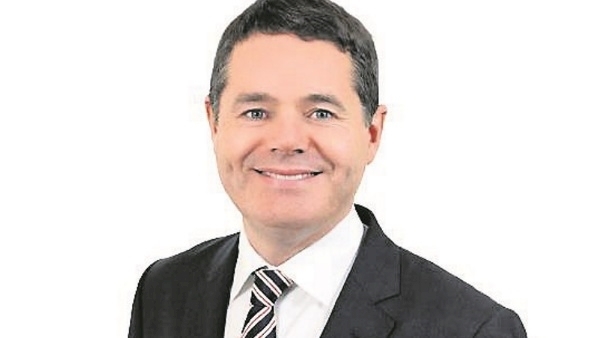
- Paschal Donohoe is Minister for Finance and a Fine Gael TD for Dublin Central.

More in this section

Revoiced

Newsletter

Sign up to the best reads of the week from irishexaminer.com selected just for you.

Cookie Policy Privacy Policy Brand Safety FAQ Help Contact Us Terms and Conditions

© Examiner Echo Group Limited