Lifeboat volunteer's story revealed to a new generation
After decades in storage, the rare medals of lifeboat volunteer Patsy Sliney turned up — meaning his story can now also be revealed to a new generation, writes
The exploits of one of Ireland’s most decorated lifeboat volunteers will reach a wide audience after his rare set of bravery medals was given to Cork Public Museum.
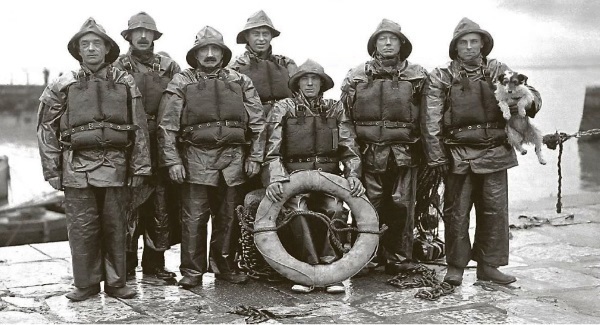
Patsy Sliney was best known for leading the Ballycotton lifeboat crew in the rescue of eight men from a lightship outside Cork harbour in 1936.
The rare gold medal for gallantry that he received for the feat — one of three occasions he was honoured by the RNLI for his lifeboat work — was hardly ever seen, even by his own family.
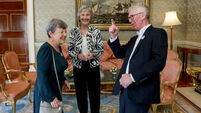
That has now changed after Patsy’s grandchildren and later generations saw the medals — and four more he received for Royal Navy Reserve service during the First World War — when they were handed over as a donation to the museum’s acting curator, Dan Breen.
Patsy was awarded the RNLI’s bronze medal in 1941, and the silver medal in 1943 for saving the Irish Ash two days before Christmas 1942. Having at least one of each medal is a rare, and possibly unique, achievement for an Irish lifeboat volunteer.
Agnes Dunlea remembered her grandfather, Patsy, as a very patient man who, despite his very poor hearing in later years, entertained visitors from all over the world who were anxious to hear about his exploits at sea.
“We never knew too much about it, but we were aware of the Daunt Rock rescue, and we’d sometimes see the medals taken out of a box when people called to see him,” said Agnes, whose mother was Patsy’s last surviving child.
If his family knew only the bare details of his lifeboat career, they knew even less about his service during the First World War.
The four medals also presented to the museum indicate he served in the Royal Naval Reserve from a few years before the war, and continued in the volunteer reserve through to the 1920s.
“It’s amazing, these seven medals tell us of a man’s entire career of voluntary service at sea,” said Mr Breen.
“It’s the museum’s first full collection of Great War medals for a Cork man with naval service.”
They include three standard First World War service medals and a Royal Naval Volunteer Reserve Long Service and Good Conduct Medal, probably issued in the 1920s.

Mr Breen expects to include these medals in an exhibition opening at the end of the year to mark the significant events of late 1918 — the influenza epidemic, Sinn Féin’s general election victory, and the end of the war, including the war at sea in which so many Cork people played a key role.
He also hopes to put the RNLI medals on display at a later date in a standalone display to share the story of Patsy’s 39-year lifeboat service that only ended when he turned 65 in 1950.
While Patsy’s wartime and lifeboat careers were not much spoken of up to his death in 1972, the family have kept alive the tradition of service.
His son William — born the same week in 1914 that the First World War began — got a bronze RNLI medal for being involved in the 1936 Daunt rescue on the Ballycotton lifeboat, the Mary Stanford. Patsy’s brother Thomas was lifeboat mechanic and received a silver medal, just like second coxswain John Lane Walsh, with bronze medals going to the other three participants.
William’s son Colm, who was in the Ballycotton lifeboat until a few years ago, also gave several decades of service.
His own son, Will, is now also an RNLI volunteer in Ballycotton, as well as being a well-known illustrator for Marvel comics.
But the family links go even further back than Patsy Sliney, as the father and uncle of his wife Catherine (nee Harding) preceded him as coxswains of the Ballycotton lifeboat.
Colm Sliney and his brother, Brendan, were part of a local group who spent many years securing the return of the lifeboat Mary Stanford to Ballycotton. After several years of work and fundraising, she is now on permanent display on the roadside overlooking the sea in the east Cork fishing village.
Ahead of an event he is organising for Heritage Week next month to remember the Daunt Rock rescue, Colm hopes to track down descendants of the men rescued from the Comet lightship by the Mary Stanford’s crew in 1936.
He has already made contact with the family of one of the lightship crew, who hailed from various parts of the country.

They were captained by John Scannell from Cobh, where G Harvey also hailed from. The other rescued men were: R Arnopp, Kinsale; P McCarthy, Cork; D Moran from Clare; and JJ Murphy, B Swift, and J Busher from Wexford.
Just like the Comet’s crew and their families, the location of Patsy’s medals were unknown for several years, and Agnes praised the persistence of family solicitor John O Lee OK for tracking the medals down to a bank where her own mother had put them in storage many years before her death.
“I remember her sometimes saying they were in a bank somewhere, but I had totally given up on finding them,” said Agnes.
“We knew my grandfather was very important to a lot of people, and it’s fantastic that his medals were found. It’s amazing to see the whole collection together, and they are in a safe and secure place here now in the museum.”