Even Trump will eventually face the judgment of history

He has made bold decisions, but that’s not the same as being a good leader, as his motives have been to consolidate his own power in the US, says .
No matter how much chaos US president Donald Trump causes — to trade, business, and core alliances — his supporters insist that he gets things done.
While Arkansas senator Tom Cotton regards Trump as an “active, engaged, and effective leader,” former Speaker of the US House of Representatives Newt Gingrich describes Trump as “stunningly effective.”
I was curious about what the undergraduates on my course on leadership theory and practice thougt of Trump, so I organised a debate. One side was tasked with defending the motion that Trump is an ‘effective leader’. They portrayed him as a decisive go-getter and marvelled at his “chutzpah” in moving the US embassy in Israel to Jerusalem. Among Trump’s accomplishments, they pointed to the tax- reform legislation that he signed in December 2017, the airstrikes against Syrian chemical-weapons facilities in April 2018, the recent engagement with North Korean leader Kim Jong-un, and the evolution of trade policy toward China.
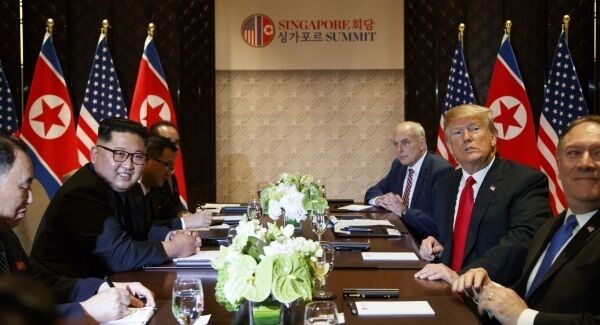
The team arguing against the motion focused on the personal attributes associated with effective leaders: A moral compass, balanced reasoning, and a disciplined and principled approach to decision-making. They said Trump comes up short on all counts. The debate boiled down to whether effective leadership is about action and intention, character, or both.
For example, a debater arguing for the motion was asked whether morality, trust, and integrity are relevant to effective leadership. “No,” he answered. Effectiveness is morally neutral: If you announce your goals and achieve them, you are effective, whatever the goals happen to be. It’s a short hop from here, of course, to Machiavelli, and then to contemporary strongmen such as Vladimir Putin, Kim Jong-un, and Rodrigo Duterte. One source of conflict was the timeframe for determining leadership effectiveness. The word ‘effectiveness’ often implies immediate actions and results. Yet ‘leadership’ suggests a capacity to deliver principled decisions and durable outcomes over the long-term, grounded in facts and informed by ethics.
Another area of disagreement is that morality and decisive action run on separate tracks. In other words, a leader’s morals can be regarded as ‘private’, with no real-world relevance.
Missing from the discussion was the fact that corrupt motives — such as self-aggrandisement, contempt for others, and indifference to the public good — produce corrupt results. Policies that seem effective in the short-term can end in spectacular failure when they are driven primarily by a leader’s self-interest and pursuit of power.
Many US presidents have become embroiled in scandals of their own making. Andrew Jackson had the ‘Trail of Tears’ ethnic cleansing of the Cherokee and other Indian tribes. Warren G. Harding had the Teapot Dome scandal. And Richard Nixon had Watergate. All of these presidents’ legacies were tarnished not by any single act — which might have looked ‘effective’ at the time — but by habits of corruption and a disregard for ethical guidelines.
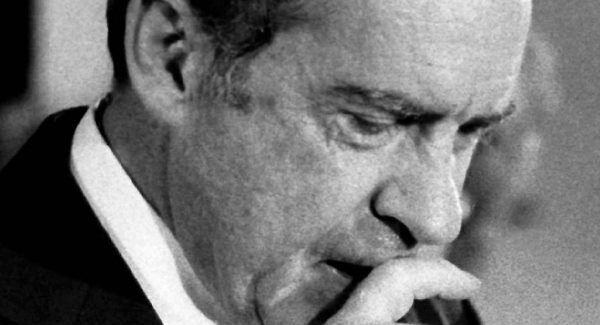
Trump bears some resemblance to these ignoble examples. In his rush to enrich himself and consolidate power, while abandoning all civility and decorum, he has shown contempt for the separation of powers, the freedom of the press, the norms of governance, and the rule of law. And, as with his predecessors, his administration will probably be remembered more for its scandals than its achievements, especially over the long run.
‘Over the long run’ is a necessary proviso, because only time can deliver the final judgment. Jimmy Carter is often remembered as a mediocre president. However, a new book by Stuart E. Eizenstat, President Carter: The White House Years, shows that the establishment of formal diplomatic ties between China and the US probably owes as much to Carter as to Nixon, despite the latter’s historic visit there in 1972.
Or consider George W. Bush, who famously stood in front of a ‘Mission Accomplished’ banner early in the Iraq War, and praised the inexperienced and incompetent director of the Federal Emergency Management Agency for doing a “heck of a job” just after Hurricane Katrina ravaged New Orleans. In both instances, the long run arrived quickly to render judgment on sheer folly.
As for Trump, it remains to be seen if his tax cuts and trade wars will save the middle class. His dealmaking with North Korea and his ‘no deal’ with Iran may or may not end badly.
But both history and leadership theory suggest that his lack of emotional intelligence, preoccupation with showmanship, and indifference to facts will lead to unambiguous failures
When my students were asked who had delivered the more convincing arguments, they overwhelmingly voted for the affirmative team, even though 90% expressed personal scepticism about Trump’s ultimate effectiveness.
Therein lies an important lesson: The glare of the daily news cycle can make us lose sight of moral leadership in sustaining the US in the years to come. Without it, the ‘successes’ of today can become the disasters of tomorrow.

CONNECT WITH US TODAY



Be the first to know the latest news and updates