The media’s gaze can be difficult for celebrities to shake off
If you live your professional life in the spotlight than you can’t expect to set limits on the public’s curiosity or appetite for gossip, whether salacious or not, writes
In a recent interview with the Guardian, Mariah Carey said: “There is a price to pay for having a public life.”
For a pop diva like Mariah, that price involves an ongoing struggle to maintain some space between a public life and a private one, especially when you are constantly under scrutiny from an intrusive media and the target of ever-present paparazzi.
An increasing preoccupation with celebrity is one of the distinguishing characteristics of the evolution of newspapers over the past half-century.
Not that long ago, you would search in vain for a mainstream paper with a photograph of a film star, a rock diva, or a supermodel on its front page. Now it’s commonplace.
This is a two-way street, of course. The stars of cinema, music, or fashion will willingly seek media exposure to promote their products or to boost their profiles.
And the media, for their part, are acutely conscious of the commercial benefits of feeding the public’s seemingly insatiable appetite for celebrity stories and photographs.
It’s all part of an unwritten compact which works to the advantage of both sides. Celebrities are happy with the coverage in the media, and the latter for their part are happy to be meeting the (sometimes prurient) needs of readers or viewers.
Until something goes wrong.
Most of the time (though not always), this involves complaints about invasion of privacy.
A classic example of this occurred in June 2004 when Princess Caroline of Monaco won a landmark legal victory when Europe’s top human rights court ruled that the German press had violated her right to privacy by publishing photographs of her and her children.
The European Court of Human Rights in Strasbourg said there had been no “legitimate interest” in her private life.
In the aforementioned interview with Mariah Carey, the reporter, Simon Hattenstone, was told early on by one of Ms Carey’s minders:
Mariah will answer no personal questions.
Yet this was after Mariah had freely admitted that she loved to bathe in milk: “Yes, sometimes I use milk as a beauty treatment. I don’t want to give away all my secrets.”
The advent of the tabloid era in the 1960s, with a new, brasher style of journalism, a penchant for sensationalism, and a recognition that popular culture had an expanding prurient dimension and an unabashed willingness to exploit this, brought new challenges to the right to privacy.
It meant a celebrity’s “secrets” were now in the firing line. Sexual escapades, new romances, broken romances, infidelity, divorce, betrayals — these were all now fodder for the churning tabloid mills and a celebrity-obsessed public.
Maintaining a space between a public life and a private life became much more problematic.
Matters weren’t helped of course by attempts by some celebrities to have it both ways. None epitomised this more than the late Princess Diana of Britain.
After her untimely and widely mourned death, in a car crash in Paris in August 1997, her brother, Earl Spencer, in a eulogy at her funeral, complained that Diana the huntress (in Roman mythology the goddess Diana is honoured as the goddess of the hunt) had become “Diana the hunted” — a reference to how she had become the targeted quarry of the media pack.
This ignored the fact that, as Princess of Wales, while married to Prince Charles, she exploited the media for her own ends.
The highlight of this blatant use of the media was her famous Panorama interview with Martin Bashir on November 20, 1995, at a time when her marriage was on the rocks.
It was during this interview that, in acknowledging that her husband’s affair with Mrs Camilla Parker-Bowles was a factor in the breakdown of their marriage, she said:
Well, there were three of us in this marriage, so it was a bit crowded.
The legal argument that vindicated Princess Caroline’s right to privacy in 2004 would not have worked in the Profumo Affair in 1963.
John Profumo was Minister for War (a term still in use in the 1960s) when news of his affair with Christine Keeler broke.
He was not aware that Ms Keeler was also sexually involved with Eugene Ivanov, a Soviet naval attaché in London, at the same time.
This was at the height of the Cold War when Moscow was very keen to learn of Nato plans, so the possibility of dangerous “pillow talk” meant Profumo’s involvement with Ms Keeler posed a real security risk.
In other words, there was a legitimate “public interest” in his sexual activities that trumped his privacy rights.
In early 2001, Monica Lewinsky was sitting on stage in New York, preparing to tape a Q&A for a HBO documentary called Monica in Black and White.
The opening question brought gasps from the audience:
How does it feel to be America’s premier blow-job queen?
Recalling the interview in an article on the ‘Culture of Humiliation’ in the June 2014 edition of Vanity Fair, Ms
Lewinsky said: “In 1998, when news of my affair with Bill Clinton broke, I was arguably the most humiliated person in the world ... A snapshot of a scenario I’ve grown accustomed to, even as I attempt to move on with my life: A shrill ring interrupts the rhythms of my day. The call — from the doorman of the apartment building where I’m staying in New York — leads me to an exasperated: ‘What? Again?’ They’ve reappeared; the paparazzi, like swallows, have returned to the sidewalk outside, pacing and circling, and pacing some more...”
grateful to the myriad people who have helped me evolve + gain perspective in the past 20 years.
— Monica Lewinsky (she/her) (@MonicaLewinsky) June 4, 2018
worth reposting this today from @VanityFair ...https://t.co/u9Ta13Alz3
In his 2000 book, The Unwanted Gaze: The Destruction of Privacy in America, Jeffrey Rosen, associate professor at the George Washington University Law School, highlights the violation of Ms Lewinsky’s privacy.
“The invasions of privacy continued to multiply during the Starr investigation and the impeachment trial that followed. Lewinsky herself was especially unsettled by Starr’s decision to subpoena a Washington bookshop for receipts of all her book purchases since 1995. In her memoir, Lewinsky pointed to the bookstore subpoenas as one of the most invasive moments in the Starr investigation, along with the moment when prosecutors retrieved from her home computer the love letters she had drafted, but never sent, to the President.
‘It was such a violation,’ she complained to her biographer, Andrew Morton. ‘It seemed that everyone in America had rights except for Monica Lewinsky. I felt like I wasn’t a citizen of this country any more.’
Protection of reputation (and the Monica Lewinsky experience showed how devastating the consequences can be when private sexual behaviour is dragged into the public sphere) is also a primary concern for celebrities.
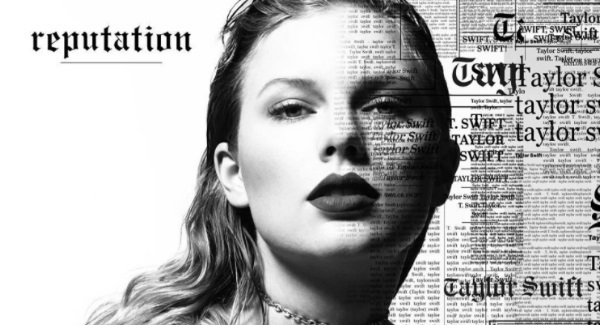
Hardly surprising, therefore, that US pop star Taylor Swift — who will be performing in Croke Park later in the week as part of her Reputation world tour — should have decided to call her latest album (her sixth) Reputation, or that the cover shows her against a background of her name repeated endlessly in newsprint.
In that album she sings “I don’t trust nobody and nobody trusts me”, and she hasn’t disputed claims that this really
is a comment about traditional media.
Significantly, she has also refused interviews to promote her album. Instead, she resorted to social media. It has proved a clever move. The album sold 1.2m copies in its first week.
The lesson that the music industry has been revolutionised by social media has been learned by others, notably Beyonce.
When Taylor Swift’s Reputation tour reached Manchester’s Etihad Stadium last week, reviewers noted that the
spectacular show ends with screens displaying a message about the death of the singer’s reputation.
But sidelining newspapers has raised questions. One commentator (Jane Martinson of The Observer) said: “If ever there were a celebrity who sums up the two biggest issues for journalists, control and trust, it is Swift.
In one sense, her desire for control is an affront to journalism’s ability to seek out truth and hold the powerful to account, and Swift is powerful.
“But it’s hard not to have some sympathy for her decision to do things on her own terms.”
Even if she can keep traditional media at arm’s length, Taylor Swift (like Mariah Carey and Beyonce and other superstars of pop and rock before her) is going to find it increasingly difficult to protect her privacy and reputation from “the unwanted gaze”.
When you live, professionally anyway, in the public spotlight you can’t set limits to the public’s curiosity or appetite for gossip, salacious or otherwise.
Or safeguard privacy and reputation against what Monica Lewinsky, with considerable justification, has called “the gossip rags”.
And the gaze of the media isn’t always “unwanted” — not when you have to sell concert tickets or albums.
Sometimes the gaze is very much “wanted” and even invited; that makes the maintenance of space between the private self and the public persona especially perilous.