Exit poll reinforces FF’s image as ‘male, stale, and from beyond the Pale’

The party is out of touch with Ireland’s social agenda and has a real identity crisis, writes
Just who in the country is voting for which party?
We got a real glimpse to the answer to that question at the weekend.
One of the most interesting aspects of the RTÉ/ Behaviour and Attitudes exit poll, published on Friday night, was the breakdown of results by political party.
While obviously, the primary focus was on the result of the referendum, buried in the poll were two different sets of figures which revealed a lot of interesting information.
Firstly, there were figures showing which way people who associated themselves with a particular party voted.
The most interesting piece of information was that a slight majority of identified Fianna Fáil voters opposed the proposal to remove the Eighth Amendment. The figures showed that 50.3% of Fianna Fáil supporters voted to retain the Eighth Amendment, while 49.7% voted for repeal.
This was compared to 74.9% of Fine Gael supporters backing the repeal proposal; 74.5% of Sinn Féin supporters backing it; 80.3% of Labour supporters backing it; 88.9% of Green Party supporters backing it; and 82.1% of Solidarity/People Before Profit supporters backing the proposal.

The Fianna Fáil result was perhaps not surprising given that, at its last ard fheis, the party voted by a significant majority to support a motion which calls for the party to oppose “any attempt to diminish the constitutional rights of the unborn”. But it does mean the party has a real identity crisis and has shown itself to be completely out of touch with the social agenda in Ireland.
For many, to see Fianna Fáil to be marginalised to such a degree by its own making is remarkable.
The age demographics were also pretty interesting as the exit poll showed that the age group above 65 years of age was the only one to vote by a majority against the proposal. The exit poll showed that 58.7% voted no while 41.3% voted yes.
Clearly, such a statistic only reinforces the image of Fianna Fáil as “male, stale, and from beyond the Pale”.
But the other fascinating set of numbers in the exit poll were those relating to party support.
Based on a sample of 4,000 people who actually voted (four times the sample of normal polls), once 24.9% of don’t knows were excluded, they suggested that Fine Gael is now on 36%. This means, if this exit poll is to
be believed, Fine Gael commands a 13-point lead over Fianna Fáil.
Notably, 36% is the level of support the party achieved in its historic 2011 election win when it secured 76 Dáil seats — within spitting distance of an overall majority.
Fianna Fáil, according to the exit poll, was on 23% and at this stage nowhere near being in a position to become the country’s favourite party.
It also has Sinn Féin not too far behind it on 16%, which is more a realistic figure for Sinn Féin than has been suggested in some recent opinion polls.
The elevation of Mary Lou McDonald to party leader and the deal done with Fine Gael over the Judicial Appointments bill has begun a process of normalisation of the party and Fianna Fáil is now looking very squeezed.
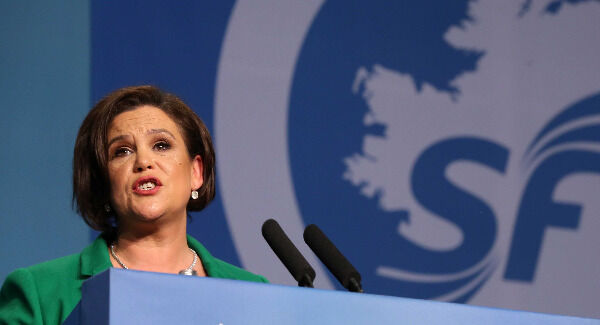
Such concerns about what it is and what it stands for have been voiced in the past 24 hours or so by the likes of Limerick TD Niall Collins, who has questioned the party’s ability to get into government in its current shape.
Strangely, in previous decades, Fianna Fáil always claimed to be the true national party of Ireland, supported by young and old, urban and rural.
Now, Fine Gael with a young, openly gay Taoiseach and one of, if not the youngest cabinet teams in history, looks to be far more in tune with the public mood.
Against the prevailing mood in Leinster House, they created the Citizens’
Assembly, committed to the Oireachtas committee and Varadkar backed the holding of the referendum.
The question is whether we would have gotten here with Micheál Martin as Taoiseach? Given he has been badly let down by his party, the answer is probably not.

CONNECT WITH US TODAY



Be the first to know the latest news and updates