One year on: Paris marks anniversary of attacks
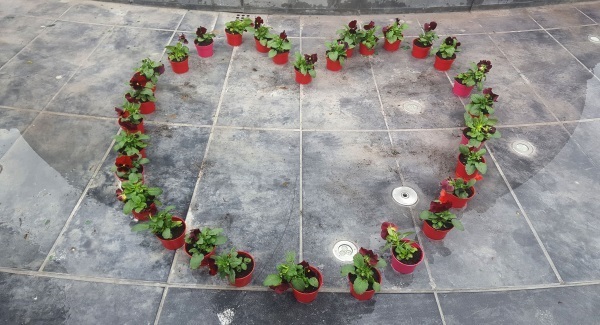
Michael Dias lauded the lessons his father Manuel, an immigrant from Portugal, taught him so youth can integrate instead of turning themselves into âcannon fodderâ.
Under heavy security, President François Hollande unveiled a plaque outside the Stade de France âin memory of Manuel Dias,â pulling away a French flag covering it on a wall at one of the entrances to the French national stadium, where Dias was killed on November 13, 2015, by a suicide bomber.
Paris mayor Anne Hidalgo joined the president at six sites that were targeted in the attack on the French capital. The Islamic State group claimed responsibility for the attacks.
Three teams of extremists coming from neighbouring Belgium targeted six bars and eateries, turning scenes of Friday night fun into bloodbaths.

At the Stade de France, on the northern edge of Paris, Michael Dias said his father Manuel was âliving proof that integration is possible, necessaryâ to end the madness of violence carried out by those who felt excluded.
Learning to live again after extremists killed his father was âa personal challenge, but it concerns us all,â Dias said, crediting his father, who came to France at 18, with life lessons like the need for education.
âIt is by knowledge, by intelligence that the children of tomorrow can stop humiliating themselves as cannon fodder in the service of criminal, mafia-style interests ... as is the case today. [They are] incapable of reflection, thinking about the world and expressing the unease and social exclusion they feel.â
The final stop, the Bataclan concert hall â which reopened Saturday with a concert by British pop star Sting â was the site of the bloodiest and longest attack.
There, 90 people were killed by three attackers who also took a group hostage. The youngest and oldest victims of the night of horror were a 17-year-old and a 68-year-old â both killed at the Bataclan.
Families of victims, security and rescue forces, and some still trying to heal were among those present at the ceremonies. JesseHughes of the Eagles of Death Metal, the California band whose concert that night ended in a bloodbath, paid respects at the Bataclan ceremony, placing his hand on his heart as he departed.
In addition to those killed, nine people remain hospitalised from the attacks and others are paralysed. The government says more than 600 people are still receiving psychological treatment after the attacks.
A sign scrawled and posted near the Bataclan, âLove for all, hate for no one,â captured the sense of defiance shared by many â but not all. Some residents of the lively neighborhood where most of the attacks occurred are still trying to heal.
âWe always have this fear that weighs heavily in our hearts. We always try to be careful. And every time we pass by, we think of them,â Sabrina Nedjadi said.

Soubida Arhoui said fear is now part of her life.
âI am afraid for my children, when they take the Metro. When my son goes to work, I am afraid. When I get into a Metro I am afraid.â
The remembrances come after the Sting concert on Saturday night that reopened the refurbished Bataclan concert hall.
Sting, in a T-shirt with a guitar slung over his shoulder, asked concert-goers in fluent French to observe a minute of silence as he opened the show.
âWeâve got two important things to do tonight,â the 65 -year-old singer said.
âFirst, to remember and honour those who lost their lives in the attacks ... and to celebrate the life and the music of this historic venue.â
Bataclan claims it turned away band frontman
Eagles of Death Metal frontman Jesse Hughes was turned away from Stingâs concert at the Bataclan, according to the venueâs management who said he was ânot welcomeâ.
The US rock band were performing in the Paris theatre on November 13 last year when it was attacked by Islamic extremist suicide bombers who killed 89 people.
In the months after the massacre Hughes provoked anger when he suggested Bataclan security staff were complicit in the attack and later apologised.
On the eve of the first anniversary of the atrocity, former Police frontman Sting, 65, re-opened the 150-year-old venue and Hughes was not allowed in, the Bataclan boss said.
However a representative for the band reportedly branded the venueâs version of events as âfalseâ.
Jules Frutos, manager of the theatre, said Hughes and his manager were turned away at the door.

Mr Frutos said: âThey tried to enter the venue and they are persona non grata. They are not welcome after what he said about the security.â
Referring to Hughes, Mr Frutos said: âEven if he came back on what he said. I mean, this man is just sick. Thatâs all.â
Mr Frutos said he thinks the band used what happened at the Bataclan to get âpromotionâ, asking: âWho did know about this band before?â
He said the bandâs attitude shows âno respect for the victimsâ. Mr Frutos said the frontman and his manager did not have tickets for Stingâs concert.
The bandâs management said Hughes was in Paris with family, friends and fans to commemorate the âtragic loss of life that happened right in front of his eyes during his showâ.
Marc Pollack, of The MGMT Company, accused Mr Frutos of âtainting a wonderful opportunity that couldâve been used to spread peace and loveâ.
âJesse never even tried entering the club for Stingâs show tonight,â he said.
Earlier this year Hughes apologised for suggesting that security guards were complicit in the attack.
He told the Fox News in March that six guards at the Bataclan never came to work on the night of the attack, and âit seems rather obvious that they had a reason not to show upâ.
Afterwards in a statement, he said: âI humbly beg forgiveness from the people of France, the staff and security of the Bataclan, my fans, family, friends and anyone offended by the absurd accusations I made.
âMy suggestions that anyone affiliated with the Bataclan played a role in the events are unfounded and baseless â and I take full responsibility for them.â