Teachers' strike: Day of action in coming week is all but inevitable
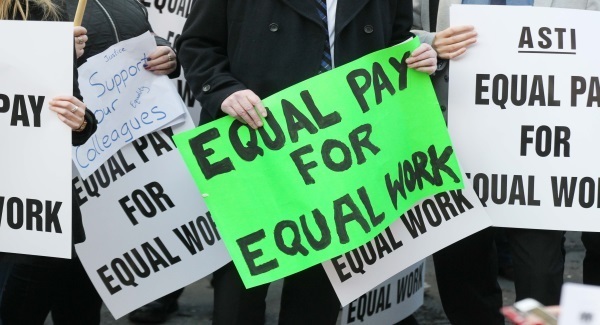
While any attempts at sorting out their differences will be welcome, both sides will have to be seen to concede something if there is to be any breakthrough.
The ASTI insists that the idea of being unable to negotiate any deal outside the Lansdowne Road Agreement (LRA) has been the mantra of Education Minister Richard Bruton’s officials in recent meetings.
If this is the case, it needs to change. The Teachers’ Union of Ireland (TUI) rejected the LRA a year ago and yet the department was able to negotiate a deal with it in May to begin addressing some issues not covered by the agreement.
On the other hand, the ASTI has to acknowledge the bigger picture in which the minister’s representatives are entering further discussions.

With gardaí also fighting for increased pay, the Government is not going to do anything that could threaten the industrial peace enjoyed across the majority of the public sector.
The granting to the ASTI of full pay parity for pre-2012 teachers would lead to justified demands from every other public-sector union, whose newer members also started on different pay rates after 2011.
That is not to say there is not merit in the union’s claim for equal pay for equal work, but a defined timescale in which the differential might be bridged could be something to encourage the ASTI to moderate or postpone its planned series of industrial actions.
It will take, however, more than Mr Bruton’s approval of any such statement of commitment to be given.

His cabinet colleague Paschal Donohoe, at the Department of Public Expenditure and Reform, will expect to have these kinds of issues played out at the Public Pay Commission, whose work has not even begun.
Whether the minority government can pre-determine some of the outcomes — such as prioritising closure of gaps between salaries of newer and longer-serving public servants, including teachers — is unclear.
Even more uncertain is whether such a measure would be enough to quell teacher anger on the issue, evident in the ASTI’s 80% mandate for strikes for equal pay.
It is likely that nothing but a clear Government statement of how it intends dealing with the issue will force a deferral of the earlier industrial actions.

A strike day next Thursday is almost inevitable, even with talks beginning today.
The eventual measure of those discussions’ success will be whether over 250,000 students are forced to stay at home after the mid-term break in the second week of November.

CONNECT WITH US TODAY



Be the first to know the latest news and updates