All over bar the counting as we await an outcome
Only once the last vote has been tallied will we know who chose whom, and why, says Theresa Reidy
All over bar the counting as we await an outcome

POLITICAL campaigns should inform, educate, and mobilise voters, and this is a useful starting point for thinking about the last few weeks. By Sunday, the success or failure of the party campaigns will be clear for us all to judge.

Parties and Independents tell voters what they stand for and what policies they would enact once in office.


The persuasion usually involves personality, policy, and the promise of delivering for the local area.

Candidates must convince the electorate that they have the correct combination of personal characteristics, local commitment, and good ideas to be worthy of their vote. Data drawn from RTÉ exit polls show that the precise combination of these three features will vary from election to election. In the crisis election of 2011, 41% of voters decided on the basis of policy ideas; 7% on the candidate for taoiseach; and 37% on who would deliver for the constituency. In 2007, it was very different.

Policy was less important, with just 24% citing it; but 22% decided based on the candidate for taoiseach.

It will be interesting to see what the balance between these elements will be today, as the details of the voting surveys are made available. In this campaign, the parties clustered on policy. That was clear in the seven-way leaders’ debate. Little separated Fianna Fáil, Fine Gael, and Labour on many issues, while the manifestoes also showed that there is considerable common ground between the Social Democrats and the Greens, and policy agreement among the left groups is most evident in the formation of the AAA-PBP electoral alliance.

There are big divides in the beliefs of the parties about how the economy and society should be organised, but these have not translated into any big campaign ideas. There was no universal health insurance or zero tolerance on crime to catch the voter’s imagination.

The Government was successful in framing its terms. It wanted to talk about economic recovery and its trite catchphrase, “keep the recovery going”, became something of a mantra in its first week. But that is where its campaign success ended. The campaign was about the recovery, but the unequal nature of that recovery, the long-term chance of its survival, and the fact that, according to one poll, 50% of voters claimed that they had not experienced any recovery, came to dominate radio and TV debates, moved centre-stage, and seem to have taken the government parties by surprise.

For more election news, analysis and general banter join us HERE

It was a low-key campaign, with plenty of debates and discussions, but few memorable moments to be replayed on Reeling in the Years in decades to come.

All the usual things happened. Party manifestoes were published. There were policy launches every day. Posters, fliers, and candidates appeared everywhere, but the campaign lacked the intensity of others in recent years.

The 2011 election was especially divisive, with the bank guarantee and the bailout provoking strong reactions, but none of that intensity was present this time. Indeed, indifference appeared to be a common reaction.

But campaigns do matter. We have mixed information from the research. Some of the exit polls suggest that as many as 50% of voters make up their mind during the campaign, but this is at odds with opinion-poll data, which suggests that undecided voters are fewer than 20% at the start of the campaign.

When we look at the information over the last 20 years, the numbers of undecideds going into the campaign are increasing, so campaigns are becoming more important. In the last days of the campaign, the main focus is on getting out to the vote.

Efforts at persuasion continue, but the election will have been a failure if parties can’t get their supporters to go to the polls. Turnout was just short of 70% in 2011. Internationally, this is a respectable figure, but it is likely to be an under-estimation. Our electoral registers are in a poor state, so even when we come to know the final turnout figure, late on Saturday or on Sunday, it will be hard to judge. There could be as many as 300,000-500,000 extra voters on the register.

The number of candidates has fallen a fraction from 2011, but we can expect a long weekend of counting. Larger constituencies will mean more votes to be counted. Tallies will give us early indications, but the polls suggest a knife-edge finish — meaning that it could well be Monday, as the last of the seats are decided, before we can start discussing possible government options.

A couple of constituencies are worth watching. The performance of Labour and Sinn Féin in the two Cork City constituencies will say a great deal about the prospects of those parties. Dublin will be a big battleground, and Dublin Bay North and Dublin Bay South have high-profile candidates and lots of current TDs. Success and failure here will say a lot about the chances for Independents and for some of the smaller parties, such as Renua, as well as giving us indications about the Fianna Fáil recovery and Fine Gael’s overall strength.

And by Wednesday, government-formation mania will have replaced election mania!

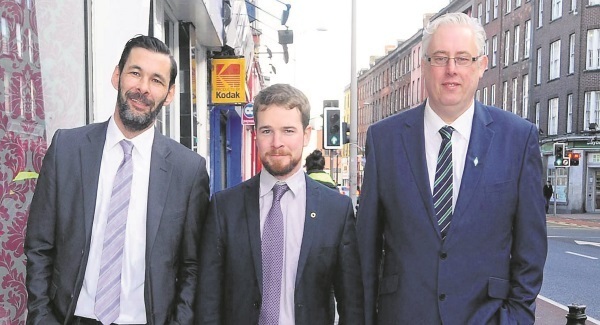
Dr Theresa Reidy is a political scientist in the Department of Government in University College Cork.

x

More in this section

Revoiced

Newsletter

Sign up to the best reads of the week from irishexaminer.com selected just for you.

Cookie Policy Privacy Policy Brand Safety FAQ Help Contact Us Terms and Conditions

© Examiner Echo Group Limited