Time for a reverse Tallaght Strategy
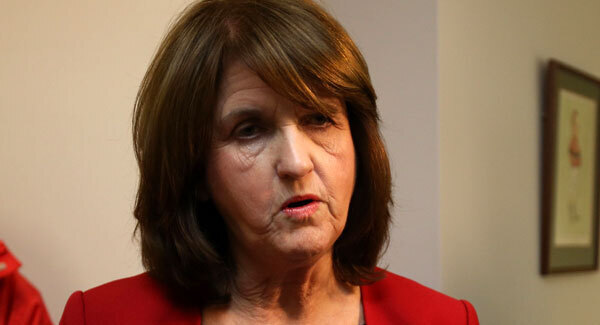
Yesterday began with bad news for Tánaiste Joan Burton who saw her party fall back to just 8% in the latest Red C opinion poll for Paddy Power.
The party is bracing itself for the mother of all spankings on February 26 and party bosses are hoping against hope for a late swing which would deliver them between 15 and 20 seats.
A previous Red C poll on the weekend of their party conference a couple of weekends ago saw them climb back into double figures and certainly gave encouragement to beleaguered Labour delegates. But the slip back, while within the margin of error, shows how fragile the Labour cause is.
Certainly, the mood around the party is a good deal edgier than it was in 2011, where they were enjoying widespread public popularity. Even yesterday, one noted a change in tone from the party. Burton and others appeared to want to distance themselves from their record in Government in favour of wanting to talk about the future. Such a move would be a mistake as Labour has a strong story to tell about its time in Government.
For more election news, analysis and general banter join us HERE
They should not seek to renounce their achievements but celebrate them. Burton herself was omnipresent across the media yesterday but her tenure as leader has at best been mediocre.
She has not united her party, having been its most divisive and undermining presence when Eamon Gilmore was leader, and she has not delivered any tangible Burton bounce.
She herself is also not guaranteed to be returned by the people of Dublin West.
Having returned with 37 TDs in 2011, the fact that Labour is only fielding 36 candidates goes to show how their fortunes have deteriorated. If they were to abandon anything, they should give up on the auction politics which they engaged in in last October’s budget and in some of the policies they have announced so far.
There is a large constituency of people in Ireland who are primed to reward those political parties who actually are prepared not to risk bringing the house down again.
Ever wondered what the main players in #GE16 are saying on Twitter? Well find out HERE. https://t.co/IRB1F7XDKd pic.twitter.com/QLwlwfUp3f
— Irish Examiner (@irishexaminer) February 8, 2016
Burton and her party will hope that further polls this weekend will see them return to double figures. The poll also saw a marginal slip for Fine Gael but at 30% they are still on course to achieve their target of 60 seats.
There is still a lot of ground for Fine Gael and Labour to make up if they want to return to power, and even a deal with a dozen independents may not be enough to see them home.
Ultimately, the latest poll shows a hung Dáil unless Fine Gael and Fianna Fáil were able to cobble together some arrangement.
That question was top of the agenda yesterday.
Fianna Fáil’s justice spokesman Niall Collins has said he would not have a problem with Fine Gael “propping up” a Fianna Fáil-led government.
Collins said Fianna Fáil was contesting the election to again become the largest political party in the country, with a total of 71 candidates running in 40 constituencies.
“We absolutely aim to be the lead party, and under no circumstances are we going in as one leg on a three-legged stool for Fine Gael or indeed with anybody else — and that is emphatic,” he said.
Collins said if Fianna Fáil ended up as the biggest party after the election, “well then that’s a different kettle of fish”.
Others, however, have read his comments yesterday as a further softening in the position within Fianna Fáil that a deal with Fine Gael is now a runner.
In the last week or so, a succession of leading Fianna Fáil voices have openly said such a deal at least deserves consideration.
Some form of a reverse Tallaght Strategy — where Fianna Fáil would support Fine Gael from opposition — has been mooted and could make sense rather than forcing a second election.
So far, this campaign has been remarkably dull but the genuine move toward a Fine Gael-Fianna Fáil alliance would put an end to old civil war hostilities and mark a major shift in the Irish political landscape.
For more election news, analysis and general banter join us HERE
CONNECT WITH US TODAY



Be the first to know the latest news and updates