Political will can make the lives of children better but lots of work needs to be done
Ireland has moved to strengthen the rights of children, but there is much to do, says Tanya Ward

Political will can make the lives of children better but lots of work needs to be done

TODAY, I am in Geneva to witness a top UN body put a spotlight on Ireland’s treatment of children.

It’s the first time the UN Committee on the Rights of the Child has scrutinised us in 10 years, so it’s a landmark day.

As the head of an NGO, it’s my job to hold the Government to account when it falls short, but I am also the first to admit there’s a lot to be proud of since we last met with the UN.

Ireland has amended its Constitution to strengthen children’s rights — this was a major point of criticism the last time around — and we now have a minister for children and youth affairs with full Cabinet status.

Another important development is the establishment of a dedicated agency, Tusla, for children and families.

All of these things are, undeniably, positive steps.

Most children live happy, safe childhoods, but for many, life is tough.

The grim reality is that these children, through no fault of their own, are being failed by the State.

The UN committee’s job is to shine a light on these gaps so the State takes the action it must.

It is hard to know what will be the UN focus, but it’s certain they will be heavily critical of the child poverty rate, and rightly so.

The rate has almost doubled since Ireland was before the committee in 2006.

One child in every nine lives in poverty, with disproportionally high rates among one-parent families.

This has to be addressed by the incoming Government as a priority.

Minister for Children and Youth Affairs James Reilly

Linked to a soaring child poverty rate is the scourge of homelessness.

No child should ever experience homelessness, yet 1,638 children are homeless, as of October 2015.

The figure rose by 90% last year and children now account for almost one-third of the homeless population.

Related to this, in one year, women and children experiencing domestic violence were denied access to refuges on 3,500 occasions.

Proper housing provides the foundation for a child to live, sleep, and do homework, yet they live in inappropriate emergency accommodation, such as hotel rooms, for up to 18 months.

This raises serious child protection and welfare concerns.

There are ways to fix the housing problem, such as putting in place minimum standards, a child protection review, as well as creative legislative solutions.

Outcomes for Traveller and Roma children are far below those for the general population across all areas, including health and education.

They experience sky-high school dropout rates, wholly inappropriate accommodation, an over-representation in the care system, and an infant mortality rate that is over three-and-a-half times as high as the rest of the population.

Too many Traveller and Roma children are prevented from reaching their full potential in school and beyond.

We can’t be proud of how we treat children until these trends are reversed.

We must grant recognition of Traveller ethnicity, address the accommodation shortage, and reverse the cuts to dedicated education supports.

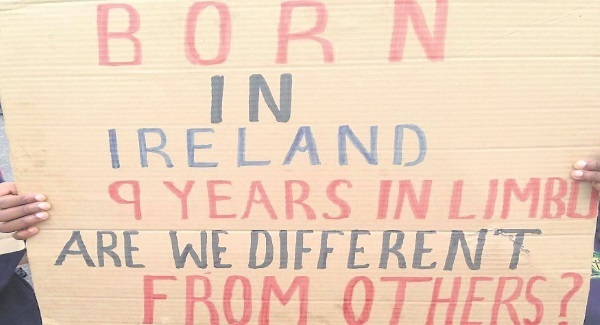
More than 1,300 children live in direct provision accommodation. Direct provision is no place for a child, yet too many children spend years of their childhood in this inappropriate accommodation.

There is no independent complaints mechanism for these children.

They experience high rates of poverty and also have a high referral rate for child protection and welfare concerns. We must end the system once and for all.

In the meantime, we must implement the recommendations of the working group on improvements to the protection process (McMahon Report).

Last week, we saw an increase of €6 to their weekly allowance, but this must be upped to the recommended €29.80 for children, at the very minimum.

We have the highest EU rate of youth suicide among girls and the second-highest rate among boys.

Yet, our mental health services are in crisis; 2,309 children are on a waiting list for an appointment, of whom 1,319 have been waiting for longer than three months, and 214 have been waiting for more than a year.

Also, over a quarter of children admitted to mental health facilities in 2015 were inappropriately admitted to adult in-patient units.

We need to see a commitment to address waiting lists, end the treatment of children in adult units, and establish an independent advocacy service for children experiencing mental health difficulties.

Some of these issues are more complex than others, but all are fixable. This is not the point, though.

The point is that the State has a duty to act. When they signed up to the UN Convention on the Rights of the Child — which, incidentally, is the world’s most widely accepted piece of international law — the Irish State made important promises, including to do all in its power to ensure children’s rights are respected, protected and fulfilled.

This is a permanent commitment with no opt-out clause. I am sure the UN will impress this truth upon Minister for Children and Youth Affairs James Reilly and his officials during today’s day-long hearing.

I, along with many others, will watch eagerly from the viewing gallery.

Filling the children’s rights gap is dependent on smart decisions and political will. It is possible, but, more than that, it must happen.

You can join the debate on Twitter #UNCRC.

Tanya Ward is chief executive of the Children’s Rights Alliance

More in this section

Revoiced

Newsletter

Sign up to the best reads of the week from irishexaminer.com selected just for you.

Cookie Policy Privacy Policy Brand Safety FAQ Help Contact Us Terms and Conditions

© Examiner Echo Group Limited