€5m Oireachtas banking inquiry a toothless farce that was always doomed to fail

CERTAINLY, there appears to be no bliss in this dawn for the beleaguered members of the €5m Oireachtas banking inquiry.
For all those in this country who value democracy, transparency and accountability, the inquiry was to be an important development.
Its job — to account for and explore why Ireland suffered the greatest financial crash in its history in 2008 — was of paramount importance in the context of the development of this State.
But, in truth, the inquiry has been doomed before it even began.
It has been dogged by criticism of being a toothless farce and has been likened to a eunuch, by one critic, given its very limited powers.
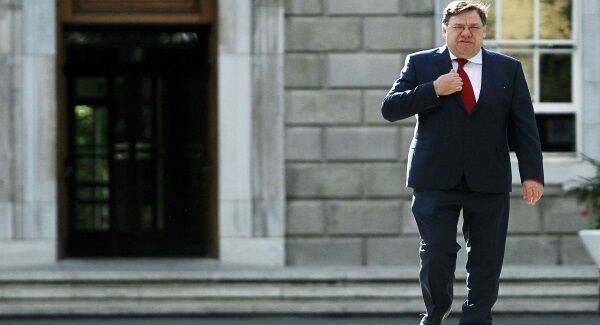
Typified by dull sessions, the absence of a smoking gun revelation and a failure to land any punches on key figures from the crash including former taoisigh Bertie Ahern or Brian Cowen, the inquiry has been a damp squib.
It was also precluded from fully examining one of the most crucial aspects of the economic crash — the demise of Anglo Irish Bank — because of ongoing litigation.
We are also hearing reports of the committee, which to date has worked on a consensus basis, now dividing along party political lines about what the final report should say.
Now, that it has concluded its public hearings and is moving to produce its final report, it has descended into complete chaos.
For weeks, inquiry staff members have been quietly working away on a draft report in the absence of the political members of the committee.
Last week, the politicians got their first sight of the 750-page report and quickly all hell broke lose.
“It was a real piece of shit, a piss poor report,” is how one inquiry member described the report last night.
“It seemed to miss crucial parts of evidence,” Senator Sean Barrett yesterday said when asked his feelings.
Overall, the draft report appeared to completely ignore detailed submissions from the 11 committee members.
It has also emerged that all is not well within the inquiry’s backroom team, with the environment and atmosphere being described as “toxic”.
Emergency meetings were held at the weekend in a bid to resolve the crisis, but now the very viability of the inquiry is in question. In an attempt to surmount the current difficulties, inquiry members Fine Gael TD Eoghan Murphy and Labour senator Susan O’Keeffe have been given the unenviable task of trying to redraft the report in its entirety.
Mr Murphy and Ms O’Keeffe are both determined to turn over every stone to give the inquiry of salvaging some of its credibility, which has been badly damaged this week.
Their desire to continue is partly driven by the political reality that the committee members will face the electorate in the coming months, an electorate who would want to see a report, given how much has been spent on it.
“The public would not forgive us if there was not a report,” Mr Barrett added yesterday. But the sad truth of the inquiry’s difficulties is that they have been well flagged.
Last December, as the public hearings got under way to much fanfare, the weaknesses of the inquiry’s powers emerged.
Internal documents from its advisers, legal and economic, contained a myriad of restrictions and limitations which have had the cumulative effect of rendering the ability of members to ask the kind of probing detailed questions required as non-existent.
Also, as it is a political inquiry and limited by the 2002 Abbeylara judgment by the Supreme Court, no adverse findings of fact could be made against any individual or any institution.
No individual officeholder from the time of the crisis and no bank can specifically be blamed for what happened.
So as a result, committee members themselves have felt the need to lower expectations as to what the Inquiry could achieve.
But, so far nobody has asked why has the inquiry hit the sand and who is to blame for it happening.
As chairman, Labour TD Ciarán Lynch must shoulder some of the blame for its current difficulties.
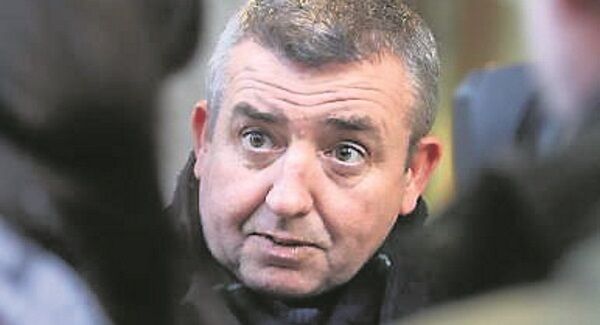
Surely, the problems with the report did not arise overnight and did Mr Lynch not know about them? Did he know and not do anything about them?
Either way, it is clear he has questions to answer.
But so do the inquiry’s investigations’ team and key secretariat.
If such problems existed over several weeks, as it has been suggested, then why were they not properly flagged?
Even if a report is eventually produced, it will disappoint, according to those most familiar with the process.
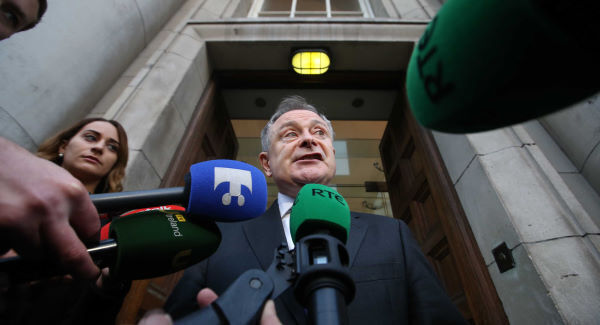
Comments in recent days from Public Expenditure Minister Brendan Howlin that it would not be a waste of money even if a final report is not delivered was revealing as to the real thinking in Government toward the inquiry.
They had hoped to use it to embarrass Fianna Fáil ahead of the general election by hanging the likes of Cowen and Ahern, but when that didn’t happen, the lust for that report visibly dissipated.
Ultimately, no matter what happens from here, the Irish people are going to be short-changed.
CONNECT WITH US TODAY



Be the first to know the latest news and updates