Ireland must face up to the inevitable threat of IS terrorism
Events in Paris over the weekend mark a paradigm shift in the capacity and intent of Islamic State terrorism.
In terms of capacity, there were key features to Friday’s attacks that mark them apart from previous IS operations. Unlike the Charlie Hebdo killings in January and the botched high-speed train attack in August, the perpetrators of the Bataclan Theatre massacre acted in a calm, methodical, and indiscriminate fashion.
They engaged in what the military term “deliberate” shooting. According to eyewitnesses, they covered one another as they reloaded their weapons repeatedly — and slaughtered their victims one by one, execution style.
The attackers attempted to inflict the highest number of casualties in the shortest period of time. They exploited the brief window of time before the beginning of their attack and the arrival of armed first responders.
The organisers knew how long it would take before gendarmerie or Police Nationale officers would arrive on the scene. They were working against the clock. This is a very important point to bear in mind when configuring our response to the newly emerging and existential threat posed by IS.

The attacks demonstrate a terrorist organisation that is directed from within Syria and which is evolving rapidly, in sophistication and capacity, to inflict large numbers of casualties within a short timeframe.
The ‘success’ of the Paris attacks will embolden IS to repeat the exercise and will encourage copycat assaults by ‘lone wolf’ attackers throughout the EU — including Ireland.
For the EU security and intelligence community, the suicidal propensity of radical Islamists means it is impossible to prevent all such attacks. Some plots may be thwarted, but others will inevitably succeed.
The emphasis will be on speed of reaction by armed units placed on permanent standby in all cities and towns across the EU.
There will also be an emphasis on training and rehearsing for such eventualities among emergency medical personnel and acute hospitals. In terrorist attacks such as these, it is essential that trauma victims are treated on site in the immediate aftermath in order to save lives in the so-called golden hour which is critical for patient survival.
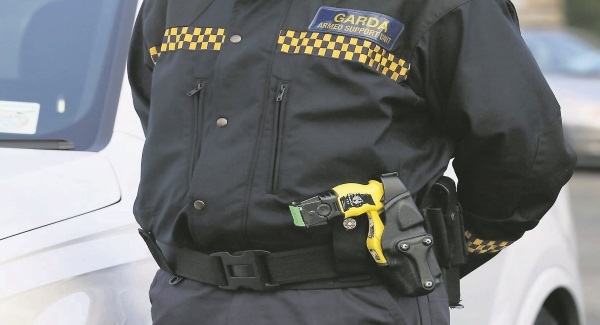
There has been no such ‘boots on the ground’ training among the critical stakeholders in Ireland for a number of years now. Armed gardaí (outside of the Emergency Response Unit) who would be first on the scene of such an incident, along with emergency clinicians and nurses, have not exercised together for such a scenario in recent years — unlike their counterparts across the EU.

IS has declared war on Europe and all western states. They do not discriminate between nationalities. Irish citizens have been murdered and injured in IS attacks already this year.
Our EU neighbours appreciate that IS has declared war on Europe — on our values and way of life. To this end, the EU has stepped up border and aviation security and is investing further in security services.
Our European partners are very concerned about the threat posed to internal security by EU passport holders who have travelled to Syria and Iraq to fight with IS and al Qaeda affiliates. Some 700 French citizens have carried out this so-called jihad. Several key suspects in the Paris attacks were veterans of the Syrian conflict. The remainder were radicalised young men with no previous criminal or intelligence profile.
Per head of population, Ireland has a similar participation rate in the conflicts in Syria and Iraq. The gardaí, justice minister, and the International Centre for the Study of Radicalisation in King’s College, London, estimate that more than 30 Irish passport holders have travelled to Syria to participate in combat there.
Human Rights Watch International and the UN have both stated that all parties to the conflict there are engaged in war crimes, including mass murder and rape. Ireland must prepare for the return of Irish citizens who have either witnessed or participated in such acts. They pose the same threat as their counterparts in France.
What makes Ireland different from our neighbours, however, is that we do not have sufficient resources to deal with the threat. After almost a decade of austerity and cuts to public services, the gardaí — the lead intelligence agency within the State — is not sufficiently resourced, trained, or equipped to deal with an attack such as that mounted in Paris on Friday.

The Government describes the probability of such an attack here as “low”. Justice Minister Frances Fitzgerald stated yesterday that the risk assessment remains “unchanged” after the Paris attacks.
The Government is out of step with the facts in this regard. While the possibility of such an attack remains low, it is, unfortunately, a distinct possibility. The Government’s failure to prepare and train for such an act of terrorism is a clear failure in its duty of care towards Irish citizens.
Ireland is Europe’s weakest link in security and intelligence terms. At the very least, we deserve to be as fully informed as our fellow EU citizens to the risks that confront us in this new phase of IS terrorism.