Why some thought it permissible to perpetrate the Paris attacks in God’s name
IN HIS 1990 book God and the Gun, Martin Dillon — who worked for the BBC in Northern Ireland for 18 years — tells of an encounter with a UDR man in the 1970s, during “the Troubles”, who admitted that he once “advocated beheading Catholics and impaling their heads on railings in the Protestant Shankhill area of Belfast”, telling his terrorist boss it was the “best means of terrorising the IRA”.
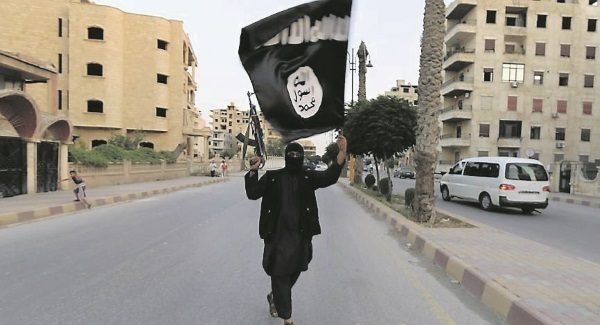
To a generation of readers brought up with headlines and news bulletins dominated by stories of beheadings, crucifixions, and mass rapes by jihadists associated with Islamic State (IS) in the Middle East, there will be something horribly and sickeningly familiar with this story from our own backyard here in Ireland.
At the very least it should prompt a reappraisal of some of the smug and cosy assumptions about “our” religion and its peace-loving nature, and maybe even some deeper thinking about religion in general. After all, Christians were fighting Christians in the North, and no doubt both sides confidently believed that God was on their side.
Little wonder that Dillon could write the following in the midst of the 30 years of civil strife: “Outside Ireland, many people see the conflict as a holy war, and with close examination of the character of the various causes, it is a view not without foundation.”
That religion from a Christian standpoint could provide the justification for violence may be a disputed thesis, though militant atheists like Richard Dawkins are convinced all religion is toxic.
In the Islamic world the matter is much more complex, and it is not possible to make a clear distinction between religion and violence. Violence has a very firm underpinning within the Islamic theological tradition.

And the hostility to democracy among many Muslims in the Middle East — puzzling to many in the West —stems from a recognition that one of the foundations of democracy is the separation between religion and the state. Islam admits of no such separation; religion is all-pervasive, so detaching violence from a religious justification becomes highly problematic in Islamic thinking.
In the bloody aftermath of the terrible attacks in Paris that left 129 people dead, and as the focus is again on IS and its murderous ideology, it is perhaps timely to turn to re-examining the links between religion and violence. Has modern society made a scapegoat of religion, or is there something in religion itself that breeds a natural propensity for violence?
When you have gunmen running into a concert hall, a sports stadium, bars and restaurants in Paris, shooting dead unarmed citizens of that city on a night out, while shouting “Allahu Akbar!” (God is great), then it will seem to a great many people that there is something incurably sick about religion when it leads to this kind of extreme and homicidal behaviour.
One counter-argument — a defence of mainstream Islam — was put forward by former British prime minister Tony Blair in a speech to the Bloomberg organisation in London in April 2014.
“Islamic extremism represents the biggest threat to global security in the 21st century,” he said.
“At the root of the crisis lies a radicalised and politicised view of Islam, an ideology that distorts and warps Islam’s true message. The threat of this radical Islam is not abating. It is growing. It is spreading across the world. An Islamic ideology that mixes politics and religion in such a deadly way must be confronted.”
The view that mainstream Islam is not tainted by such a deadly ideology found an echo elsewhere. In her book The Mighty & The Almighty, Madeleine Albright, former US secretary of state in the Clinton administration, said: “We should be encouraged that the nihilism that infects al Qaeda-style thinking is about as appealing — even to most Muslims — as dry rot”.
Can that be stated as confidently now, especially following the emergence of IS, as when Albright first wrote it back in 2006?
And then there is the other hugely significant factor in the spread of radical Islamism, a factor to which Albright and her successors in Washington DC continue to turn a blind eye: The role of the US’s most important Arab ally Saudi Arabia. It uses billions of its petrodollars to promote its brutal Wahhabi theology across the globe, a theology which sustains IS.
The rise of Islamic fundamentalism is usually traced back to the Iranian Revolution of 1978-9 from which Ayatollah Khomeini emerged as the supreme leader of the Islamic Republic. It has much older roots, however. And Saudi Arabia has long been the home of and breeding ground for one of the most fundamentalist, puritanical and radical strands of Islam — Wahhabism. Its founder was Muhamman ibn Abd al-Wahhab (1703-1792). “Wahhabism is the form of Islam that is still practised today in Saudi Arabia, a puritan religion based on a strictly literal interpretation of scripture and early Islamic tradition,” according to Karen Armstrong, author of Islam — A Short History.
A much less benign (and frightening) view of Wahhabism is to be found in God’s Terrorists: The Wahhabi Cult and the Hidden Roots of Modern Jihad by Charles Allen. But what if Islam itself is the problem, what if there is a predisposition toward intolerance and violence at the very core of this religion? This is very much the central thesis of Heretic: Why Islam Needs a Reformation Now, a recent book by Ayaan Hirsi Ali. In it she boldly challenges centuries of theological and political orthodoxy. At the very outset, she writes this sentence: “Let me make my point in the simplest possible terms: Islam is not a religion of peace”.
That assertion is boldly challenged by Karen Armstrong, a former Catholic nun, in her book Fields of Blood: Religion and the History of Violence. “In the West the idea that religion is inherently violent is now taken for granted and seems self-evident,” she writes. Armstrong, one of the foremost scholars of world religion, sets out to debunk what she calls “a persistent myth” — that religion has been the cause of all major wars in history.
That broad thesis may not withstand persistent scholarly analysis, but the narrower thesis — that religion provides no support whatever for a violent ideology — clearly doesn’t stand, as the bloody events in Paris on Friday have demonstrated with horrifying consequences. In his new book, The New Threat From Islamic Militancy, Jason Burke says that “despite huge expenditure of blood and treasure, and despite new laws and enhanced powers for security services, Islamic militancy has not been beaten”.
“Instead, a threat faced by the West for more than 20 years has entered an alarming new phase. If anything it appears more frightening than ever. Why? Why does Islamic extremism not only endure but seem to be spreading? Why does its violence and utopian message appeal to so many? How real is the danger it poses? Why is the phenomenon so extraordinarily resilient? How will it evolve in the decades to come?”
Much, very much, will depend on the answers to those questions. And, in the aftermath of Paris, the search for those answers will necessitate a far deeper exploration of the links between religion and violence. The most frightening and potentially destructive endorsement of all is to believe that you have God’s endorsement. This fuels the conviction that in God’s name anything is possible and anything is permissible. You just need the right belief, the right theology. For the religious extremist the bloodstained justification for the next atrocity is ready to hand: It predates the Crusades and the birth of Islam — “Deus vult!” (God wills it!).