A brief history of celebrity
WRITING in 1969, Harford Thomas, the then deputy editor of The Guardian, said that, as a term, “the permissive society” came into common usage in Britain in the late-1960s.
In the introduction to a book entitled The Permissive Society, he traced the emergence of the term, explaining that the phrase usefully summed up an episode in social history. From the perspective of the 21st century, we can see that this was a very significant episode indeed, a period whose ramifications are still very much with us.
“Its spontaneous emergence marked a real change in the social climate of Britain,” wrote Thomas. “The immediate origins of the permissive society can be found in the 1950s, which saw a gradual relaxation in standards of personal conduct and the erosion of conventional taboos on freedom of expression. The passing of the liberal Obscene Publications Act in 1959, and the publication of the unexpurgated edition of DH Lawrence’s Lady Chatterley’s Lover in 1960 are two key dates.”
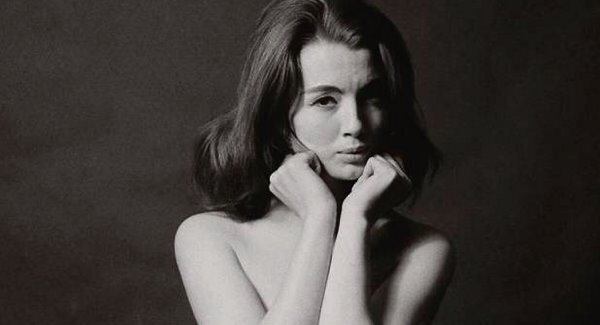
The Profumo Affair in 1963 was another key date. It began with rumours that John Profumo, secretary of state for war in the Macmillan government, was sexually involved with Christine Keeler, a young woman who worked as a topless showgirl in a cabaret club in London’s Soho. Soon Keeler was one of the most talked about women in Britain and beyond. When news of the affair eventually broke in June 1963, over in Washington DC, president John F Kennedy asked for all the English papers to be delivered to the Oval Office so that he could follow a scandal that would eventually bring down the Macmillan government, in the process ushering in a new era in journalistic sensationalism.
Profumo, who was married to the actress Valeria Hobson, became obsessed with Keeler when he saw her, at the age of 19, swimming naked in a pool in Cliveden, the posh country estate of Viscount Astor, whose family owned The Observer newspaper (his brother, David, was editor at the time). Keeler had been brought there by Stephen Ward, an osteopath who mixed with senior figures of the British Establishment. The problem for Profumo was that Keeler was also sleeping with Eugene Ivanov, a naval attaché at the Russian embassy in London, a convenient cover for a KGB agent.
This was at a time of Cold War paranoia. At that time, the Soviets were desperate for any information about US intentions in Europe, where the divided city of Berlin had become a hot spot for the two superpowers. So was Profumo, as minister for war, compromised? Was Keeler reporting the details of their pillow talk to Ivanov? Was there yet another Russian spy operating with impunity at the heart of the British Establishment?
With the investigative net closing, Profumo finally confessed to parliament that he had lied about his affair with Keeler and resigned. The social historian David Kynaston recalled the impact the “toffs and tarts” sensation had: “It certainly sold newspapers.” In her autobiography, Secrets and Lies, Keeler said: “I was a 24-hours-a-day attraction before they invented rolling news.”
It reminds us of Philip Larkin’s tongue-in-cheek claim in the opening lines of his poem ‘Annus Mirabilis’: “Sexual intercourse began In nineteen sixty-three (which was rather late for me) – Between the end of the ‘Chatterley’ ban And the Beatles’ first LP.”
Keeler’s name was to become as synonymous with the sixties’ sexual revolution as the pill. The usually staid Sunday Telegraph described her as “that icon of the ditzy sixties — a sultry brunette with wistful eyes and stunning legs, who raised the temperature”. The celebrity and the notoriety led to a 1989 film called Scandal, in which she was played by Joanne Whalley-Kilmer.
“It was the beginning of the separation of babies from sex,” said novelist Fay Weldon. “The pill made an enormous difference to women quite quickly, and Keeler, although she was naughty, became a sort of role model, so that you would have been quite pleased if she came to dinner, as long as she stayed away from your husband.”
Permissiveness, inevitably, had a lot to do with sex. “What has gone much deeper is the revolution brought about in sexual relations by the development of effective birth control, notably by the contraceptive pill,” concedes Harford Thomas.
Old taboos were disappearing. The breaking down of conventions, and the dissolution of widely accepted standards, the undermining of orthodox religion by science and secularism, spawned a new climate of opinion which, in its extreme form, as Thomas emphasised, “might be summed up in the words, ‘Anything goes’”. Sooner or later, this new climate of opinion, and the spread of permissiveness, would infect the media. In their book Stick It Up Your Punter! Peter Chippindale and Chris Horrie tell a story which social and political historians of the 20th century would not find easy to ignore, for to do so would be to ignore not just a media phenomenon but a socio-moral one as well.
This is the classic story of The Sun and tabloid culture, a story symptomatic of a seismic shift in what newspapers were about. In her 1997 book Bad Girls (a riveting study of the media, sex, and feminism in the nineties), Catharine Lumby seized on the extent of the cultural shift. “In the past decade,” she wrote, “every conceivable media format, from prime-time news bulletins and current affairs programs to traditional women’s magazines, seems to have developed a taste for the tabloid.” Admittedly hers is an Australian perspective, but she was merely latching on to something that started in Fleet Street and spread like swine flu.
The tabloid era was upon us, with sex at its core, and no other publication pushed this new agenda more brashly or provocatively than The Sun. “Sex soon crept on to the menu of every part of the paper,” according to the authors of Stick It Up Your Punter! — and the sports pages were no exception. “The sex obsession, combined with the early deadlines, gave new currency to what rivals had previously regarded as only a small part of the news agenda.” The most graphic and sensational illustration of this was the appearance of the Page 3 girl in The Sun, which had been purchased in November 1969 by Rupert Murdoch and relaunched as a tabloid.
“The regular topless Page 3 features started on the paper’s first anniversary in November 1970,” according to Chippindale and Horrie. In fact, on November 17, 1970, a 20-year-old model made tabloid history by posing in her “birthday suit” on Page 3, and her name was Stephanie Rahn. Things would never be the same.
It is perhaps worth noting, in passing, that while Page 3 was introduced by Larry Lamb, it was continued by his successors in the editor’s chair. And even when, in January 2003, Rebekah Wade succeeded David Yelland, becoming the first female editor of The Sun (and, at 34, the youngest editor of a national daily in these islands) she retained the Page 3 feature. Peter Preston, in a profile of her in The Observer, told readers she arrived “at her first editorial conference wearing an ‘I Love Page 3’ lapel button. The unnaturally pert Page 3 girl on the first day of her regime was ‘Rebekah, 22, from Wapping’.” Wapping, of course, is where Rupert Murdoch moved The Sun when he decided to abandon Fleet Street.
In August 2009, Wade was named chief executive of the UK division of News International. She was succeeded as Sun editor by Dominic Mohan.
The Page 3 feature stayed in place. It was only in January 2015 that a decision was taken (much to the surprise of some media analysts) to drop the Page 3 feature.
In its review of the first edition of the “new” tabloid Sun, The Times (then under the ownership of Lord Thompson) stated: “Mr Murdoch has not invented sex, but he does show a remarkable enthusiasm for its benefits to circulation.” That enthusiasm would prove catching. The distinctly downmarket trend, however, the increasing emphasis on sex, the readership “war” between the tabloids, and the mad scramble for circulation, would soon cause concerns about privacy, the limits of freedom of expression, and what could or could not be justified as being in the “public interest”.
Hand in hand with the growing sexualisation of the media, there emerged another cultural phenomenon — the rise and rise of “the celebrity”. And this too would bring in its wake fresh concerns and new socio-moral and socio-legal problems.
The birth of television, and especially the era of colour television, would be a central factor in the emergence of celebrity culture. Hollywood and its “star” system would play a huge part, of course, and this would be followed by the extraordinary success of TV soap operas on both sides of the Atlantic. There is a fair argument to be made that the media exploitation of “celebrity culture” really came into its own in the noughties. Marina Hyde, writing in The Guardian on October 17, 2009, certainly makes that case. “With the UK launch of Big Brother in 2000, and amplified by the talent show format and the Rise of Cowell, reality TV would define the noughties obsession with harvesting jerry-built celebrities, ersatz stars whose lack of savvy/ self-esteem/£400-an-hour lawyers made them the perfect fodder for a rapidly morphing news media, for whom showbiz ephemera was the tiger economy.”
More mainstream celebrities continued to make news by their extracurricular activities. Geri Halliwell of the Spice Girls became a goodwill ambassador for the UN, Sharon Stone was an honoured guest at the World Economic Forum, and Bono campaigned for an end to world hunger. This was all grist to the media mills, a fact no doubt of which the celebrities themselves or their PR agents were acutely aware.
“But you couldn’t keep the sub-lebrities down,” concluded Hyde. “Sex tapes became showreels, launching celebrities like the heiress Paris Hilton, who parlayed nightvision fellatio into a life of professional indolence so immensely lucrative that neologisms like celebutante could scare be coined to keep pace. By 2009, ‘celebrity’ was a definition so elastic that it included Rodney King and Sarah Palin’s daughter’s baby father.”
The extensive coverage given to the death of Jade Goody, who shot to fame and fortune on Big Brother, the death of Michael Jackson, and the death of Boyzone singer Stephen Gately, and that of Whitney Houston, were further proof of the media obsession with celebrity.
However, we mustn’t forget the downside. Marina Hyde’s comment is pertinent: “The concept of privacy was further eroded as evolving technology meant anyone with a digital camera could become a paparazzo or one of the new breed of videorazzi.” She could also have mentioned mobile phones with their inbuilt cameras, and the ease with which material can be posted online.
Here is an example. The following is the opening paragraph of an Associated Press report datelined Chicago, October 3, 2009: “A man accused of taping surreptitious nude videos of ESPN reporter Erin Andrews while she was alone in hotel rooms appeared in federal court Saturday and was ordered returned to California.”
The FBI said he faced federal charges of interstate stalking for taking the videos, trying to sell them to celebrity website TMZ and posting the videos online. Andrews, 31, and based in Atlanta, has covered hockey, college football, college basketball, and Major League Baseball for ESPN since 2004, often as a sideline reporter during games.
Agents said the videos posted online were taken through a modified door peephole while Andrews was alone and undressed in a hotel room in Nashville, Tennessee, in September 2008. They were recorded by means of a mobile phone camera.
In an interview with Oprah Winfrey, broadcast on September 11, 2009, Andrews said that having secretly videotaped nude footage of her distributed on the internet was a “nightmare”.
This is a shocking example of the way in which the concept of privacy has been eroded by evolving technology. That Andrews happens to be a television celebrity is beside the point.
In Britain matters came to a head with the News International phone- hacking scandal. Rupert Murdoch was forced to close the News of the World (it ceased publication on July 10, 2011), and Hugh Grant became a spokesperson for the Hacked Off group of campaigners for an accountable press. Throughout 2011 and 2012, a string of celebrities came before the Leveson inquiry (set up to examine the culture, practices, and ethics of the British press) to protest over violations of their privacy.
But just what is a “celebrity” anyway? Daniel Boorstin, author of The Image: A Guide to Pseudo-Events in America, and a respected commentator on popular culture, defined it thus: “The celebrity is a person who is known for his well-knownness.”
At first glance that may strike us as a bit glib. It applies, for example, to Daniel O’Donnell but also to Roy Keane, Terry Wogan, Barack Obama, George Clooney, and Pope Francis. It also applies to Miriam O’Callaghan and the Nolan sisters, but also to Rosanna Davison, Nadia Forde, Kate Moss, Barbra Streisand, and Oprah Winfrey.

It fits all of these people: Their well-knownness is there for all to see. But of course they are well-known for very different reasons.
What of Catherine Nevin, found guilty in April 2000 of the murder of her husband, or Radovan Karadzic, the Bosnian Serb ex-leader on trial in The Hague for genocide, or Peter Sutcliffe, the “Yorkshire Ripper”? Or what of OJ Simpson? After all, their well-knownness is there for all to see. OK, they are “celebrities” in the main for reasons of notoriety. Yet, as David Rolph, senior lecturer at the University of Sydney School of Law, has pointed out, “notoriety, a subspecies of celebrity, suggests that a bad reputation can in fact confer a positive benefit on its possessor”.
OJ Simpson is an interesting case study in this context. He was initially and genuinely famous and celebrated because he was one of the all-time greats of American football. Then, building on that fame, he went to Hollywood and landed some film roles. In 1994 it all went horribly wrong when he was charged with the murder of his ex-wife Nicole Brown Simpson and her friend Ronald Goldman. On January 25, 1995, the Simpson trial began, and, covered and televised by Court TV and in part by other cable and network news outlets, as well as newspapers, it became a media sensation. Simpson, who was acquitted in 1995 after the longest jury trial in California history, was still very much a “celebrity” — but now for very different reasons indeed.
What is central to any understanding of Simpson’s celebrity (in its two varieties), and the celebrity status of all the others mentioned above, is the role of the media.
Rolph, the author of a fascinating book entitled Reputation, Celebrity and Defamation Law, says that in order to properly and fully explain the emergence of celebrity, the “development and spread of mass media technologies and formats” must be considered a crucial and indispensable factor.
As his and subsequent scholarship on celebrity indicates, it is impossible to discuss celebrity — and, by extension, privacy and reputation — in contemporary society without reference to the formative role of the media. Not to be underestimated, though, is the public interest in celebrities and the public appetite for celebrity “news” and gossip. “We can map the precise moment a public figure becomes a celebrity,” writes Graham Turner in his book Understanding Celebrity. “It occurs at the point in which media interest in their activities is transferred from reporting on their public role (such as their specific achievement in politics or sport) to investigating the details of their private lives.”
That transference on the part of the media has a very real commercial motivation — the recognition that “celebrity news” is a tradeable commodity. Catharine Lumby, a journalist with the Murdoch-owned paper The Australian, came up with a pithy, if somewhat naughty description of this tradeable commodity: “The news without underpants.”