Greek deal: Coup used financial system instead of tanks
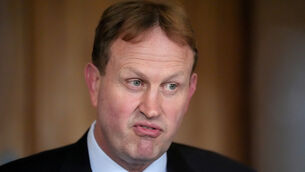
A united Europe is dead, buried in the rubble of the economic war unleashed against the people in the peripheral countries that were bailed out by the troika, writes Rory Hearne

Greek deal: Coup used financial system instead of tanks

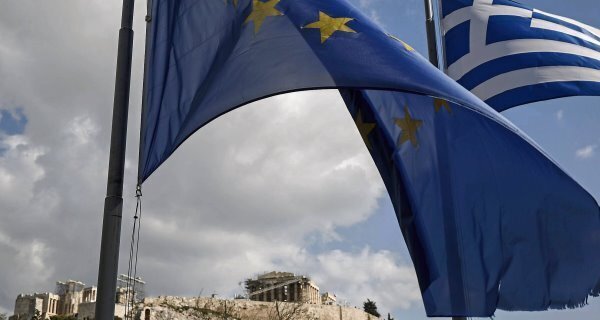
THE ideal of a united Europe providing a global beacon of peace, democracy, and sustainable growth is dead.

It is buried in the rubble of the economic war unleashed against the people in the peripheral countries bailed out by the troika: Greece, Ireland, Cyprus, and Portugal.

The EU institutions, ECB, and core Eurogroup countries, led by Germany, have forced these countries to disproportionately pay for a crisis caused by the design of the euro currency and failures of these very institutions.

The Europe of solidarity, human rights, and social inclusion has been replaced with institutions and politics that look more like those of past empires and colonial powers.

What is going on now is a form of economic war and coup d’état against a democratically elected government of an EU member state. The parallels with recent and past historic catastrophic events should not be ignored.

The newly proposed bailout agreement, as with most of the discussion about the Greek crisis, has narrowly focused on the various draconian reforms the Greek government must impose on their people.

The agreement leaves the fundamental problems at the heart of the euro that caused the crisis unchanged. The euro encouraged huge lending and investment from Germany and other core countries to the periphery in search of profitable return.

This inflated the peripheral booms and intensified the crisis. It also enshrined the underdeveloped nature of the economy of peripheral countries as their income was used to increase imports from the core countries like Germany.

Yet it is the periphery which has taken all the blame and the pain. The role of the euro received little mention in this new agreement aside from a vague reference to debt relief ‘down the road’.

We have seen in Ireland that such promises on debt relief can remain unfulfilled.

Thus, this new “aGreeKment” will not work. It will result in further and deeper recession in Greece as austerity measures dampen any possibilities of growth. The debt crisis is only postponed and will spiral. There will be horrendous immiserisation and impoverishment of ordinary Greek people. This is a deal that everyone knows will fail.

Yet there were many alternative solutions. The debt crisis of the periphery could have been addressed through the ECB playing a role in writing down debt and in providing funding to new state development banks in the periphery priming economic growth.

This would have been more effective than pumping trillions through quantitative easing that has mainly benefited financial markets and the commercial banks. And we must remember that fiscal austerity and deficit targets are political choices, not economic laws of nature.

The European debt and deficit budgetary rules have already been broken by Germany and France. Greece could have been given much greater leeway and time to meet its deficit targets which would have necessitated less austerity.

It is clear, therefore, that an agreement was not about finding a sustainable solution to Greece’s problems but at protecting the governing parties of the core countries and institutions of the eurozone from political contagion.

Thinking about it, Greece is to Merkel and the conservative governments in Europe what the coal miners were to Margaret Thatcher.

Thatcher was determined to defeat the miners in order to instill fear in the rest of the trade union movement and remove any support for an alternative to her plans for implementing privatisation and financial capitalism.

In the same way it is hoped by the European elite that by defeating and humiliating Greece they will quench the support for left and anti-austerity alternatives that is growing in Spain, Ireland, Italy, France, Portugal, and even in Germany. And just as Thatcher was acting not just for her own political party but also for the wider system of neoliberal capitalism, so too Merkel et al are disciplining Greece in order to save not just the future of their own parties, but also the current global financial system of capitalism of which the eurozone plays a key role.

Indeed, the current approach to the crisis mostly protects the large financial wealth and asset management firms and billionaire bondholders. The quip that George Bush’s cabinet was “government by Goldman Sachs” could be transferred to today’s European equivalent as it seems the financial system has taken over the institutions.

But the new political forces on the left and gaining support from their criticism of this model and its associated austerity, slow economic growth, climate change, and growing inequality. They propose greater financial regulation and taxation of corporations and wealth.

This explains why Syriza and the Greek people are being defeated and humiliated. This is not just about Greece. It is about the exertion of the power of the global and European financial system to remove a threat to their order which is already facing challenges from Left governments in Latin America.

Just as the IMF and US overthrew various left governments in the 1970s and 1980s so today we have in Europe a coup d’etat without the tanks — using the financial system instead.

The European project appears to be returning to its colonial past but only this time its army and colonial administrators are the European institutions. And just as colonialism was justified by the construction of the indigenous of the colonies as a ‘lesser’ people so too the Greeks have become the ‘lesser other’ in their portrayal as lazy, corrupt and insolent.

The other context is that if the euro is going to survive it needs deeper political and economic harmonisation. So this deal says to the people and governments of the other 18 eurozone countries — accept further reductions in national sovereignty or else take the Greek medicine.

So we are left with the conclusion that democracy and the current European order are no longer compatible. No more do democratically elected governments have the ability to pursue alternative economic and political ideas as mandated by their people.

The Greek people in their election of Syriza and in voting no to their referendum demonstrated genuine democracy in action but through that very act they openly challenged the new Empire of Europe and are now paying the price.

This is a dark, dark, period in Europe’s history. Our leaders and institutions are walking us down a dangerous road with many possible consequences resulting from the humiliation and debt enslavement of the Greek people.

The only glimmer of hope came this weekend from hundreds of thousands of ordinary Europeans who stepped in where their leaders did not when they made #ThisIsACoup the second top trending hashtag on Twitter worldwide on Sunday night.

So perhaps a Europe of solidarity might emerge from outside the institutions.

Rory Hearne is a lecturer in the department of geography at Maynooth University

x

More in this section

Revoiced

Newsletter

Sign up to the best reads of the week from irishexaminer.com selected just for you.

Cookie Policy Privacy Policy Brand Safety FAQ Help Contact Us Terms and Conditions

© Examiner Echo Group Limited