Remembering the fall of Saigon 40 years on
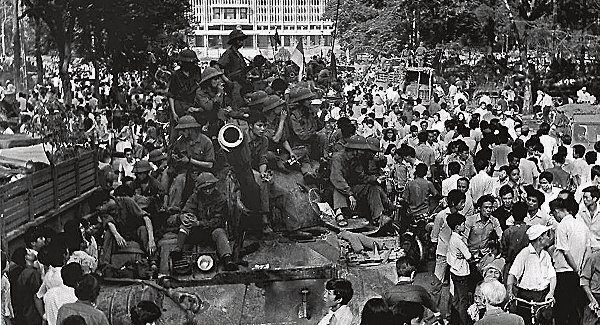
On April 30, 1975, North Vietnamese forces marched into Saigon, the then-capital of South Vietnam, and raised the Flag of the National Liberation Front, bringing to a close more than 15 years of conflict with the United States.
Some 40 years later, Vietnam remembers the day the war ended.
Nowadays, there are many different names for this pivotal event in Vietnamese history. In western circles, it is known as the Fall of Saigon and conjures images of refugees running alongside departing helicopters in the hopes of being evacuated.
Meanwhile, supporters of the south and dissident expatriates call it Black April, and reflect on it as the day that they lost their nation forever. But the majority of Vietnamese people celebrate it simply as Reunification Day – the day that Vietnam finally became one.
DISCOVER MORE CONTENT LIKE THIS
Vinh Dao Ngoc, a veteran of the war, can still recall the days leading up to the liberation of Saigon.
“Actually, there was a good feeling from the beginning of April 1975 as we all believed that the Spring Offensive would be successful,” he says at his home, 30km from Hanoi.
“People were excited to build a new life in freedom.”
Vinh Dao Ngoc was only 23 then, but he had already been a member of the People’s Army of Vietnam for almost four years. He left his home and family to join the war effort and was part of that year’s march south that saw the North Vietnamese forces recapture many territories, including the coastal cities of Hue and Da Nang.
They reached the outskirts of Saigon in early April and encountered fierce opposition and heavy losses at Xuân Loc, but the fighting stopped just short of the city’s limits.
Over the next few days, the army began to encircle Saigon and soon had 100,000 soldiers in position and ready to attack.
“It was 9am on April 30th when General Tran Van Tra ordered the troops to enter Saigon,” Vinh recalls, casting his mind back to that day. “We were surprised by how little resistance there was.”
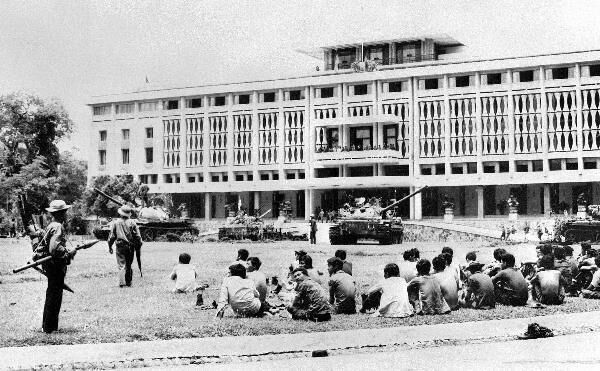
Saigon up until this point had been relatively peaceful and left more-or-less unscathed by the terrible warfare and bombing campaigns that had devastated much of the rest of the country.
However, people had been quietly leaving since March amid rumblings from the north and fears of bloody reprisals should the forces breach the city’s lines of defence. Now, as word began to spread that the city was soon to come under attack, panic set in.
Flights out of the country were fully booked and the price for sea vessels more than tripled.
The US began measures to airlift their own citizens to safety and US President Gerald Ford introduced Operation New Life to help with evacuation of South Vietnamese refugees.
As the soldiers moved in, and it became clear that there was no chance of victory, the president of South Vietnam, Duong Van Minh, ordered his men to lay down their weapons.
“At around 11.30am, one tank from the North of Vietnam entered the sub-gate of Independence Palace and butted the gate. The group leader — Bui Quang Than — jumped out of a tank, took a flag and ran into the Independence Palace.
“At the same time, another tank which was led by Senior Lieutenant Vu Dang Toan smashed down the main gate of the Independence Palace.
Colonel Bui Quang Than took down the flag of the Army of the Republic of Vietnam and hung the flag of National Liberation Front of South Vietnam instead. President Duong Van Minh announced unconditional surrender.”
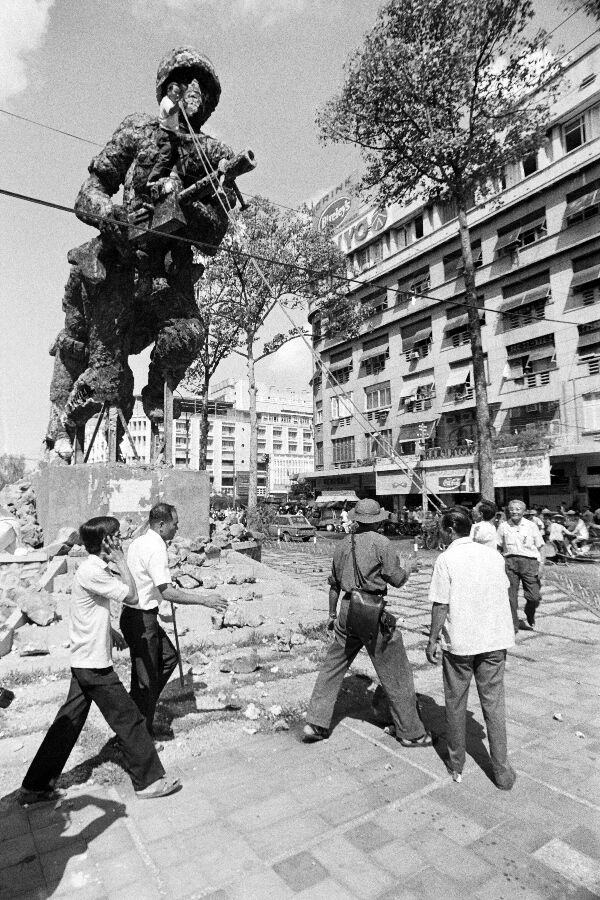
Vietnam had been at war with the United States for well over 10 years at that point, though acts of aggression can be traced back as far as 1955. Vietnamese casualties during this time are still debated with estimates varying wildly.
Some studies place the losses at around 2.1 million, while others suggest it might have been as high as 3.5 million. Prior to this, Vietnam had been embroiled in the first Indochina War with its previous occupiers, France. Many Vietnamese people had never known a time when war had not been a part of life.
“Late in the afternoon, President Duong Van Minh took to the radio station and announced the dissolution of the South Vietnamese government via radio. South Vietnam was wholly under the control of North Vietnam who then announced the creation of a united Vietnam. Saigon was re-named Ho Chi Minh City.”
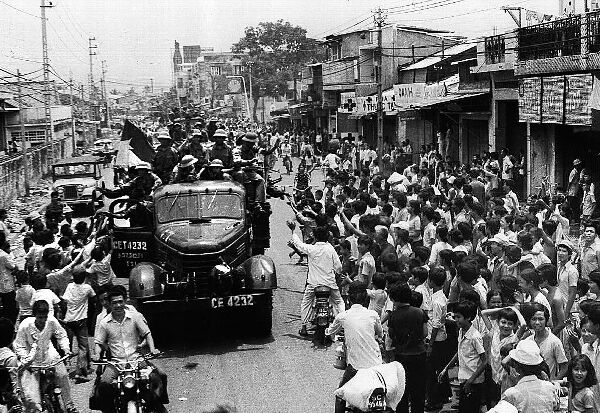
Vinh smiles as he recalls the celebrations that took place that afternoon: “After the surrender, a programme of music was broadcast on the radio. Thousands of people went down to the streets where they danced and sang the songs of liberty.”
They waved their flags at the soldiers and hugged them. They all held banners or flags, went to the Independence Palace and shouted “Saigon is freed!” all together at once” Vietnam was at peace, at least for a short time.
Conflicts with neighbouring Cambodia, who had just recently fallen under the influence of Pol Pot’s Khmer Rouge, and the 1979 border war with China were just around the corner, but for then, they were happy and allowed to dream of a future away from the hardships and troubles that had become commonplace over the previous decades.
Vinh, now 66, lives a quiet life and enjoys spending time with his grandchildren. He says that he is proud of his time spent serving in the army and he believes that life improved considerably for normal people following the reunification of Vietnam.
“After the Independence was set, although we had lots of difficulty, people’s lives were much better. The North and the South became one. Education, recreation, food, employment, industry and agriculture were improved. Traffic was easier.
“People’s lives were still hard but we all felt good to have a brighter life where we had independence, freedom and happiness.”
DISCOVER MORE CONTENT LIKE THIS

CONNECT WITH US TODAY



Be the first to know the latest news and updates