COMMENT: Public pay restoration may come from reduced pension levy
As Niall Shanahan of the country’s largest solely public service union, Impact, pointed out: “With modest pay recovery beginning to take hold in parts of the private sector, and with up to 57% of employers expecting to make similar pay improvements this year, it makes sense for the public sector to keep in step with these developments. The spring statement should give a clearer picture of where we can go from here in that regard.”
So what do unions want? First and foremost they expect Public Service Reform Minister Brendan Howlin to deliver on his promise of an “orderly” unwinding of the emergency legislation which has seen their members’ pay cut by 14%.
Tom Geraghty said the public services committee of the Irish Congress of Trade Unions has met with all of the unions and there is a consensus that it is feasible to start with some sort of flat-rate increase and that it should be targeted at reducing the pension levy.
He said by how much and how quickly has not been established yet but would emerge in any talks. However, said that a report of a 2% increase over the weekend was “speculative” and that nobody had mentioned any figures on either side.
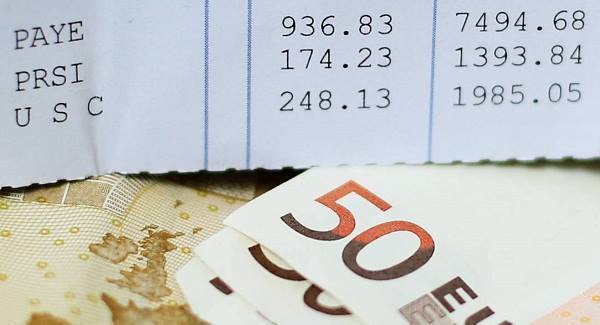
“We would prefer to start with the pension levy because it creates all sorts of anomalies,” he said. “People have to pay USC on the pension levy even though they are not getting any income so the net value of decrease in the pension levy is greater.”
Impact general secretary Shay Cody has said it should be technically possible to start unwinding the emergency FEMPI Acts “from the bottom up which would generate pretty much the same cash amount for everybody”. “On this occasion, in theory, it is doable and I think we need to have a consensus as far as we can across the trade unions that we should go after that,” he said.
A cut in the levy would also be more attractive to the Government — while the worker would benefit, there would be no actual increase in the pay bill.
Unions are unequivocal that, while they are continuing to meet productivity targets set during the recent public service agreements, they will not give any concessions on terms and conditions in order to gain some restoration of their pay.
“If there is any attempt to change conditions of employment (in the upcoming talks with Government), I think we are in trouble,” said Mr Geraghty.
Away from the remuneration for public servants, Siptu president, Jack O’Connor, has called for public spending to be prioritised over tax cuts on a ratio of a minimum of 2:1 as resources become available.
He said public infrastructure has been severely damaged by six years of “one-sided” austerity with about €30bn taken out of the State’s budget in an effort to cut the gap between revenue and spending.
He told his union’s recent education sector AGM: “It is now critically important that we embark on a major investment programme to rebuild our public health, education and local authority services. Simultaneously, the State’s current capacity to borrow at near negative rates offers a unique opportunity to accelerate the public housing programme.”