Independents Day: New groupings to thrive after election
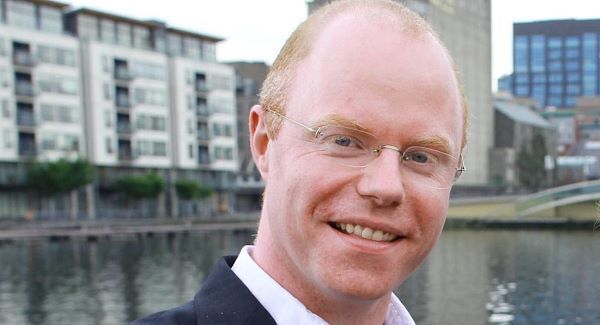
TDs such as Stephen Donnelly and groups like People Before Profit look set for roles in any new government, writes Adrian Kavanagh

Independents Day: New groupings to thrive after election

THE results of May’s local and European election contests, added to a series of strong results in recent opinion polls, suggest that independents will form a very significant grouping in the Dáil after the next general election.

An analysis of recent opinion polls suggest that independents and other groupings could account for more than 30 Dáil seats after this contest.

Indeed, an analysis of the November 22 Sunday Business Post-Red C poll predicted that this grouping would win 45 Dáil seats based on the support level estimates contained in that.

This poll estimated national support levels for this grouping as standing at 27%, well ahead of Fine Gael (22%), Sinn Féin (22%), Fianna Fáil (18%), and Labour (8%).

But seat volumes for independents are notably harder to predict than those for the larger political parties. First of all, opinion polls usually measure support for independents and others and not just independent candidates.

A number of smaller parties and alliances, including the Socialist Party and People Before Profit Alliance — as well as the Green Party on some occasions — are included within this very large and diverse grouping.

The nature of this grouping means that support levels do not usually translate as neatly into seat gains as would be the case with parties such as Fianna Fáil and Fine Gael.

Vote transfer levels across this grouping will generally not prove to be as strong as the extent of intra-party vote transfer levels enjoyed by the larger political parties, who in turn often enjoy a “seat bonus” at most general election contests.

Votes for independents located in the centre-right of the political spectrum (such as the Fianna Fáil or Fine Gael “gene pool” independents or people such as Shane Ross and Stephen Donnelly) are probably more likely to be transferred to the two main parties (or else be shaped by local candidate factors) than they are to go to left-leaning independent candidates.

In a similar vein, these centre-right independents are probably less likely to draw large numbers of vote transfers from left-wing independents than are candidates from Sinn Féin, the People Before Profit Alliance, or Socialist Party.

Furthermore, votes won by independents and other groupings tend to be shared across a larger number of candidates than would be the case with the larger political parties, with a significant number of these candidates also having little or no chance of winning seats.

For instance, candidates from the independents and others groupings won 20.4% of the vote in Laois-Offaly at the 2011 general election, but, with this constituency being contested by 11 candidates from this grouping, none of these went on to win a seat here. (By contrast, Sinn Féin’s Brian Stanley won a seat there with 10.8% of the vote.)

At this year’s local elections, 583 independent candidates and 139 candidates from the “others” (smaller parties/alliances) grouping combined to win 26.6% of the national vote, emerging as the largest political grouping in terms of vote share.

But, with this vote being divided up between a much larger number of candidates than Fine Gael (468) and especially Fianna Fáil (415), this grouping accounted for a smaller number of council seats (225) than the number won by Fianna Fáil (267) or Fine Gael (235).

The main issue when it comes to sustaining current support levels for the independents and others into the next general election relates to how the electorate tends to become increasingly focused on the composition of the next government in the months leading up to this contest.

The precedent in recent electoral contests shows that significant changes in public opinion can occur in the run-up to a general election.

In the past, such changing support trends have often seen this grouping becoming increasingly marginalised, or “squeezed out”, the closer one gets to polling day, especially when election contests are perceived to be close, as was the case with the 2007 general election.

However, independents and others could be in a position to play a significant role within the next government. Falling into this category on the left of the political spectrum would be the Socialist Party/Anti-Austerity Alliance and People Before Profit Alliance, as well as the Independents Network grouping.

Scope for potential alliances on the opposite side of the political spectrum is offered by the Reform Alliance grouping and a proposed new alliance of independents, potentially involving people such as Ross and Donnelly.

If these groupings can portray themselves as potentially strong actors within the next government, then they are less like to get “squeezed out” in the run up to the next election.

More in this section

Revoiced

Newsletter

Sign up to the best reads of the week from irishexaminer.com selected just for you.

Cookie Policy Privacy Policy Brand Safety FAQ Help Contact Us Terms and Conditions

© Examiner Echo Group Limited