Feeding the frenzy of the Chinese market
IRISH food and drink exports to China have trebled in just three years and were worth well over €400m last year.
China, with a population of 1.3bn people, is the largest and most populous economy in the world, and is now the sixth largest market for Irish food and drink exports and our second largest market for dairy products.
The latest progress report on the Food Harvest 2020 targets outlines that while Britain is still the largest export market for Irish agri-food exports, at 42%, other markets are increasingly emerging.
After Britain, the EU accounts for 32% of food and drink exports, with France, Germany, and the Netherlands the biggest performers.
However, the report points out that the greatest percentage gains have been shown in international markets which have grown from 20% to 26%. The US is now the sixth biggest export market for Irish food and drink.
Asia has shown the greatest growth but the Middle East and Africa, at 4% and 6% of total exports, respectively, are also showing promise.
However, the growth of China as a market is particularly strong. The report notes that exports to China have increased significantly in the last two years — from €254m to €415m last year. They stood at just €80m in 2008. This makes China our sixth largest market overall for agri-food exports, and our second largest market for dairy products, of which infant formula sales are a major component. The report also notes that strong growth has been achieved for pork and seafood exports.
“The scale of potential opportunities is huge but the complexities of that market, the distances and difficulties involved in servicing it, should not be underestimated,” the report states. “A primary requirement is that companies realise that a long-term approach is needed.”
The report stresses the need for Irish companies to build a strong network of contacts, select the right partner, and tailor the product to meet cultural differences. It acknowledges that this will take time.
The report sounds a note of caution, warning that the importance of the British market “should not be underestimated”.
“We are uniquely positioned to capitalise on the fact that the UK does not produce enough food to meet its own need and that this deficit will grow, if as projected, its population increases by 10m in the next 25 years,” says the report.
Commenting on the growth in international markets for Irish food and drink produce, Agriculture Minister Simon Coveney said huge work was being done by stakeholders to grow these markets every year.
“I have strong personal experience of the impact which trade and investment missions make in extending market reach and in marketing Ireland as a responsive, sustainable producer of quality food products which appeal to consumers,” said Mr Coveney.
Overall infant formula sales accounted for around 26% of total value of Irish dairy exports last year.
In the case of China, however, they constitute a far higher proportion at almost 80% of sales and have been steadily growing over the past five years.
This expansion has resulted from continuous and strenuous efforts over a decade to build strong relationships at company and government level with leading dairy and infant formula companies in China.
The growth which has been achieved is significant, as European suppliers face competitive challenges entering this market due to distance, costs, regulatory constraints, differing consumer requirements, as well as existing bilateral agreements with advantageous tariff terms for nearer suppliers.
Inspiring confidence in food safety is seen as critical for all trade in food products but particularly so for infant formula.
Following on past experiences, more stringent food safety regulations and registrations were imposed in 2014 on food imports by the Chinese Certification and Accreditation Authority.
This involved an inspection audit of all Irish infant formula exporting plants prior to registration. Ireland achieved 100% compliance with these requirements, which was a positive signal to other key dairy markets as the overall number of international infant formula companies which received certification by the Chinese was reduced from 133 to 82.
Government relationships have played a key role in securing trade links with China. Visits headed by Taoiseach Enda Kenny and senior ministers have already resulted in memoranda of agreement — the first step in commercialising relationships.
Enterprise Ireland has also been building strategic relationships between leading Chinese dairy and infant formula companies and Irish processors.
Ireland’s dairy companies have built on these links and many of our major companies now have a presence in China and are developing strong business relationships with key Chinese players.
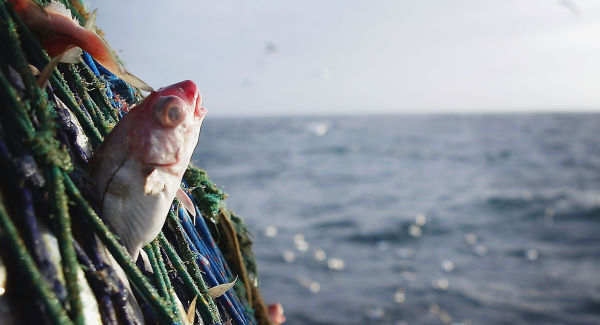
Overall seafood exports to China have risen from €3.3m in 2009/10 to €16.3m last year.
However, Irish seafood companies are small global players and, individually, they do not have the necessary scale, capacity, or expertise to successfully target the Chinese market.
So, assisted by BIM, four Irish seafood companies took a more collaborative approach, pooled their resources, and in 2012 launched a joint venture company Ocean Jade, in Shanghai, to be run as a separate venture to their Irish operations.
Their combined resources offered a wider portfolio of products, provided one focal point of contact for importers and retailers, and allowed them to place an agent on the ground in Shanghai.
Their aim was to service both the food service and retail market with a range of quality seafish and shellfish products which, in time, could position Irish seafood as a leading premium brand.
Ocean Jade used the Bord Bia hub in Shanghai to help establish a presence in China and it found that Bord Bia’s contacts helped them identify channels for business and key domestic players.
The extensive market research already undertaken guided their investment in specific market development such as recipe development and packaging to match local tastes.
Since its launch, Ocean Jade has developed strong, long-term relationships with importers in Shanghai and Beijing, and has participated in the China Fisheries and Seafood Expo.
As a result, it now supplies Spar Beijing and has achieved a 74% value increase in exports to the Chinese market.
As the world’s largest consumer of pigmeat, but also the largest producer, Chinese annual import requirements can vary significantly depending on domestic production.
Import levels are also affected by the strategic focus of the Chinese government to maintain the price of its primary protein source at affordable levels.
The underlying trend, however, is upwards, due to increasing affluence and population growth.
Irish processors have targeted this major market using domestic pork processors.
They sell their product to large Chinese domestic pork processors who incorporate these cuts into their own products.
These are then sold on to Chinese retail outlets or, in some cases, re-exported to Japan, Korea, and other Asian markets. This provides a sustainable route to market, as no branding is required, Chinese processors enjoy easier access to these and other Asian markets, and are competitive due to their lower labour and energy costs.
Irish pigmeat exports to China have grown remarkably in volume terms, with the 2013 tonnage achieving nine times the level recorded in 2008.
There are six main companies and a larger number of secondary processors involved in this success.
Key to their achievements has been a presence in China to manage the business on a day-to-day basis, travel to meet customers and build a rapport, and the requisite level of trust with clients.
Also critical is a competitive pricing structure and, specifically, an adequate number of approved and responsive production facilities in Ireland which effectively adjusts the specification of the product supplied to align with the needs of the customer.
Contact with Chinese business is also facilitated through Government and State agency support, including Bord Bia’s engagement with the China Meat Association and company participation at trade events such as SIAL China and the China International Meat Industry Exhibition.

CONNECT WITH US TODAY



Be the first to know the latest news and updates