Answers worthy of ‘Yes Minister’ as efforts to get at the truth fail miserably
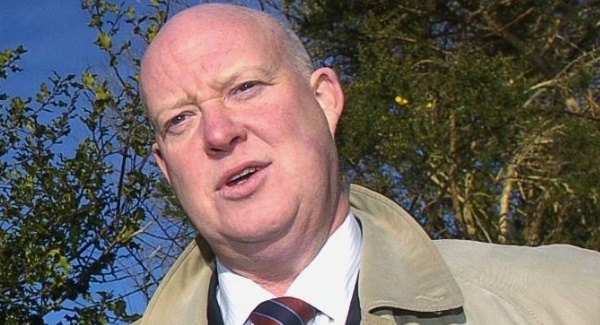
It’s the question that is refusing to go away: what happened on that mysterious March evening when the Taoiseach dispatched a high-ranking civil servant to the home of Martin Callinan, before his shock resignation as Garda Commissioner the next morning.
But when the chairman of the Oireachtas Justice Committee posed the question yesterday the response he got would — in the words of Independent TD , Finian McGrath — have “won an award for Yes Minister.”
Appearing in Leinster House committee room two, Brian Purcell, the secretary general of the Department of Justice — who was sent to deliver Enda Kenny’s message — said he was “anxious to assist the committee in any way”.
But this did not extend to answering the crucial question Paddy wants the answer to.
He was, he told them “precluded” from discussing “certain matters” which are included in the terms of reference of the Fennelly Inquiry until the “appropriate time” when its’ work is complete — or “in three years’ time so” as committee members muttered.
Far from trying to obstruct the committee’s work, Mr Purcell was worried that answering questions on the matter might get in the way of the truth being revealed.
The committee’s work, he said, cannot be used to “undermine or prejudice” the work of the inquiry, which, after all, was tasked by the Oireachtas to examine the matter. “I am deeply concerned that my giving evidence might prejudice the work of that commission,” he said.
To which the chair, David Stanton (Fine Gael) responded: “The truth cannot change if it is the truth.”
Mr Purcell explained it would be “reasonable to assume” that the inquiry “in trying to establish the veracity or truth would like to get the account of what happens from people independently.”
It would not be right, he said “for some person — me — to be putting information into the public domain which could be used by others in the preparation of their evidence to the inquiry.”
So they had to go about it in other ways. Would it be usual for him to meet the Garda Commissioner outside working hours? Yes. Where? Usually in his office or Garda headquarters.
Would it be usual for him to call out to the commissioner’s home? “There is only so far I am going to be able to go with this line of questioning, even hypothetically, and I need to state that now,” he stated. “But I wouldn’t turn up, unannounced, at anybody’s door.”
He then read a script for 10 minutes on matters relating to the Guerin report on garda malpractice before committee members finally got fed up.
“Talking down the clock, is it? Costing the taxpayers of this country more money” said Finian McGrath. “This is farcical, absolutely farcical,” said Sinn Féin’s Padraig Mac Lochlainn.
“Do you think the position you have taken today amounts to an obstruction of the work of the Oireachtas and this committee? asked Fianna Fáil’s Niall Collins.
Deputy Mac Lochlainn then pointed out what he said was a contradiction in Mr Purcell’s approach.
“Your written statement, your detailed rebuttal of findings of the Guerin Report that lead to the resignation of a minister, in advance of a commission of investigation on that matter — is that consistent with your assertion that you cannot comment on dealings with the commissioner?” he asked.
“In a sense you are trying to say: ‘Ha! — you answered questions on Guerin but won’t answer questions in relation to Fennelly’. You are trying to use the fact that I have been as open as I can in dealing with the questions against me,” Mr Purcell replied.
Deputy Collins asked if he would have a problem if he had to come back into the committee with the Taoiseach and his secretary general, Martin Fraser, as well as former justice minister, Alan Shatter, and ex-Commissioner, Mr Callinan to clear up what went on.
That’s something that’s not likely to happen. And instead we’ll have to wait for a long, drawn-out inquiry with an undetermined ending to find out if — as claimed — the Taoiseach found ways around the legislation to sack the commissioner for political purposes.
CONNECT WITH US TODAY



Be the first to know the latest news and updates