Tá language barrier agam
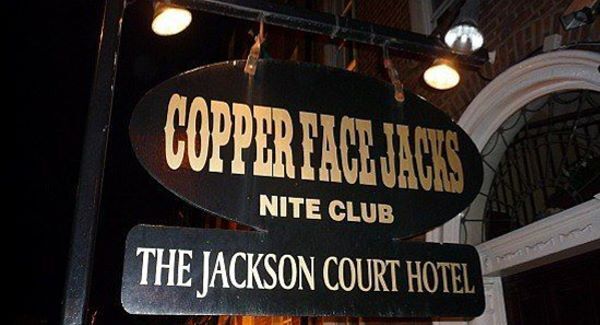

The modern bastion of Irish culture, Copperface Jacks — with its ersatz culchieness worn like a souvenir scarf by the Dubs — was yet to open. I was headed somewhere different, to an underground club.
A place where people could feel comfortable doing something that might be seen as a bit deviant if done in broad daylight: Club Conradh na Ghaeilge, where you could hear someone openly speaking Irish.
History had come full circle. One hundred and ten years previously my grandfather was arrested for illegally painting shop-signs in Irish while working as a timthire (travelling teacher) for the Gaelic League. Now here I was, risking arrest for the crimes I was committing against the Irish language.
I was doing my first stand-up comedy show ‘as Gaeilge’. Kevin McAleer has done it quite recently. Des Bishop learned it from scratch. There were probably great gigs attended by Fionn MacCumhaill and the Fianna; probably until one joke was deemed offensive sparking the usual Fenian sequence of events that ended with someone being wounded by a wild boar.
But this was my time. “Bfhuil moran cleachtadh deanta agat?” asked someone (“Have you much practice done?”) I was about to reply breezily that I would wing it, but not able to find the Irish for “wing it” the sentence was fatally winged and died in my mouth.
However in the preamble to the show, by talking to people around me, bits of Irish started coming back and I felt more confident that it would not be the unmitigated disaster it looked on paper.
I started well enough. As this was the first time speaking for this length of time since my Irish Oral, my early material was primarily focused on my hobbies and the problem of drugs in our society today.
Then I started to run aground. The chief problem with picking up Irish again is not necessarily the nouns. Gaelgóirs throw in English equivalents for nouns all the time. It’s not knowing the ‘cement’ words that hold the conversation together that can leave one up on blocks.
The audience was as encouraging as parents watching a child take their first steps — albeit a child taking his first steps while swearing in frustration”.
I received a round of applause for correctly aspirating a word that followed a 3rd person pronoun. It wasn’t ironic applause. The audience were generally delighted. You see, there were times when I think my Irish actually hurt them.
The topics I tackle are mostly fairly safe — surprising I know, given my edgy work on the books of Irish Mammies — but when I translated “her ancestors” as a h-ancestrí, there was an audible, almost involuntary “ah for feck’s sake” at the back of the room.
Then, after a failed attempt to translate a joke about negative equity, I told people about my final hobby and said good bye. Agus sin sin. (For now!)
CONNECT WITH US TODAY



Be the first to know the latest news and updates