‘Growth strategy’ is an unspecific rehash of the past
The forecasts between 2016 and 2020 are shaped by the country’s membership of the single currency and the ratification of the fiscal stability treaty in 2012. In future, each year there will be very intrusive oversight of the preparation of budgets.
Even if the Government had not published a medium-term economic strategy, the fiscal and structural deficits would have to have been in the ballpark of the forecasts released yesterday because of obligations under the fiscal treaty.
However, if a person without even a rudimentary knowledge of political and economic affairs had not known that Ireland was a member of the eurozone, then this document would have done little to disabuse them of that. It is true that the EU is mentioned on the second last page of the report, but then only in the most general terms.
Just as importantly, there are a brief few points made about demographics. Surely the eurozone and demographics should have been front and centre of a Government paper on the medium-term outlook for the economy?
After all, membership of European Monetary Union was a major contributing factor to the crisis in the first place.
Inappropriate monetary policy caused an overheating in the economy, which fuelled a massive credit bubble with disastrous consequences. The cause of this was that the Irish economy was out of sync with the German economy. Is that going to change in the future?
Ireland has a vastly different demographic profile to Germany. The latter has an ageing population whereas Ireland has one of the youngest demographics in the eurozone. Why is there no analysis about the challenges which that will present in the future?
For example, this country will have very different borrowing and savings requirements to Germany. There is also likely to be widely different growth rates. Is that possible under the same monetary policy?
For the domestic economy to reach its full potential, there has to be a significant pick-up in investment. However, the banking system remains severely constrained by structural problems — not least the billions of tracker mortgages sitting on the balance sheets of the three domestic banks.
There are also the bank stress tests and the tough new capital requirements that banks will have to meet by 2019, which both act as an incentive for the banks to hoard capital.
Again, there is a discussion in the ‘strategy for growth’ document about the need for investment in the economy and the importance of credit flowing to the SME sector, but there is insufficient clarity on how this will be achieved.
An EU banking union has massive implications for the Irish banking sector and the potential impact needs to be fully explored. Surely this paper would have been a perfect forum for this? Moreover, the Government has highlighted on a number of occasions the need for developing non-traditional forms of funding — in other words, alternatives to bank lending.
There is a discussion of these points on page 36 of the document, but they are a rehash of pledges made in the past.
The economy is moving in the right direction, but the recovery is still fragile. Markets thrive on certainty. The Government will have to be much more specific in future to about how it intends to calibrate a sustainable growth model that takes into account all looming challenges.
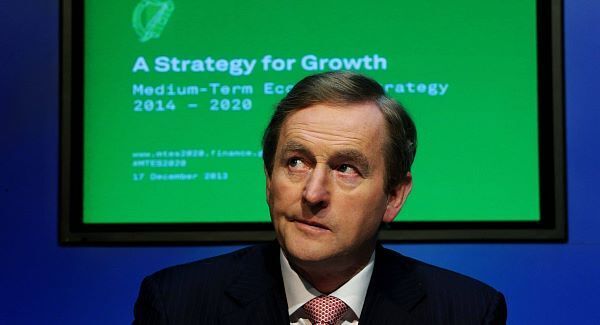
The Strategy for Growth document released yesterday has been criticised by the opposition for being short on detail.
Other than main budgetary targets, it is essentially a plan about future plans because each government department will have to compile a detailed response in the new year.
- Economic growth The document states the growth potential of the economy remains strong and its prediction of a growth level of 2% for 2014 is a realistic target when compared to Ibec and the ESRI’s predictions of 2.7%.
However, predicting growth levels of over 3% from 2017 is venturing into the unknown as the strategy itself says legacy effects such as high levels of indebtedness and unemployment will take some time to work through and “risks to domestic and international demand make medium-term forecasts subject to a high level of uncertainty”.
- Maintaining discipline in public spending The plan essentially reels out all the budgetary targets and constraints which the country has already signed up to in the Fiscal Treaty and other agreements.
- Small- and medium- sized businesses With so much of Ireland’s economic growth delivered by multi-national firms, the Government has placed huge emphasis on 200,000 small- and medium-sized enterprises which employ 655,000 people.
The strategy recognises SMEs face credit restraints but it provides no details on how much funding it can provide to SMEs and at what rates it will be available at. Otherwise, it repeats previous announcements of Government- sanctioned SME lending targets for AIB and Bank of Ireland and the establishment of the Ireland Strategic Investment Fund.
- Unemployment The document promises to bring employment back to Celtic Tiger levels of 2.16m by 2020, replacing the 330,000 jobs lost between 2008 and 2010.
However, the unemployment rate of 8.1% in 2020 will be higher than the unemployment rate of 5% in 2007. It promises to continue profiling the Live Register for those at high risk of joining the long-term unemployed.
It mentions JobPath, the Youth Guarantee and tax and welfare incentives to make work more attractive, but there is little or no detail as to how the six years of unemployment targets will be achieved.
- Mortgage arrears The strategy states mortgage arrears impacts negatively on domestic demand. For more than 100,000 homeowners in arrears there is nothing new.
- Reforming the public service The exchequer pay bill, which peaked in 2009 at €17.5bn, will decline to €13.6bn in 2014. There are no further targets for the next six years. They will be laid out in a new Public Service Reform Plan covering 2014-16 which will be published in the new year.
- Competition and regulation The troika did not hide its displeasure at the lack of competition in the legal profession and the high cost of prescription medicines in Ireland, but there is nothing new in the plan.
- Children “Improving the lives of children is a key prerequisite to ensuring a well-functioning and inclusive society”. Nothing new there.