The wealth of Germany's Catholic Church
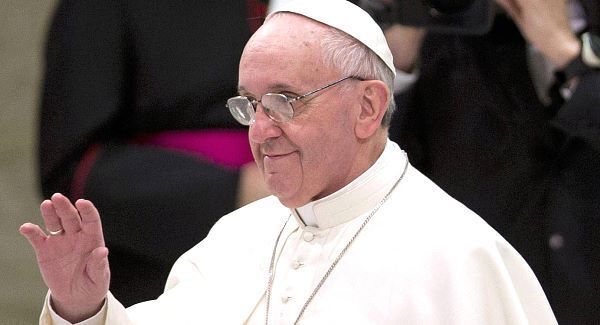
Some observers say the fact the church is partially subsidised by Germany’s taxpayers, giving it an estimated net wealth of €75bn, is the underlying reason for his opulent lifestyle. Here is a look at why Germany’s Catholic Church is one of the wealthiest branches in the world.
Germany is the world’s fourth-richest country, and citizens registered as Catholic, Protestant, or Jewish pay a tax to their religious institutions of between 8% and 9% of their income. With Catholics accounting for 31% of the country’s population, the church claims about 25m tax-paying adherents, who contributed €4.7bn in 2011. A priest from Mannheim, southwest Germany, explained why the tax, instituted in 1803 to compensate the Church after some of its properties were nationalised, remained important: “With kindergarten, with homes for elderly or unemployed, we’ve got really good things, so I know we need the tax to help the German country to do good things.”
Germany’s Humanist Union has proposed legislation that would end state payments to religious institutions, the website www.taz.de reported.
With growing numbers of German Catholics leaving, the church last year announced that those who don’t pay the church tax would be denied sacraments including weddings and burials, along with the right to serve as godparents.
This posed a difficult decision for some Catholics. One Berlin man who had deregistered told the radio show Marketplace: “Obviously, when you die, no priest is going to come to your funeral so that’s a downside. But that’s a few years from now.”
After the church’s announcement, a Federal Administrative Court rejected a legal challenge from a retired professor of church law who wanted to keep attending but not pay the tax. The court ruled that there could be no partial church membership.
Germany’s constitution protects religious institutions from state oversight, stipulating that they “shall regulate and administer their affairs independently within the limits of the law that applies to all”. This freedom and opacity has lead to many scandals over the years, none of which, however, have resulted in a bishop’s suspension until now.
In 2010, Der Speigel investigated why church funds were protected from the government austerity measures, and found the money nearly impossible to track.
“The assets, accumulated over the centuries, are invested in real estate, banks, academies, breweries, vineyards, media companies and hospitals. The church also derives income from stock holdings, foundations and bequests. The revenue money flows into a budget that only a bishop and his closest associates are familiar... [and] which tax authorities are not required to review,” the magazine reported.
Of Germany’s 27 dioceses, 25 refused to disclose their finances. Since the news of Bishop Tebartz-van Elst’s suspension broke, however, Frankfurter Allgemeine reported that about half of those dioceses have decided to make their assets public. “The Archbishop has always made it clear that the church is there for the people and responsible with its financial resources, which must be dealt with humbly and transparently,” the Archdiocese of Hamburg said in a statement.
Political scientist Carsten Frerk estimates the German church’s net wealth is around €75bn. That, he said, gives it the political power to snuff out efforts to change the tax relationship with the state.
It’s a position shared by the country’s second-largest Christian entity, the Evangelical Church, whose tax revenues were around €4.3bn in 2011.
“We have the very extraordinary situation in Germany that the Catholic and Lutheran churches are equally strong. They are strong enough to be able to say to the parties, if you even think of making any changes, we will strike back now... I think that the relation of state and church won’t change at all,” Frerk says.
Archbishop Robert Zolltisch, the head of the German Bishops’ Conference, told NPR: “In Germany, the church is a community of faith which coexists alongside the legal system… The two cannot be separated.”

CONNECT WITH US TODAY



Be the first to know the latest news and updates