Funeral Mass is about living and the dead
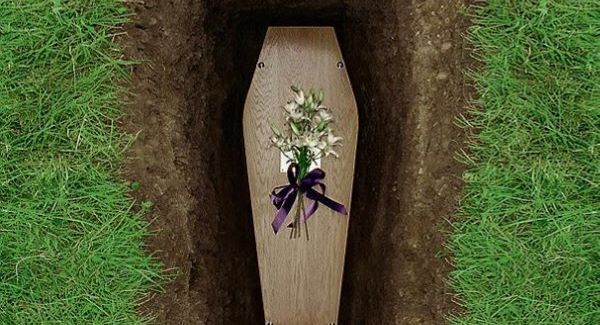
WHEN a loved one dies, the family contacts the local priest to help prepare for the funeral Mass. They do so because they have a desire to pray for and accompany their loved one on their final journey. They do so, because deep within their faith, they know that the Mass is a sacred moment, a solemn prayer that offers them hope and consolation in eternal life. They want to commend their loved one to the grace and mercy of God. The funeral Mass too offers the opportunity for the Christian community to pray for the dead and to “be with the family”.
It is normal practice for the local priest to visit the home of the deceased before the funeral Mass. From my work as a curate in a parish, it is a humbling experience to share the family’s grief and to offer support. I share this time with them and, above all, I listen to their memories, to hear their pride and sadness. In between the tea and tears, we make preparations for the funeral Mass.
My role is not that of undertaker or a master of ceremonies. My role is to offer the Mass, which is the community’s prayer of petition and thanksgiving, so that the deceased may rest in peace. I seek to ensure that the prayer is respectful, both towards the Lord to whom we pray and towards the family in their sadness. We choose Bible readings that reflect our hope in the resurrection and our esteem for the person who has died. We write intercessions — the prayer of the faithful — giving family members the opportunity to thank God for the life and example of the person who has died. We arrange the procession of the offertory gifts which, together with the bread and wine for consecration, usually include symbols of the loved one’s life. The dignity and imagination of the bereaved and the sensitivity they bring to these moments is an important part of the funeral Mass.
Having discussed and agreed the hymns for the Mass, we work together on preparing the homily. We seek to break open God’s word of comfort to us. We speak of faith, sometimes shared in abundance by the deceased, but that’s not always the case. We talk about how our lives can be viewed from beyond the grave, where God who is merciful and extravagant in love desires us to share eternity in His presence. Affection usually flows when we talk of the dead and comfort is found in shared recollection, purple passages of anecdotes, a glimpse of healing grace as people in the ease of company put words on deep emotions. Here God speaks through fleshy recollections, where neither condemnation or canonisation occurs, but there are lessons and there is grace in the life of every human soul. With the support of the family, the homily casts the light of faith on their experiences of life and the hope of eternity.
Although the funeral Mass is not a personal possession, nor is it impersonal, for here we gather as family and friends in the presence of the local Christian community. The words of the Scriptures come to bear, that “where two or three gather in God’s name, He is there among them”. The sprinkling of water, the chime of bells, the scent of incense mingle with familiar faces offering sympathy and the expression of faith in God and in humanity which He created.
The funeral Mass is a ritual, the same for everyone. The circumstances of one’s life or of one’s death make no difference, for all are equal in God’s eyes. It is a sacred duty for the Church to offer this spiritual service in the face of death. It is but one part of the Church’s ministry to the grieving which, in many parishes, includes bereavement support services, as well as celebrating anniversaries and other remembrances. Long after the final hymn is over and the grave is filled, I hope the practice of this ancient sacred ritual will bring some measure of comfort to the bereaved, just as we prayed that it may bring rest for the dead.
Following a discussion at the last meeting of the Council of Priests, I agreed to write to priests in the late summer on our diocesan practice in relation to panegyrics and eulogies at funeral Masses.
In a book entitled Eschatology: Death and Eternal Life by the then Cardinal Ratzinger, he quotes, with approval, a phrase of the theologian Joseph Pieper, who summed up the modern approach to death as “the materialistic trivialisation of death”. Ratzinger, in this context, writes: “Death is to be deprived of its character as a place where the metaphysical breaks through. Death is rendered banal so as to quell the unsettling questions that arise from it.”
The funeral liturgy is a prayer of petition for the deceased, a prayer commending the deceased to God’s tender mercy and compassion, a prayer rooted in the hope engendered by the death and resurrection of Christ.
In the directives for the funeral Mass, it is stated: “A brief homily, based on the readings, should always be given at the funeral liturgy, but never any kind of eulogy. The homilist should dwell on God’s compassionate love and on the paschal mystery of the Lord proclaimed in the scripture readings.”
All priests are asked to uphold the integrity of the funeral Mass and funeral rites. A dumbing-down of their integrity does no service to the faith. If family members or others wish to speak about the deceased, this can be done at the graveside or when the family and friends gather after the burial.
The following regulations are to be followed at all funerals:
*Appreciations or eulogies by family members or friends of the deceased should not take place in the church but may take place after the Rite of Committal in the cemetery or when the family and friends gather;
*The ambo [lecturn] is for the proclamation of the word of God;
*Readings at the funeral liturgy should be taken from the lectionary;
*Secular songs, poems, and texts devoid of a Christian content are out of place in the funeral liturgy;
*A post-Communion reflection of a prayerful nature can be given after Communion but this should be agreed beforehand with the celebrant and should not be used as a cloak for a eulogy.
*As is clear from the directives on the funeral rite, the deceased should not be canonised in the homily;
*If a visiting priest is officiating at the funeral Mass, he should be informed of these regulations and asked to abide by them;
*It is important that undertakers in your area are aware of these regulations. It is also important that clear arrangements are in place on the signing of books of condolence. Some priests expressed the view that they should not be allowed in the Church;
*Clear arrangements, allowing people the opportunity to offer sympathy to the family of the deceased, should be put in place in each parish;
*In some places, it seems that the ‘funeral planner’ has made an appearance. Priests should only engage with the family in relation to the funeral rite.

CONNECT WITH US TODAY



Be the first to know the latest news and updates