Has Catholic hierarchy lost touch with its flock?
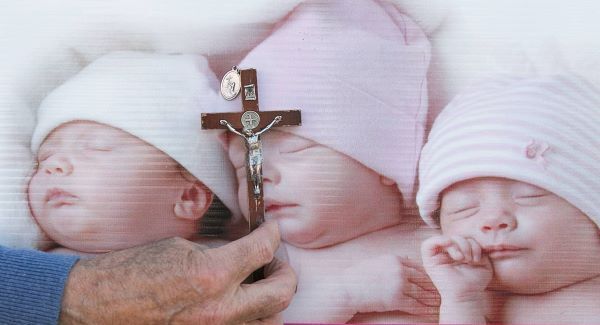
IS holding the line on abortion the primary article of faith in the Catholic Church today? Is this really the most important element of the faith, and all that the religion claims to represent in providing a moral benchmark for life?
The manner in which the hierarchy conducted themselves throughout the last six months would suggest this to be the case. How can you truly be a Catholic, they seem to ask, unless you follow the Church’s fundamental teachings on abortion?
What is not known is how many of the depleted flock, both religious and the lay element, see their faith in those basic terms.
The tone of the bishops’ contribution to the debate lurched from deeply un-Christian to ridiculous. Last Sunday, Bishop of Ferns Denis Brennan introduced the Boston Tea Party to abortion. He compared the plight of those who oppose the legislation to the American colonists who were ruled from London in the 1760s
“Tens of thousands of Irish citizens feel the heavy weight of state taxation at present while being denied the parliamentary representation that should in a modern democracy accompany it,” he told a gathering in Knock.
“Huge numbers of people are finding themselves in a ‘Boston Tea Party’ situation, having taxation without representation. This is not good for society, nor does it do anything to encourage people to believe in, and participate in, the democratic process.”
This was the first time a member of the hierarchy intimated that the legislation being passed through the Oireachtas was anti-democratic. Whatever one’s view of the issue, the notion that this piece of legislation is anti-democratic is beyond all logic. A vocal minority obviously oppose it on grounds of their conscience or religion, but it won’t affect any of them directly. Opinion polls suggest most people are in favour of the legislation, which is more than can be said for a raft of laws passed in recent years.
The tone and vehemence emanating from the hierarchy was set last December when Bishop Leo O’Reilly said the planned legislation was the “first step on the road to a culture of death”. This laid it out bare: Choose life with us, or death with the representatives of the citizens and anybody else who disputes our teachings.
The phrase “a culture of death” elicits images of Nazi concentration camps, ethnic cleansing, or straightforward mass murder. The hierarchy was intimating that it put a greater value on human life than any other religion or institution. We were back at a time when every school child in the State had it drilled into them that Catholicism was the “one true Church”, and all outside the fold were children of a lesser God, doomed to descend to the fires of hell.
What of the other Christian faiths? Are we to infer that they are acquiescing in the introduction of a “culture of death”? At the Oireachtas hearings last January, only the Islamic Cultural Centre agreed with the Catholic Church in disputing the need to legislate for X.
The Church of Ireland, the Methodist Church, the Presbyterian Church, and the Jewish faith all agreed in broad terms with the Government’s line. These religions have issues with the concept of abortion but recognise that we live in an imperfect world.
And what of this notion that the Catholic Church’s teaching on abortion is rooted in a unique and elevated respect for human life? Surely it has as much to do with the Church’s great obsession with sex as anything else.
The Church believes the creation of human life is supposed to be the sole premise for sex, to be performed only between a heterosexual couple married in the Church. Life, in this scenario, begins at conception. Nobody must interfere thereafter at any stage to arrest the trajectory towards the creation of a living human being.
This teaching informs the Church’s attitude to contraception and abortion. It’s difficult to believe now that until recent decades contraception was highly controlled in the State. Access was confined to married couples who had to avail of a prescription from a GP, a visit to whom infers that one is suffering from some ailment. Any desire to have sex outside the Church’s strictures implied there was something wrong with you.
The Church’s teaching on abortion comes from the same school, albeit at a greyer stage of the trajectory from sex to birth. The battle against contraception has long been lost, leaving abortion as the last stand to fight the potential “evil” of sex.
Meanwhile, the desperate tone of the hierarchy reverberated across the country as the legislation moved closer. There were regular pastoral letters read out at Mass, which made explicit references to abortion. Precious little allowance was made for the presence at Mass of children. A number of parents were moved to ring RTÉ’s Liveline programme to complain about what their young offspring were being exposed to in the course of what is supposed to be a religious celebration.
Then there was the attitude to politicians. Speaking at Knock last May, Cardinal Seán Brady refused to discount the possibility that legislators could be ex-communicated. “That is down the line at the moment, as far as we are concerned,” he said. “It is our job to convince the electorate first of all and the legislators.”
The message was clear. Legislators who are practising Catholics should beware that they may be cast out beyond the fold to join the most wretched examples of humanity.
On that occasion, Brady went on to say: “We’re trying to persuade them not to introduce it. In addition to doing good, we also have to oppose evil and to oppose a law that would take away fundamental rights from people.”
This defender of fundamental rights was the same man who stayed schtum about the crimes of Brendan Smyth, and swore to secrecy two children abused by the priest. Yet here he was, contextualising the “evil” being done by legislators obliged to cater for all citizens of the State.
His anointed successor, Archbishop Eamon Martin, got in on the act soon after, when he intimated that legislators who are practising Catholics might be refused Communion.
He told the Sunday Times that anybody who clearly and publicly said they supported abortion should not approach a priest for Communion. He had not, he said, ever refused anybody the sacrament, but he asked how anybody who knowingly introduced abortion legislation receive communion, still believing they were part of the Church.
What of child abusers, rapists, murderers, fraudsters who have wreaked havoc on innocent lives? What of the clerics convicted of child sex abuse but still permitted to say Mass, albeit in limited circumstances, not to mind receive communion? Is the crime of a TD voting to normalise the law as deigned by the Supreme Court regarded as the worst possible crime against humanity, as being beyond redemption, as being “evil”?
NOTABLY none of the bishops referenced the Supreme Court judges as candidates for damnation. Neither did they reference the 4,000-plus women who travel to the UK annually to have an abortion, including those have to do so to deal with a fatal foetal abnormality. To threaten any of them would be to both acknowledge that this “evil” practice is already in the country and would most likely provoke a serious backlash. Much easier to stick it to the politicians, to threaten them as if admonishing frightened schoolchildren that the road to hell lurks around every corner.
Bookending the campaign last Sunday, senior Vatican cardinal Raymond Burke advised Massgoers in Cork not to be discouraged from living “faithful Christian lives in a society marked by a culture of death”.
There we are again, the hierarchy projecting themselves as the last bailiwick against “a culture of death”.
The moral posturing, the threats, the arrogance had little effect. Those in the Oireachtas who opposed the legislation were not swayed by pressure from the hierarchy.
But what does it all say for the Church in Ireland today? The whole thrust of the hierarchy’s campaign suggested that this issue now defines Catholicism. None of the issues that have emerged in the State over the last five years — most of them with profound moral consequences — exercised the hierarchy to any extent compared to this legislation. No “evil” has been identified in the wreckage of the economy, no crimes that merited talk of excommunication. No evil has been referenced in the callous treatment of living, breathing children who are no longer nurtured by their parents for one reason or another.
And what of those elements of the flock who see their faith in broader terms? Whether lay or religious, there are many still within the Church who live their faith primarily through their personal relationship with their God, their work in parishes, or among those requiring help, or through personal sacrifice. Are they all to interpret that their primary concern should be ensuring that a suicidal teenager in care should be put on a plane rather than have a termination here?
Is that what Catholicism is all about in Ireland today? It would appear the hierarchy certainly seem to think so.
CONNECT WITH US TODAY



Be the first to know the latest news and updates