Our EU successors are a lot like us
LITHUANIA is a lot like Ireland. Both are on the periphery of the EU, both have spent a lot of their history battling a neighbour, both suffer immigration, both worry about nuclear plants across the border, about the fate of the euro, and about sourcing their own energy.
And this week both countries touch as Ireland hands over the baton of the EU presidency to its Baltic counterpart. “This is very symbolic for us — Ireland held the presidency when we joined in May 2004,” remarked their finance minister Rimantas Sadzius.
But some of Ireland’s problems pale into near insignificance when compared to those faced by Lithuania, a country of some three million people.
Just across their border, 55km from the capital Vilnius, Belarus, is building its first nuclear power plant — and is doing it at half the original cost with finance from Russia.
Foreign affairs minister Linas Linkevicius was not too impressed with the attitude of the Belorussian authorities when he discussed it with them recently. “They said it was too expensive so they halved the cost. I asked them about the quality, standards and safety if they have cut the price. They say ‘don’t worry, we will not commit suicide’”, he said.
But, he noted, they are not following the international rules for nuclear safety and he wants the EU to get involved, pointing out that radiation knows no borders if something should go wrong.
The Lithuanians are understandably concerned about the latest foray right on their borders into nuclear — and point out that they were forced by the EU to shut their last reactor three years ago for safety reasons, despite it generating 70% of their electricity.
The closure has left them completely dependent on their old enemy, Russia. Part of the electricity network is controlled from Moscow, Gazprom owns 37% of the national gas utility, the country has no gas storage capacity and almost no alternative sources of energy, and they import all their gas from Gazprom that charges them between 15% to 25% more than they do Germany, they say.
It is, according to the EU’s definition, an “energy island”.
But not for much longer. They are unbundling, as Ireland did, dividing the providers of energy off from the infrastructure and this includes forcing Gazprom to sell part of the network to a state body.
This will allow them to connect the network to alternative supplies of gas, which will come from their own LPG terminal currently being built on the Baltic sea. They are expecting the new vessel to deliver the first gas ready for testing at the end of the year and hope it will process up to 25% of the country’s gas needs from 2015.
Their current agreement with Gazprom ends next year and they hope that breaking their monopoly will help them secure a new deal at prices closer to world markets.
Growing their economy is now of prime importance for Lithuania. It experienced growth of up to 8% a year up to 2009. It then went into recession, losing 15% of its GDP with unemployment at around 18% and public pay cuts of up to 30%. It lost a lot of people with most going to Britain and the second biggest cohort to Ireland where there were 38,000 in 2011. The haemorrhaging continues, despite growth of 3.7% last year, second only to Latvia and compares to Ireland’s 0.9%
“The investment climate is very important. We have no natural resources except for our natural intellectual capital shaped by our very good education, especially in physics and maths” said finance minister Sadzius.
For this reason they have their sights firmly set on joining the eurozone in 2015, even if the majority of their population is against this at the moment. With Estonia already having the single currency and Latvia due to join in January, it will leave them at a disadvantage when investors consider which of the Baltic countries to invest, he said.
As usual when a country assumes the EU presidency, the issues they are most aware of come to the surface, and for Lithuania their term coincides with the Eastern Partnership Summit which they will host in Vilnius at the end of November. This initiative was the brainchild of Poland in an effort to create closer relations between the EU and six former Soviet states not in the EU. Their main area of interest is Ukraine — and it is also the main point of interest for the Lithuanians at the moment.
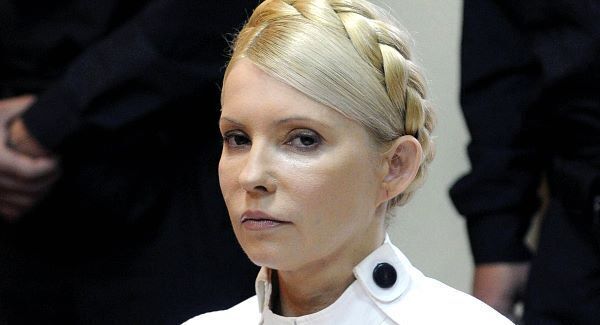
Their Foreign Minister, Linkevicius, warned that if the EU does not sign the association agreement with Ukraine in November, it risks pushing that country into the arms of Russia and its customs union with Belarus and Kazakhstan. “This is not just another partner and another process, it’s a dual political process,” he said. While the agreement — that leads to greater economic and political co-operation with the EU — has been initialled, Brussels is demanding a series of reforms including the release of former prime minister Yulia Tymoshenko and greater independence of the judiciary.
Linkevicius recently met his Ukraine counterpart and advised them to take the EU’s wishes seriously, saying that many countries took the Tymoshenko case as a symbol that the country was guilty of selective justice. “If you want to dismiss these doubts... release this sick woman”.
He warned that he did not want the summit to become a repeat of the Bucharest NATO summit in 2008 when Ukraine — and Georgia — were blocked by Russia from joining. Russia has accused the EU of trying to bring these countries into their sphere of influence and divide them off from Russia.
Germany was also instrumental in blocking them in NATO, and Germany and France are very hesitant also over the Eastern Partnership — fearing that the countries see it as a stepping stone to EU membership — something Poland favours for their sister country, Ukraine.
But while furthering relations with Ukraine is a goal both Poland and Lithuania share, the relationship between the two countries is at its lowest ebb in decades. Together 500 years ago as a Commonwealth they formed the largest most powerful country in Europe, taking in modern Belarus, Ukraine and parts of Poland.
However, Poland is up in arms over plans to have Poles in the country take their final exams in Lithuanian and they are furious over the length of time it takes for Poles to get back property confiscated during the Soviet era. For many Lithuanians this property was “occupied” by the Poles — so the divisions run deep.
The Lithuanian president, a former member of the European Commission, Dalia Grybauskaite, is being tipped as the next president of the European Commission. Asked about this she will only point out that she is not a member of any political grouping — normally a prerequisite to garner the support needed from prime ministers.
CONNECT WITH US TODAY



Be the first to know the latest news and updates