A look into NAMA’s troubled existence
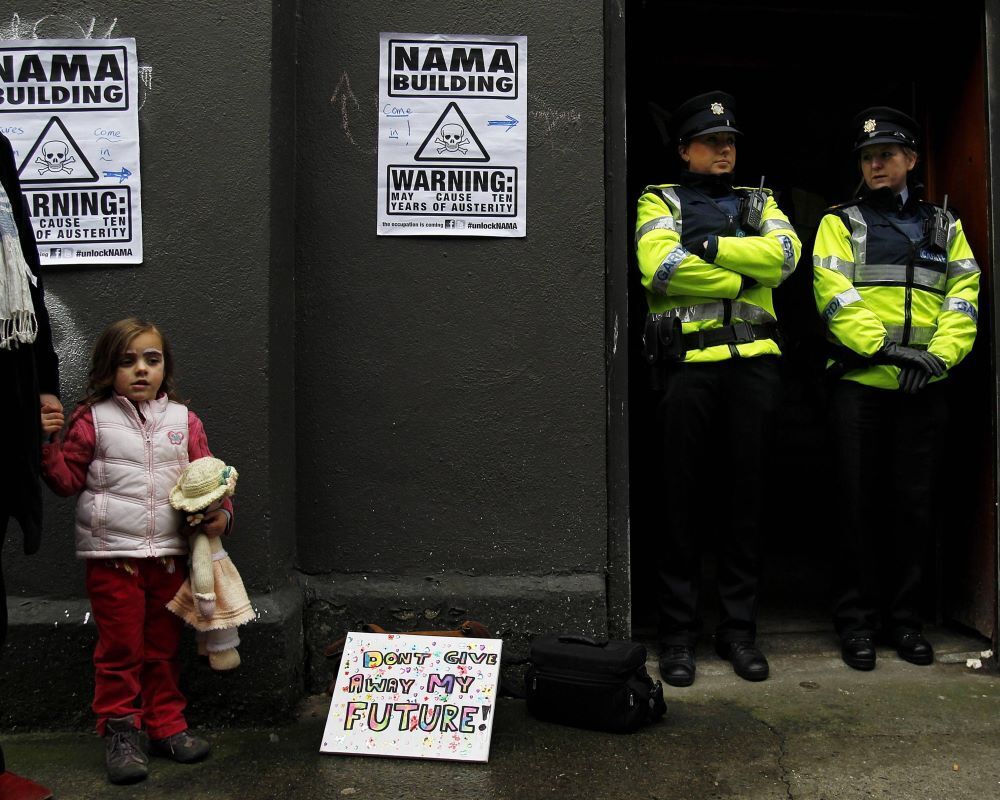
THE National Asset Management Agency was set up in 2009 amid a whirlwind of controversy.
The then minister for finance, Brian Lenihan, claimed it would not only make a €5bn profit for the State, but would also save the banking system. Its critics claimed Nama was a monster that would create a multibillion-euro contingent liability that had the potential to sink the State.
There was €74bn of development loans sitting on the balance sheets of the banks. Nama was set up as a home for these bad loans. The argument was that free of the shackles of these loans, the banks stood a chance to remain solvent and outside State control.
The plan hopelessly backfired. AIB, once the biggest bank in the country, is 99.9% State-owned. Permanent TSB, although never a major player in developers’ loans, is also 99.9% in State control. Bank of Ireland is 15% publicly owned and the closest to making a return to the private fold.
But the level of insolvency of the Irish banks in 2009 would have ended them up in State control regardless.
Irish Nationwide and Anglo Irish Bank, possibly two of the most reckless institutions in the history of global finance, were melded into Ibrc. This toxic bank was sacrificed in February in order to facilitate the restructuring of €28bn in promissory notes.
In a strange piece of symmetry, the remaining assets of these institutions are on their way to Nama, which could theoretically increase the agency’s balance sheet by €16bn. But once again, the transfer of these assets is generating its fair share of controversy.
When Ibrc was liquidated, the plan was to put the loan book up for sale. Whatever assets not sold would then be transferred to Nama with a provisional completion date set for August.
However, this process is proving to be far from seamless. The Ibrc book can be broken down into commercial property loans; the Irish Nationwide mortgage book; business loans; and personal loans for very high net-worth individuals.
The special liquidators, KPMG, have retained PwC to value the property loans, and investment bank UBS to value the cashflow loans.
A source claims there are delays in the valuation process, which means it is unlikely that the process of getting all of the loans put up for sale will be completed by August. KPMG declined to comment.
Market sources say there is a healthy demand for the Ibrc loan book, with a number of overseas financial institutions in the mix — particularly for the cashflow loans.
Any loans that do not meet the special liquidator’s reserve price will be transferred to Nama. A source claims that the number of loans that are eventually transferred could be a lot smaller than was originally expected.
Political pressure would more than likely have seen Nama and Ibrc merged at some stage.
Also, in something of an embarrassment for the Government, Ibrc and Nama were on the opposite sides of the bruising legal tussle between the developer Paddy McKillen and the billionaire Barclay brothers over the control of three top hotels in London.
It is the latest piece of controversy to dog the agency since 2009.
John Sheehan, originally from Ireland, has been based in Bangkok for over 30 years as a distressed-debt specialist. He works with a number of sizeable Asian property funds. He had a number of meetings with Nama in 2011 and 2012 but failed to reach agreement on each occasion. He is highly critical of the agency.
“Everyone knows that Nama paid too much for domestic real estate assets and they know they cannot afford to sell them at a realistic price. This is central to delaying the asset sales process and the chance of a property market rebound essential to recovery. The best thing the Government can do is drop the smoke-and-mirrors, shut down Nama, and sell off the assets,” he told the Irish Examiner.
“We all know this will be at bargain-basement levels but those are the facts of life today. If it says it cannot afford it, it is effectively saying that it cannot afford to heal the economy. Rather than fretting about the cost the Government would be far better served by calculating the monetary and human cost of each additional year of continuing economic downturn for Ireland as a whole, addressing the de-leveraging problem head on, and aggressively getting on with the earliest recovery.”
The economist Peter Bacon, who was the original architect of Nama, was highly critical of the agency in a report issued last year. Unlike Mr Sheehan, he claimed it was selling assets too quickly and as a consequence, was destined to make a loss for the taxpayer when eventually wound up. He advocated selling large chunks of Nama to a private equity vehicle.
But when Nama was set up, the point of it was to save the banks, not make a profit. The transfer of assets needed to happen quickly. However, political wrangling ensured that the transfer took close to 18 months. But the doomsday scenario some of Nama’s critics predicted never unfolded.
It eventually paid about €32bn for €74bn of loans.
The latest set of results — up to the end of 2012 — show Nama made a profit of €230,000 for last year. Since it was established, it has generated cash of more than €11bn. It has made €6.8bn of disposals, debt repayments of €5bn, and is sitting on cash of €3.4bn. Moreover, it is collecting €100m in income every month.
“Nama is doing what it was set up to do, managing loans and assets over a 10-year lifespan,” says Jagdip Singh of the influential blog, Namawinelake. “It is doing its job reasonably well. It has won approval from the Nama advisory board, made an audited accounting profit in 2012 and kept its costs considerably below Ibrc’s which was doing a similar job. It deals with individuals every bit as difficult as the Quinns and David Drumm. Overall, yes, it is fit for purpose.”
Another criticism of Nama is that it is selling its best performing assets to try to meet its targets. But chief economist with NCB stockbrokers, Philip O’Sullivan, says the latest results prove otherwise. The level of non-performing loans have remained consistent since 2009.
The biggest immediate threat Nama poses is outside its control. This is set to become bigger again as soon as the former Ibrc assets are transferred.
Over the medium-to-longer-term, Nama is highly dependent on the health of the property market. The idea of eventually returning a profit of €5bn to the taxpayer now seems fanciful. However, it no longer looks like posting huge losses which would have a material impact on the State.
The most enduring criticism of the agency is the way it goes about its business. It is seen as being far too secretive in its transactions and lacking any sort of transparency. Nama cites commercial reasons for its opaqueness.
But as long as it is funded and owned by the taxpayer, calls for greater accountability will grow.

CONNECT WITH US TODAY



Be the first to know the latest news and updates