Ministers can’t resist the lure of the local
THERE is sweetness about the naivety fuelling the row about the upgrade to hospitals in Wexford and Kilkenny.
The palaver about transparency is especially comic. Do you remember telling your mother you hadn’t been taking biscuits again? The unbelievable, but sweet lie of a child, all chubby cheeks and earnest eyes. Now we are supposed to be grown up. But we are still sticking our fingers in the biscuit tin. We are still telling mammy we didn’t do it.
Our whole system of government is based on access to the biscuit tin. That is access mind, not ownership.
With rare exceptions for the megalomania of a Pee Flynn or Charlie Haughey, there is a grudging regard for the principle that the public purse does ultimately belong to the public. But the job of politicians we elect to the Dáil is ultimately to get their hands on as many custard creams as possible. By all means leave a few dry mariettas behind, but bring home the goodies and let’s gorge together.
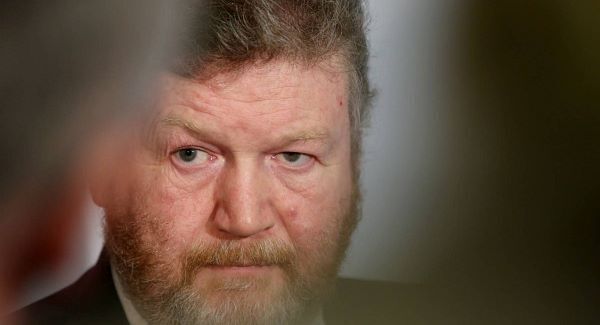
Health Minister James Reilly is unspeakably honest. He is doing what he said he would do in reasserting political control over the HSE. Far from dissembling, he is showboating as the big man making big decisions like bringing a medical centre to Swords in his constituency in Dublin North or revamping small parts of hospitals in his Cabinet colleagues’ constituencies at Wexford and Kilkenny. It may be arrogant. It is unquestionably inept politics. But it is admirably candid.
Reilly is old politics to the core. As his significance as a political liability increases daily, the corollary is that the importance of his decisions ever increase. Reilly is to an extent almost unique in this Government, indelibly cloned from the DNA of the Irish political organism. If there is any criticism that can be fairly made of him, it is that he is too much of a good thing.
The Irish political DNA is impulsive, generous, greedy, and self-regarding. It has a bleeding heart that can seldom refuse a hard case. The same impulsive nature, however, can seldom systematically study an issue through to a systemic solution. Its genius is people, its parody is policy. As retail politics go, the Irish system and the practitioners brought up in it are world masters. It is only the bigger picture that is a disaster.
A lack of irony and surfeit of hypocrisy are key characteristics of Reilly’s detractors. Jump a new medication up the queue at enormous cost for CF patients and he is a hero. Fast-track a few million for hospitals in Wexford or Kilkenny and he is a knave. His political opponents and that swathe of the public sufficiently lacking in self-awareness to join in the name calling, are retching on their own reflux. The divvy-up they complain of is a petty example of that prime Irish political principle: To the victor go the spoils. Our system, from the bottom up, is premised on constituency politics. In contrast, Alan Shatter’s showdown over Garda stations sets him apart.
At the heart of our peculiar political scheme is the Cabinet. Unlike other countries where parliaments can disturb a government’s enjoyment of office, Rialtas na hÉireann is seldom inconvenienced. The preponderant power of the executive here is extraordinary. There are no effective institutional intermediaries between the constituency clinic and the cabinet table.
But it is a paradox that our political system with its premium for constituency politics is populated by politicians who largely, but as Shatter shows not always, find themselves at a loose end when they arrive at the cabinet table. The policy free zone on the open tundra of Irish politics is training for corporals not colonels. Only a minority of ministers fully understand the potential of the power of the command they arrive at. Most fritter it away attending to the detail their political life’s work has almost exclusively trained them for. If almost unadulterated power is invested in an Irish cabinet, much of it is in fact divested.
The four-man economic management council of this Government has subsumed the key functions of government. This is nothing new. In the previous decade the substance of the Cabinet was increasingly hollowed out by the onward encroachment of social partnership. In one form or another vast tranches of government have effectively been subcontracted by cabinet for over two decades.
Of the flimflam that remains, and some of it is sectorally important, many ministers lack the skills to drive lasting change in a complex environment of competing vested interests.
In place of the substance of power is the tinsel that make it ridiculous. What is striking about the largess bestowed on ministers’ constituencies is the surprise feigned about it. In default of exercising either the ordinary power of government or the extraordinary opportunity created by the crisis and the general election that swept them into power, ministers are re-enacting as comedy the tragedy they swore would never recur.
It was ever thus that goodies, like custard creams from mammy’s biscuit tin, were distributed around the cabinet table. The exchange of largess is a courtesy code among colleagues. For the inhibited and the inadequate, it is the surrogate of power. Exercising real power could profoundly change the political job spec. It would certainly abolish the multi-seat constituencies that require cabinet ministers to act as soup kitchens for the disbursement of public funds.
The claptrap is that anyone intended that continuity and not new politics is the real agenda. This is perhaps Reilly’s ultimate importance. He actually stands for something that increasingly looks grand enough to be the mausoleum of an entire government.
New politics was the mantra of a new government in Mar 2011. Before the Irish spring had turned into a typically bleak Irish summer hospital refurbishments had been fixed by one minister for two of his cabinet colleagues.
The problem for this government is not that it is different; it is that it is the same. We have never grown up at all. Mammy help us all.