Flying flag for peace
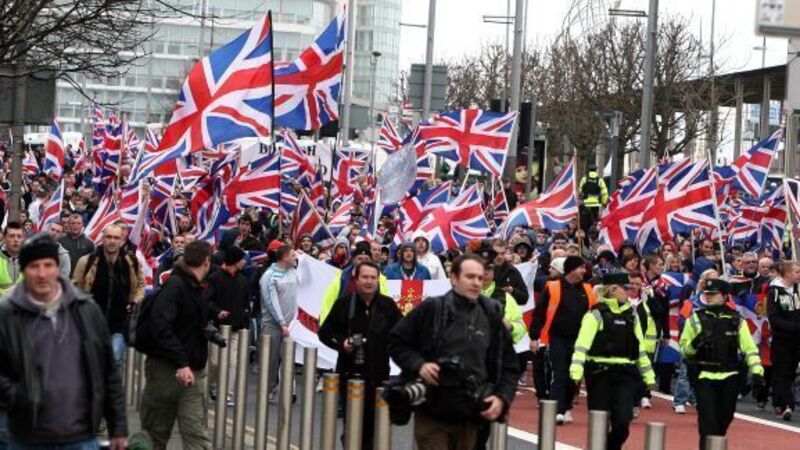
SINCE Belfast City Council voted on Dec 3 to only fly the union flag at city hall on designated days, I and other elected representatives from the main parties have received death threats, while violence has struck various parts of my constituency.
A number of my Alliance Party colleagues have been the focus of intimidation. One has been forced to leave her home after threats were made to her; the office of another colleague was burnt out in an act of wanton vandalism.

A similar arson attack on another colleague’s constituency office was thwarted only by a police patrol; the home and car of a local councillor was attacked while she was at home, alone.
Attempts were also made to destroy the property of other members of my party.
Protests occurred against various other representatives, some of which turned violent, and a chilling attack took place on the home of two elected representatives, on a room where their 17-month-old daughter regularly plays.
While I recognise the right to peacefully protest is an important democratic right, many of the demonstrations in Belfast over the past month — which until yesterday’s decision to postpone the Dublin protest could have been repeated in the Republic’s capital — have long since stopped being lawful or peaceful.
My own constituency office has been the focus of a daily protest, even on Christmas Day, in a deliberate attempt to disrupt the delivery of the services I was mandated by the people of East Belfast to provide.
A police car guarding my office against threats to destroy it was petrol bombed while an officer was still in the vehicle — a clear case of attempted murder.
The protests have also had a devastating impact on the businesses surrounding the focus of the protests, in the midst of a recession and at a time when they normally receive a financial boost.
Those businesses have had to close repeatedly due to the fear of protests turning violent and seeing their premises destroyed.
For people in the local community who are claiming leadership of these protests, the irony must surely not be lost on them that they are directly contributing to the economic downturn of the area they purport to love, leading to more difficulties regenerating their neighbourhoods, and creating and sustaining jobs and prosperity.
In a wider view, the international image of Northern Ireland as a place to visit, work, and invest has taken a massive hit over the past month, with scenes of mayhem broadcast worldwide on a seemingly nightly basis.
A reputation which takes years to rebuild takes only minutes to destroy.
This was always going to be an emotive issue, as are any which so directly link to identity in a divided community.
However, these tensions were deliberately exploited and raised for partisan political ends in advance of the vote.
Over the previous month, 40,000 leaflets were distributed in mainly loyalist areas of Belfast, produced by members of the two main unionist parties.
They were designed to resemble Alliance Party literature and bore no reference to who actually published and delivered them, but misrepresented my party’s position in inflammatory terms and urged members of the public to contact me specifically and my office about the subject.
While I am always happy to speak to constituents — including those who disagree with me — to discuss their views, those leaflets with their misleading information and provocative language specifically targeted me and made me the focus of that anger, though I have no role in City Hall.
Although those who issued the death threats and committed acts of violence must ultimately take responsibility for their own actions, it is not surprising that when they sought a target upon which to vent their anger, their focus was also on me and on Alliance.
The parties behind the leaflets need to reflect on the role that literature played in escalating an already tense situation.
Flags and emblems are important symbols of identity for many in Northern Ireland but are not the only remaining difficult issue left unaddressed by the peace process.
Other sensitive issues such as dealing with the past and its legacy, parading, integration of housing and schools, and the costs of division, have been merely papered over, leading to a lack of reconciliation crucial to build a truly shared future.
In order to resolve the problems in our society, strong, courageous, and generous leadership is required from everyone who has a role to play.
The answer to the situation will not be found in a unionist forum, which is in the process of being established by First Minister Peter Robinson and Ulster Unionist leader Mike Nesbitt, but rather from discussing these issues with those from right across the community.
Such proposals show a lack of understanding of or any commitment to a genuinely shared future, to which both parties have alluded in recent times.
The DUP has also pledged to bring the flags debate to Stormont, where it had previously been accepted by all parties that it would fly only on designated days.
They are also trying to overturn the designated days policy in majority unionist councils such as Craigavon and Lisburn, where they had previously voiced no objection, in what appears to be a cynical attempt to further raise tension.
This is an astonishingly short-sighted move and evidence of a bankruptcy of progressive, inclusive leadership.
Another plan, by victims’ campaigner Willie Frazer, to take three busloads of loyalist protesters to Dublin this coming weekend to draw attention to the flags issue — which was postponed last night — was ill-advised at best, given that the Dublin government had no role in the decision. Such a protest, whatever its intention, would risk spreading disturbance wider rather than seeking a sustainable solution.
I would call on him and others claiming leadership around this now postponed protest and those ongoing in Belfast and elsewhere to bring them to an end as they are, after a week of consecutive nights of violence, a vehicle for yet more violence.
They need to desist from protesting at people and start talking with people, as this is the only way any grievances they feel they have can be addressed.
While the right to protest is important, a repeat of scenes witnessed at the Love Ulster parade in Dublin in 2006 would have done nothing but serve as a further attack on democracy.
Despite the hardships, things have not been all negative — my colleagues and I have been tremendously encouraged by the support we have received from many in East Belfast and beyond, and it has increased our resolve to work to build a shared and prosperous future for all.
It was never going to be easy to stand up for a shared society at peace with itself and neighbours but Northern Ireland is changing and the vast majority of people here back that process.
A new Northern Ireland is emerging, but we need to work to ensure that as a community, we are confident in our identity and reconciled to our past and our neighbour.
No one will get everything they want and compromise will be necessary. Everyone will need to be willing to give something in order to gain the bigger prize for the whole community.
That is not weakness or concession — it is the essence of real strength and vision. No amount of threats will stop it. The prize is simply too great.
*Naomi Long is an Alliance Party MP for East Belfast