Carbon tax is all very well but let’s not rule out the nuclear option

But antipathy to nuclear power has become a kind of secular religion, based almost entirely on superstition and bad science. It is the sine qua non of what Lenin once called ‘infantile leftism’. Nuclear power was opposed at least partly because it seemed to imply a commitment to a nuclear military industry and thus nuclear weapons

Carbon tax is all very well but let’s not rule out the nuclear option

WINSTON Churchill once said there was no such thing as a good tax. Perhaps, but some taxes are infinitely preferable to others. One of the better recommendations by the Commission on Taxation is for a carbon tax. Whether or not you entirely buy into the idea of massive, harmful man-made climate change, discouraging businesses and citizens from emitting pollution is in all our interests. No one in Ireland wants to live in the same toxic soup that they do in Shanghai or Moscow or Tehran.

What’s more, we all know that fossil fuels are a finite resource. The wells in the Middle East are drying up. Yes, new sources come on stream all the time — in the Caribbean, in central Asia, in Africa — but we still have to prepare for the day when mankind will have to give up its crude oil habit and, even sooner, its natural gas habit.

There’s another reason to move away from oil and gas: it’s not in Europe’s interests to be held to ransom by Middle Eastern dictatorships — or Moscow, for that matter.

As long as national security risks aren’t factored into the cost of petrol and as long as carbon dioxide can be emitted without serious penalty, oil will continue to have an advantage over emerging fuels in the marketplace, and we’ll continue our ruinous addiction to it. Reducing our reliance on fossil fuels is a no-brainer.

A carbon tax, though, would attach environmental costs to carbon-based fuels like oil, causing the market to recognise the price of their negative externalities. Wind and solar power would have a shot against natural gas. Trains would compete with trucks. We could clean the air, create wealth and jobs through a new technology boom and drastically improve our continental security.

Ireland relies on coal, oil, gas or peat for about 90% of our electricity. We only generate a tiny fraction of what we consume. Indeed, Ireland is now more heavily dependent on imported oil for our energy requirements than almost every other European country because Irish people tend to have longer commutes, because we’re heavily dependent on road haulage for goods and because the public transport infrastructure is poor.

Air travel has boomed, too. No wonder we’re consuming about 50% more oil per person than 20 years ago. The case for cutting down is clear.

A carbon tax that takes into account the carbon emissions of different types of fuel, as recommended by the commission, is a good idea, therefore. Frank Daly and his team have avoided the trap of simply imposing a levy on businesses by assuming that all fuels are the same when, as we all instinctively know, for example, peat is a dirtier technology than, say, gas.

In Britain, a flat rate on electricity usage, whatever the method of generation, has led, in part, to a controversial increase in coal-fired power. Monday’s proposals, however, should encourage switching to less polluting fossil fuels and to renewables like solar and wave power.

A previous generation sought independence in energy by harnessing the Shannon, making Ardnacrusha, in its time, the largest hydroelectric plant in the world. Thanks to that foresight, 10% of Irish electricity comes from hydroelectric power over 80 years later.

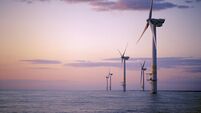
We need similar foresight now. We must continue to invest in hydroelectric and also more in wind power to secure a diverse energy mix. A carbon tax should encourage us to use less fuel overall and, to the extent that we must, to use cleaner fuels.

Where the commission’s report falls down in its chapter on fuel taxes is in relation to revenue neutrality. Their brief was to come up with ideas that did not increase or decrease receipts to the exchequer. They didn’t come up with specific recommendations to ensure revenue neutrality but concluded “carbon tax revenue should be used, in the first instance, to combat fuel poverty”.

The thinking behind this is that the people who tend to be burdened most by environmental taxes are the poorest in society: a person earning €500,000 a year doesn’t spend 50 times as much on keeping warm as someone on €20,000.

The commission also recommends recycling carbon tax revenues to fund energy efficiency incentives and also some payments through the social welfare system to the very poorest.

An influential study commissioned by the Joseph Rowntree Foundation concluded, however, that “although redistributing the revenues from a carbon tax through means-tested benefits would certainly be progressive overall … no way of effecting such a redistribution was found that would not also worsen fuel poverty for those who are already most badly affected by it”. Moreover, any attempt to reduce the regressive impact of a domestic carbon tax through an extension of means-testing would do further damage to work incentives and ultimately harm many of those it was intended to help.

Wouldn’t the simplest thing have been for the commission to couple the carbon tax with reductions in income taxes and taxes on employment or, in the current budgetary climate, smaller increases? What we need to do is impose a tax on the thing we want less of (pollution) and reduce taxes on the things we want more of (income and jobs). As former US vice-president Al Gore puts it: “Penalising pollution instead of penalising employment will work to reduce that pollution.”

Another issue that needs to be revisited — and this certainly wasn’t part of the commission’s remit — is the whole question of electricity generation. A carbon tax, cleverly implemented, could encourage greener, cleaner technologies but we have to be realistic.

Even Denmark — the most advanced nation on earth in terms of its use of wind power — can only get 20% of its electricity from that source. Is it sensible, therefore, that the Irish statute book should contain a ban on the building of nuclear power stations?

IT’S a pity that a sensible debate on nuclear isn’t possible in Ireland. There was a proposal back in the late 1960s to build such a station but environmentalists killed off the idea. Forty years on, are we all cycling to work and heating our homes by burning garden waste? Of course not: as already noted, we’re practically gargling crude oil.

But antipathy to nuclear power has become a kind of secular religion, based almost entirely on superstition and bad science. It is the sine qua non of what Lenin once called ‘infantile leftism’.

Nuclear power was opposed at least partly because it seemed to imply a commitment to a nuclear military industry and thus nuclear weapons.

The emergent Green movement argued that nuclear power was altogether too dangerous to be meddled with. But the truth is that the nuclear industry’s safety record is better by far than that of the fossil fuel industries.

How many people die around the world in coal mines, or on oil rigs each year? Quite a few. How many have died in nuclear accidents in the EU since Ireland joined? None.

How many died on Three Mile Island in 1979? None. Admittedly, a few dozen died in Chernobyl — but who would build a reactor like that these days?

Carbon tax or no carbon tax, precluding even the consideration of nuclear power is storing up problems when the lights eventually, inevitably, go out in Saudi Arabia.

More in this section

Revoiced

Newsletter

Sign up to the best reads of the week from irishexaminer.com selected just for you.

Cookie Policy Privacy Policy Brand Safety FAQ Help Contact Us Terms and Conditions

© Examiner Echo Group Limited