Sarah Harte: With all that's going on the world we need to cling to nuggets of hope when we get them
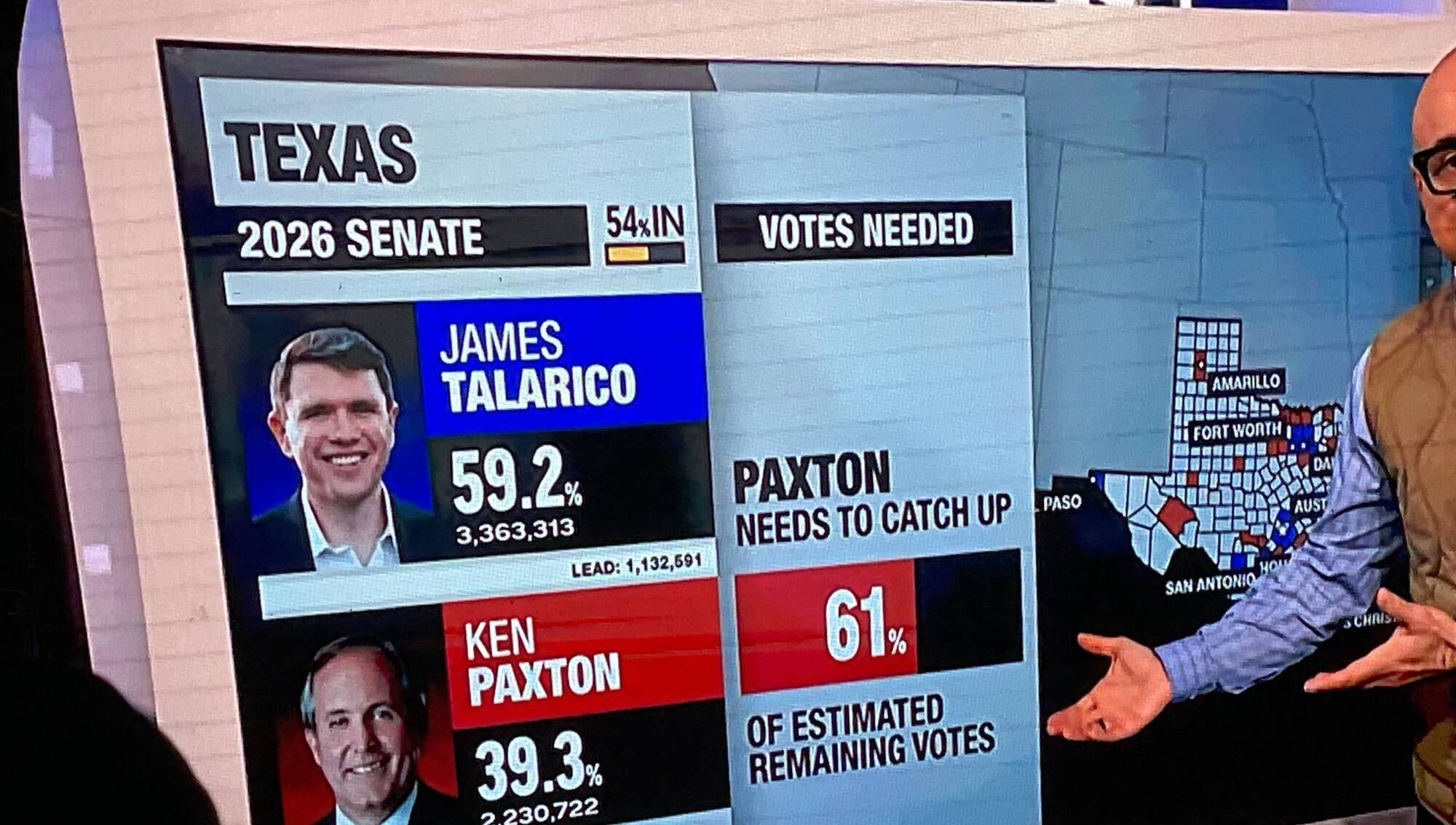
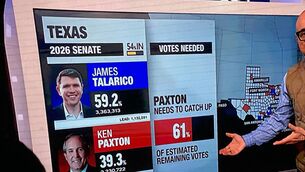
Things change, even in Texas. And if Texas can change, then, hell, ‘Yessum’, we can’t discount the possibility of change.

Everything feels so personal right now. Even public emergencies. Monday morning feels like a case of ‘on your marks, ready, steady, go!’ You cannot make it through to Friday without wondering where this thing is headed. With a kind of whiplash, we try to absorb what just happened.
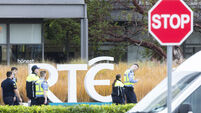
Cyber-attacks on Irish supermarkets, hoax bomb threats against media outlets, including RTÉ, the , Newstalk and Today FM last week and a wave of threats against European airlines, including Ryanair. Public sector strikes, wars, and protests. The wider political landscape leaks into our private lives.
You mutter: "Where’s that ‘Be Emergency Ready’ booklet the Government sent us earlier in the year. You eye the tinned foods in the supermarket and think about prepping. And should I be stashing cash from the hole in the wall?
No wonder Greg Wise, the English actor and producer married to the actress Emma Thompson, said in an interview with a Sunday supplement he keeps his distance from the news and that we need nuggets of hope.
Read More
I second the need for nuggets of hope. Sometimes, the geopolitical context is challenging, and the personal frontier is less than cosy too in what you might call a perfect storm.
I was looking for those nuggets last week when I sat in a courtroom behind a solicitor and barrister acting for me.
The experience was surreal. As a former practising litigation lawyer, I used to believe clients who went to litigation were stone mad. I still believe this, but events have overtaken me.
I can report being an applicant in a court case, rather than being the lawyer, is fifty shades of trauma.
I arrived at the courtroom early. The doors opened, but nobody was there. In the apocalyptic tumbleweed bowels of the building, I heard voices behind the closed shutters. There were a lot of signs. I stopped a cleaning lady with her cart, and she kindly told me where the foyer and consultation rooms were.
I went up the stairs, sat on a bench, and whipped out my bullet-pointed notes for my long-suffering lawyers, highlighting in yellow the points I knew by heart, and I thought they should make.
Personally, I always preferred clients you could lead around by the nose, so I would say I’m the proverbial nightmare client. I give my two cents and stick my nose where my lawyers don’t want me to go.
A solicitor friend advised me to bring a friend or family member for support. I decided against it.
In crunch moments, you’re better off facing the music alone. I did notice, though, that everyone who trickled into the foyer had a plus one. So definitely I was the ‘odd litigant out’.
As time went on, I spied a barrister friend in the corridors. He’s a pure gentleman, so he nodded discreetly and carried on his way.
Later, in court, when I heard the "all rise" as the judge entered, I got up on my trotters like everyone else. The case was in camera (meaning in private). The moment felt, in a Nietzschean sense, the ‘loneliest loneliness.’ I also registered a Monty Pythonesque aspect to the "all rise".
Driving home, I thought my courtroom experience proved you never know where you’ll end up when you start out in life.
When you were younger, you probably believed you were the author of your own life. That turned out to be a fiction, as it always does.
The comfort, though, is that there’s always another chapter to be written. I’m clinging to the notion that even if you lost the last hand, there’s a pathway from the past to a different future. I hope that is true for all of us in a larger sense.
As Brendan Kennelly wrote in his poem, , "though we live in a world that dreams of ending, That always seems about to give in, Something that will not acknowledge conclusion, insists that we forever begin." Isn’t that a beautiful and reassuring idea, to be able to begin forever?
Maybe our lives and our political systems, run by humans (at least so far, but that could change, but let’s not go there today), are a pendulum, not an arc.
One theory suggests history isn’t linear but moves in recurring, seasonal cycles. Three decades ago, historians Neil Howe and William Strauss propounded a new theory of American history in the book .
They pointed to a pattern which suggested modern history moved in cycles roughly the length of a human life, so 80 to 100 with four cycles and four turning points. The fourth era is perilous, described as "a period of civic upheaval and national mobilisation". No marks for guessing which cycle we are in.
William Strauss is dead, but Neil Howe, in a sequel, , suggests that by the early 2030s there will be a climax that "poses great danger" (yikes) but also holds out the promise of a next golden age.
Not everyone agrees with this theory. The American history professor Jamie Gianoutsos has a new book out, . She points to recurring patterns in the rise and fall of republics but is sceptical of a strictly cyclical view of history.
On the subject of Amer-i-kay, one nugget of hope was the American midterms and the blue tsunami. Okay, so let’s not go over the top, but watching the joyous images of Americans celebrating last week, you dared to hope maybe this wasn’t solely about the price of gasoline.
As one commentator suggested, maybe the Republicans didn’t simply fail to show up; maybe, in an act of social revanchism, the Democrats turned out in force, with some Republicans migrating, at least for now, to the other side of the aisle.
Did Trump lose or did the Democrats win? It’s a nuanced question, but I want to believe the wheel is turning. You take your comfort where you find it.
At a board meeting last week, a Californian board member told us people were so happy about two things. The diversity of the people elected and the fact Trump was waterboarded because he was such a cancer in society. Naturally, that’s just one perspective.
I saw one headline in , though: ‘Texas’s seemingly unchangeable Republican identity vanished.’ Things change, even in Texas. And if Texas can change, then, hell, ‘Yessum’, we can’t discount the possibility of change.
I’m going to leave with you two seanfhocail because those nathanna cainte are often nuggets of wisdom.
‘Dá fhada an lá tagann an tráthnóna.’ Or even, ‘Is fada an bóthar nach mbíonn casadh ann.’
Perhaps it’s not too much to hope for a systemic reset. Or a personal one. I choose to believe change is on its way. Because right now, change and beginning again feel like the only show in town.
CONNECT WITH US TODAY



Be the first to know the latest news and updates