Jennifer Horgan: What would a museum of an Irish childhood look like?
Ireland has a wonderfully curated online museum of childhood, and there are plans for an actual one.
“We look at the world once, in childhood,” writes poet Louise Gluck. “The rest is memory.”
I love that line, the truth of it. As the Barnardos’ slogan goes — childhood lasts a lifetime.
It is noteworthy then, that Ireland does little to recognise the fact.
Unlike neighbouring countries, we have yet to build a museum of childhood.
We do have a wonderfully curated online version but an online museum is not enough.
There are plans for an actual one.
The OPW is even legally committed to building it, only the funds aren’t forthcoming.
And so, we are left standing in an ante room of anticipation, wondering what Ireland’s Museum of Childhood might actually look like.
I imagine big glass cabinets waiting to be filled.
Instinctively, I gather objects from my own childhood.
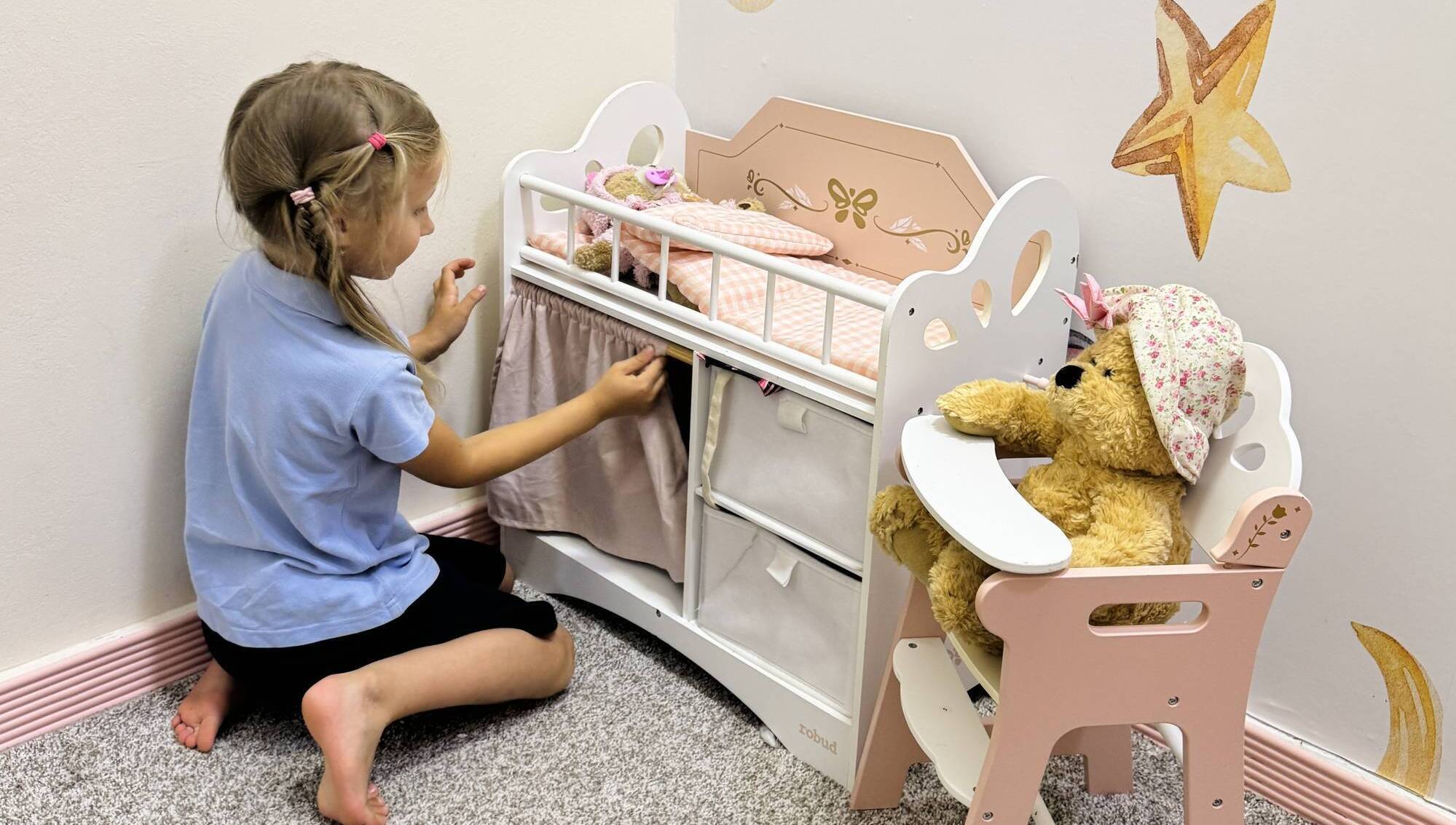
I write the sign: Girl, b.1980- At the centre of my display is Bosco’s box.

Inside are Bosco’s things, his clothes and toys, all bright and exciting and as tiny as matchsticks.
In the back is a large skateboard. It’s painted red with an abbreviation of my name hand drawn in white: Cork colours.
The wheels are scuffed from being dragged through the gravel on the lowest road in our estate, a long winding hill, perfect for stunts and knee scraping.
On a hanger is a stonewashed denim jacket, with clumsily stitched patches of Kylie Minogue and Jason Donovan.
There are plastic bags of penny sweets, Tanora, Tayto, and Juicy Fruit. An XtraVision box is open with a tape of inside.
Some sepia-tinged home videos play on a loop.
My beautiful multi-talented Aunty Jane is adding the finishing touches to our mantlepiece at Christmas.
My lovely dad is refereeing our family Olympics out the back in summer, helping me (the smallest) cheat against my naturally athletic English cousins.

I offer my youngest daughter the box alongside mine: Girl, b. 2015- She suggests some lego, along with photographs of her family: Her grandparents, cousins, siblings, and friends.
She wants something to symbolise water, goggles maybe. Something for her dog. Keys from her piano; the netting from her trampoline; a bit of the swing from our local park; her soccer boots, and the Cork GAA kit she bought this week, having saved her money.
She’d like the wrapping of a chicken burger from Wendy’s — the only fast-food burger you can buy with sliced tomato.
She doesn’t have a phone but makes no mention of screens.
Our childhoods, decades apart, don’t look all that different.
My mum fills the next one along: Girl, b. 1950- There is the little guitar she loved to strum but never learned to play; a spoon she liked to twirl in her hair; a little tricycle she would cycle down the footpath from Summerville Ave, down Passage Rd, and into Waterford City — so few cars it wasn’t a worry.
She includes a twopence, the cost of her favourite cream cake. Pip’s collar gets a mention, the scruffy white mongrel that moved out with her and her sisters, when their parents died young.
There is a bowl of raspberries from the trees in her garden, and rosary beads.
What lovely childhoods, how ordinary, and yes I know, barring my grandparents’ deaths, so fortunate.
But I must move on from this room of family memories into the lives of others, past and present.
You’ll understand my hesitation. What might I see?
Perhaps my hesitation is also behind the reluctance to build this museum of childhood, a site that will inevitably demand moral reckoning.
I spoke to an elderly man about growing up in institutions this year, as part of a poetry project.
He spoke of intense loneliness, growing up without family. He never found out where he came from, gave up trying years ago.

He said he never loved anyone because he wasn’t taught how to love, going straight from an institution to working on a farm, living alone in an outhouse.
What would we place in that poor man’s imagined cabinet?
Perhaps some cabinets will contain only names.
I thought of him this week when I read that a new public archive, set up to chart the abuse of women and children in the last century, will be without the personal records, including medical records, of children who were “boarded out” from religious institutions.
The Clandillon Papers will be stripped of information detailing the experiences of 28,000 children.
Empty cabinets could represent how Ireland’s children have never been ‘cherished equally’.
In my imagined Museum of Childhood, Ireland’s mother and baby homes will be recorded.
And we will visit, young and old, alongside the happier rooms, and bow our heads.
Certainly, what is happening in Cork’s Bessborough site highlights the State’s current refusal to commemorate and atone for what has been done to children.
The fact that planning permission has been granted on this site is a stain on our collective conscience.
Such events will be recorded in this imagined place. In my imagination, all survivors of abuse will be honoured, including those who testified and finally won a conviction against swim coach George Gibney this week.
We will honour all children terrorised by male violence, children left without mothers, fathers, sisters, brothers, cousins, friends.
Read More
There will be beauty too, and joy. I imagine seeing children who are loved fully, licking ice-cream cones, smiling.
The past will be brought to life for us, with recordings taken from the online museum.
Perhaps the one I came across from 1929, of small girls singing in Irish, holding hands in a field on the Aran islands, or of a small boy fishing singing about his “Uncle Dan”.
We will celebrate our bravest feats, our many successes, children playing happily in school yards and pitches, laughing with friends; children supported by the most fabulous coaches in the GAA, in soccer, gymnastics, and everything else; children being cared for by our wonderful doctors, nurses, and social workers.
We will have rooms for our sporting and artistic successes, memories we carry for a lifetime: Jack Charlton smiling; Sinéad O Connor’s voice rising.
The failings too: The treatment of Traveller children; neurodivergent and disabled children; our poor infrastructure; our country’s failure to protect children from the distracting and sometimes devastating impact of screens and social media; our threadbare mental health services; the ghost names on school registers.
This is all an act of imagination.
Meanwhile, the online Museum of Childhood is looking for a real home.
It promises “a diverse and enlightening programme of exhibitions, displays, archives, workshops, and events explores and reimagines how children and childhood can be truly cherished and celebrated in our society”.
I hope it happens.
I hope we commemorate children long gone, and chart brighter futures for children yet to come.
“We look at the world once, in childhood,” writes poet Louise Gluck.
We, in turn, must look at as many Irish childhoods as possible, and we must learn from them.