Shona Murray: Why the EU is moving on while Britain still wrestles with Brexit
As Britain changes prime minister again, Brussels is focused on practical cooperation rather than another grand Brexit reset
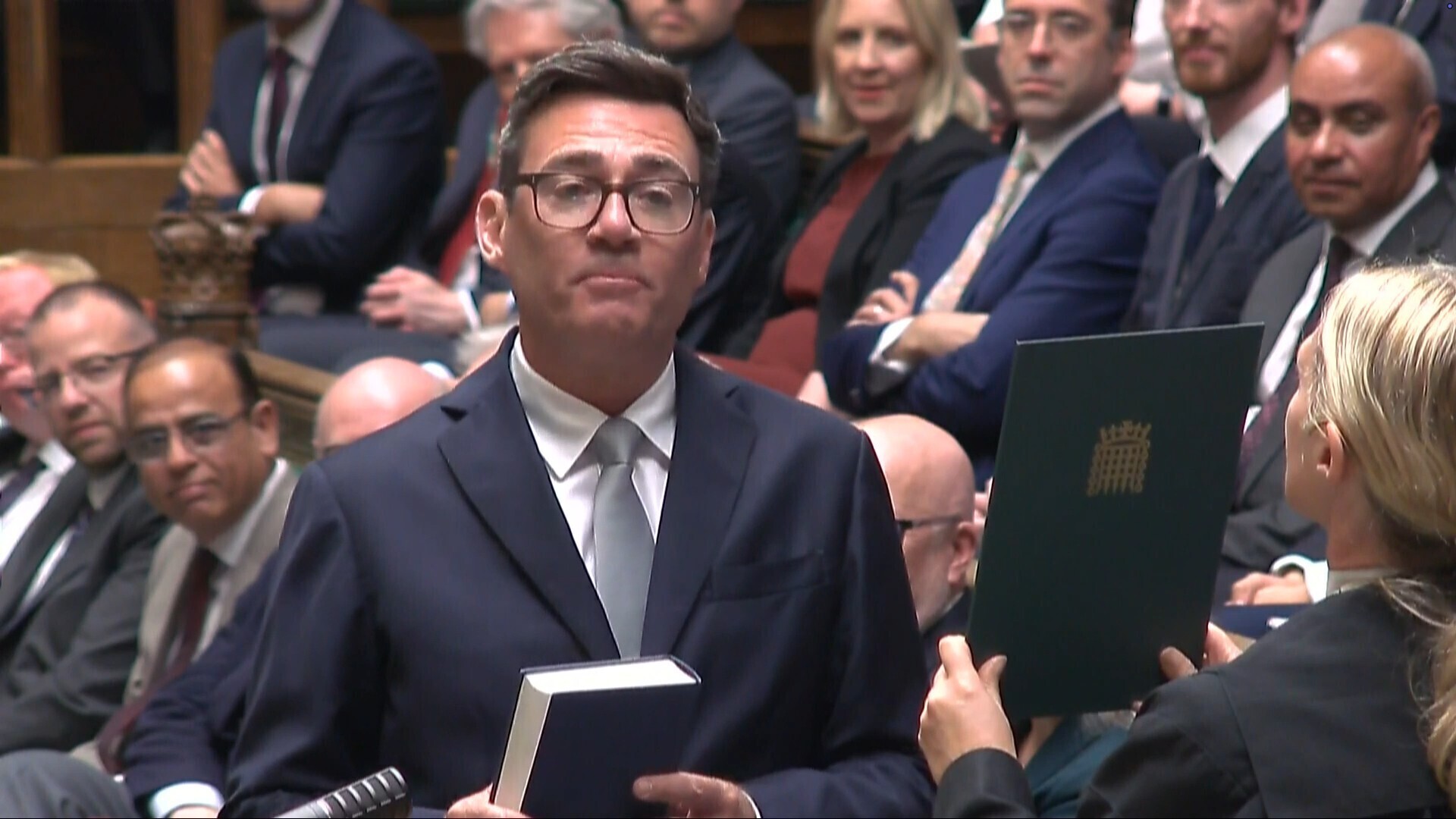
Andy Burnham being sworn-in as an MP in the Houses of Commons after winning the Makerfield by-election; during his recent campaign, he already promised not to ‘rerun’ Brexit arguments. Picture: PA

Andy Burnham being sworn-in as an MP in the Houses of Commons after winning the Makerfield by-election; during his recent campaign, he already promised not to ‘rerun’ Brexit arguments. Picture: PA

Brussels won’t wait around for the new UK prime minister to bring brave new plans breathing life into EU-UK relations.

While the door is always open to closer ties — in every sector, whether trade, defence, services, and mobility — expectations for a reset of any substance are low.

Both sides were due to meet on July 22 to finalise an agreement that will soon allow the UK to resume the sale of animal products and agricultural goods in the EU’s single market.

The formal summit has been postponed as the UK wrestles with yet another prime ministerial heave.

The SPS agreement (sanitary and phytosanitary) ends the need for physical border checks and arduous paperwork for most food, plant, and animal exports between Britain and the EU.

It requires the UK to absorb all existing and any new EU regulations on food and agriculture, and as a third country, the UK won’t have any say on the matter.

The deal doesn’t involve Northern Ireland because the North is already in the single market for goods.

You’ll recall the long-drawn-out saga that emerged over the status of Northern Ireland and the potential for a return of customs borders when the UK voted in a referendum for which no planning was made for the extreme of the two outcomes.

Ironically, one of the biggest winners from the deal, bringing closer relations and resumption of frictionless trade in food between the EU and UK, is the fishing industry.

While the harm Brexit brought to the viability of the Good Friday Agreement was the most contentious issue during Brexit, fisheries was a close second.

But leavers were told Brexit would trigger a great boom for Britain’s fishermen and for the overall economy.

It was grossly exaggerated both in facts, and in relation to the proportional size fishing has within the UK economy.

No gains for UK fishing industry despite pronouncements

Fishing represents about 0.14% of the UK economy, but took up a vast amount of negotiating time. Nonetheless, despite the massive pronouncements from Nigel Farage et al, no such gain materialised.

“We will be able to catch and eat quite prodigious quantities of extra fish,” Boris Johnson told fishers who were sold on the idea they would have full control of all of the waters if the UK left the EU.

Instead, the industry has been weighed down with extra administrative process and not that much extra access to its own waters following the overall EU-UK Trade and Cooperation Agreement.

“We can see the sunlit meadows beyond. I believe we would be mad not to take this once-in-a-lifetime chance to walk through that door,” Mr Johnson implored them.

Within days of leaving, the fishing industry was plunged into a struggle with heavy bureaucratic burdens since the UK was no longer part of the Brussels regulatory regime.

Before Brexit, fish and seafood could be caught one morning in Scotland and find themselves on the supermarket shelf in Rotterdam hours later.

Since Brexit, shellfish and fresh fish exporters have been stuck with added costs of around €700 per consignment of fish. On top of that, exports are now frozen before being sent to the EU, given the time it takes to process checks.

As Britain awaits the election of its seventh prime minister since Brexit, it appears no closer to achieving the political will or clarity on what exactly to do about the monumental choice it made 10 years ago.

Pitfalls of debating British sovereignty

And just like Keir Starmer before him, Andy Burnham might be tempted to avoid the obvious pitfalls of reopening the deeply wounding, painful national debate about what sovereignty means.

Or whether the current state of chassis globally is proof positive of the need to be a part of a bigger, more stabilising union.

Nonetheless, the writing is on the wall.

The UK economy has shrunk by 6% according to economists’ analysis from the Bank of England, according to financial results from thousands of British companies since the referendum.

“The reason for that is that if you reduce the size of the markets that we trade with, so we reduce our export markets, then that does tend to have a negative impact on growth,” British professor Nick Bloom from Stanford University, who co-authored the study, told the BBC.

It’s not clear if, in electing Andy Burnham, the UK will face the reality that Brexit isn’t working and changing prime ministers every year or so won’t resolve that.

For now, it doesn’t appear so. Particularly given how Burnham’s new constituency of Makerfield is a die-hard ‘leave’ area, voting for 65:35, so he’s already on the back foot if he wants to be re-elected.

The fact that Burnham won against Reform UK in the same constituency offers some hope that the population might be ahead of the politicians on the reality check.

In addition, successive polling shows a growing number of British people believe Brexit was a mistake. 

In June, a YouGov poll showed 57% of Britons say Brexit was wrong and 55% want to rejoin.

But during his recent campaign, Burnham already promised not to “rerun” Brexit arguments.

The EU can stand down the rejoining team.

More in this section

Revoiced

Newsletter

Had a busy week? Sign up for some of the best reads from the week gone by. Selected just for you.

Cookie Policy Privacy Policy Brand Safety FAQ Help Contact Us Terms and Conditions

© Examiner Echo Group Limited