Paul Hosford: Dare we hope that the curse of living in a continued crisis lifts soon?
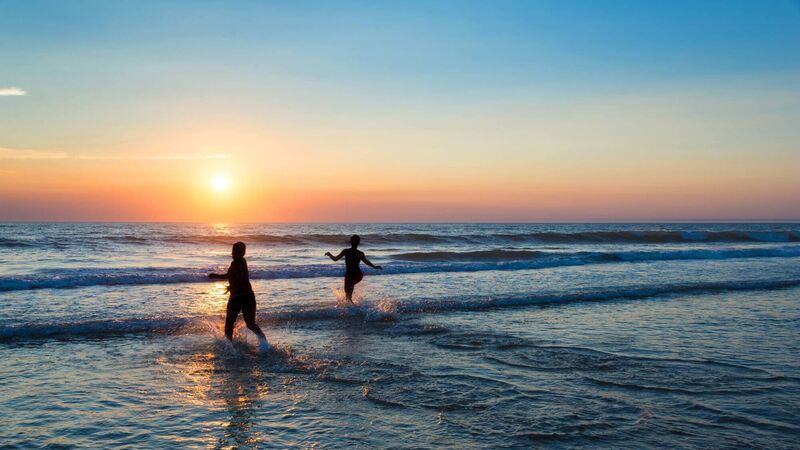
Some people's holiday plans could be badly hit, from as early as May. Picture: iStock

Remember precedented times? Back when things were calmer, less existentially crippling, with better music.
Perhaps I'm just showing my age or becoming weary after nearly two decades in news media, but it certainly feels like the early 2010s were perhaps the last time that things felt more known, more certain, more in hand.
I don't want to lean into the Irish trope of blaming the Brits, but the seismic shock of Brexit is not a bad place to start. That night, I had volunteered to work the overnight shift from 2am, manning a liveblog for what was assuredly a narrow vote of confidence in the EU.
I went to bed for a few hours before voting closed, thinking I would finish out the liveblog as the sun rose and British prime minister David Cameron declared a victory over his party's Eurosceptic right flank and everyone got on with their lives.
Instead, I woke to a text from the colleague whom I would be relieving, saying: "I think they're going to do it." As I hurriedly dressed and raced to the office, it became clear that that was exactly what had happened.
A couple of months later, a former US secretary of state would showdown with the businessman from the US version of , a man I had nine years previously stayed up to watch be a central figure in WWE's .
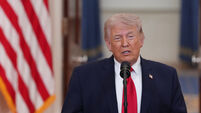
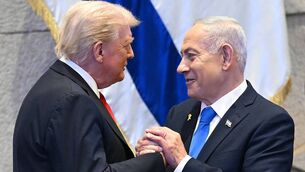
He had built his brand on open xenophobia, but the think pieces emanating from the US suggested he didn't even want to win, that this was a branding exercise, and the polls seemed pretty convinced that Hillary Clinton would easily triumph over Donald Trump.
On another overnight shift, I watched as Kellyanne Conway, the Trump spokesperson, gave an interview early in the night, which suggested that she agreed with the polls.
While she said Mr Trump would win with her mouth, her body language betrayed her. In the early going, the arrow showed a 99% certainty that Ms Clinton would become the US president.
Then it slipped to 95%, 90% and so on until it narrowly favoured the man who birthed a political movement out of little more than a red cap and a catchy four-word slogan: Make America Great Again.
In the years that followed, it seemed like both Brexit and Trump's administration were never far from the headlines.
And then came a mystery flu-like illness that had broken out in a part of China most had never heard of and probably still couldn't find on a map.
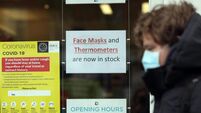
As the novel coronavirus took hold, many assumed its impact would be measured in weeks, not years, but restrictions in Ireland existed from March 2020 to February 2022, with others going further.
Of course, by the time masks were officially no longer needed in Ireland, Russia had begun once again moving towards Ukraine, not that the 2014 annexation of Crimea had ever ended.
A full-scale invasion seemingly caught the world off guard and within days, Russian troops were in north Kyiv.
Similarly, in Gaza, Israel's response to the savagery of the October 7 Hamas attacks has seen years of suffering for the enclave.
Whereas the world had become used to short, sharp bursts of violence, the war's effects continue to this day despite a ceasefire.
More recently, Israeli and US strikes on Iran last month were not the first of the second Trump administration, but have had a much greater fallout than anything that went before them, spiking global oil prices and creating more uncertainty and unrest in the Middle East.
For some weeks now, much of the world has looked at the situation and expected, or more hoped, that it would resolve itself, that responsible actors would return to their corners and everyone would go along not getting along.
But as the weeks have passed and Mr Trump has alternately claimed victory, said victory is imminent, told the world he doesn't need Nato, asked Nato partners for help, criticised Keir Starmer and threatened to leave the entire mess in the Strait of Hormuz to others to clean up — often in the one interview — it has become increasingly obvious that this may be another one of those unprecedented times.
And it is another stormy sea which Ireland's boat will be tossed around in.
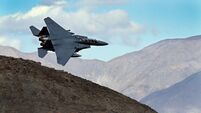
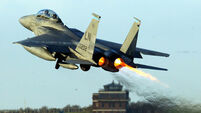
Of course, its impact is already being felt at home — an excise duty cut worth a quarter of a billion euro has been the Government response to petrol and diesel prices shooting up at the pumps as Iran chokes off supply through the Strait of Hormuz, with warnings that supply could impact motorists and holidaymakers alike.
While government sources insist that there has been no discussion of locking down travel in a bid to save fuel, the mere mention to a public still not over covid went down as expected.
It's not that people do not understand the issues — many people who previously couldn't tell a boat from a ship are now experts in international shipping — it's that after a decade of pulling together and asking for more, there may not be anything left to give.
Ireland has still not adequately reckoned as a nation with covid lockdowns, so any responses to fuel shortages will have to be measured, equitable and, above all, compassionate.
If Ryanair CEO Michael O'Leary is correct in his prognosis that holidaymakers will be hit from May, some people are likely to have summer plans badly impacted at best, and the Government response will require a much more nuanced hand than the public health emergency which hit the first years of this decade.
It is not just that the Government would have little justification for forcibly curtailing travel because of an oil shortage, it is that the public has lived through these unprecedented times, a decade of seemingly endless crisis and tumult, and it is hard to see how much more is left to give.
Many commentators now believe that some level of shortage will be seen and that will require responses from society and government — smarter energy usage, cutting out unnecessary car travel etc — and this is what is indicated as the first step of a likely government message.
As this latest crisis rolls on, a populace that has been ground down by continued crisis after crisis will hope that the curse of living in interesting times is soon lifted.

CONNECT WITH US TODAY



Be the first to know the latest news and updates