Gareth O'Callaghan: What if everything we thought we knew about Jesus was wrong?
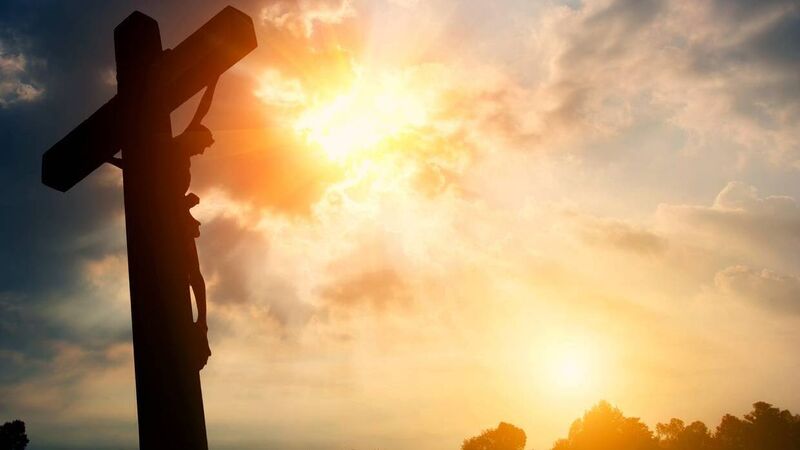
A tomb found in Talpiot opens the possibility that the resurrection of Jesus had never happened. File picture

Speculation is a dangerous pastime. When I was six, I made the mistake during catechism one day of asking if Jesus was married. I can still see the revulsion on my teacher’s face. I was guilty of heresy and given two sharp swipes of the cane.
This man called Jesus has never ceased to fascinate me. Thirteen years after my faux pas, that in March 1980 in a courtyard on Dov Gruner Street in East Talpiot, three miles south of the Old City in Jerusalem, a construction crew laying the foundations for an apartment complex uncovered a tomb.
It contained 10 small burial cases, one of which was engraved with the words “Yehoshua bar Yehosef”, translated as “Jesus son of Joseph”; although the inscription was partially illegible and its translation is widely disputed to this day. Also discovered were various other human remains and several wall carvings.
A documentary film, , by James Cameron and journalist Simcha Jacobovici was released in 2007, at the same time as a book of the same title by Jacobovici and Charles Pellegrino, which argued that the tomb was the burial place of Jesus of Nazareth.
Other translated inscriptions included “Mariamene e Mara” (Miriam or Mary), and “Yehuda bar Yehoshua” (Judah son of Jesus).
Even though all were names of New Testament characters, they were also among the most common names in Palestine at that time. But that didn’t stop Cameron and Jacobovici claiming that Talpiot was the burial place of Jesus and Mary Magdelene, Judah their son, and Mary, Jesus’s mother.
Also laid to rest there allegedly was James, brother of Jesus. Given the lack of records, we have no way of ever knowing how accurate the discovery was. If it was true, it was nothing less than the tomb of Jesus and his family, which would open an argument that the resurrection had never happened.
It was one of Discovery Channel’s most successful shows in years. However, such was the level of outrage from Christian groups and biblical academics, they pulled the plan for a repeat broadcast.
In 1996, 16 years after the tomb was found, the BBC produced a documentary for Easter Sunday called , which posed a hypothetical question based on the Talpiot discovery, “What if Jesus wasn’t resurrected?”
The public reaction to the programme was both critical and angry. The reaction of its presenter Joan Bakewell appeared to be the only argument that either side of the heated debate could agree on, namely “there is certainly no positive proof of anything”.
Some of the criticism aimed at the Talpiot discovery was both personal and nasty, motivated by an unwarranted need to defend ancient Christian beliefs.
From a scholarly perspective, critics pointed out that the tomb itself was a type more popular with wealthy Jerusalem families in the first century, while Jesus’ family came from a poorer background.
Another criticism was that the Jesus ossuary wasn’t inscribed with a title, such as Messiah, or Master.
And if Talpiot was his burial place, then what becomes of the Church of the Holy Sepulchre, which has always been revered as the site of Jesus’s death and burial since the second century?
But who’s to say that such criticisms, or objections, come from a place of absolute truth?
What if these objections are wrong, and that Talpiot is the burial place of Jesus’s family?
There is no definitive physical or archaeological evidence of Jesus’s existence, which surely makes the Talpiot findings somewhat curious.
One of the burial boxes found there is known as the James ossuary, which bore the inscription “James, son of Joseph, brother of Jesus”. However, it was later found that the words “brother of Jesus” were forged.
Biblical scholar, Ben Witherington suggests this combination of biblical names is most likely not a coincidence, and that James could be the connection to the real Jesus and his family.
Because there is so little physical evidence available that can reliably present us with facts, one of the most explosive theories is the marriage of Jesus and Mary Magdelene.
It’s a speculative claim that can’t be historically verified or rejected. But what if it were true?
Dan Brown’s 2003 bestseller raised the idea that Jesus and Mary Magdelene’s marriage had been suppressed by the church for thousands of years. Their love for each other is central to the narrative.
The Holy Grail is Mary. If it was all one big conspiracy theory, then it gave rise to historical revisionism like never before, making people rethink history and religion.
The Bible is filled with symbolism, and it’s to be expected that more and more people are thinking outside the box. What if Jesus had been married to Mary Magdelene? What if they had a daughter called Sarah? Would it change how history has charged this man as a saviour and redeemer?
And what about James his brother? That would infer that Mary, Jesus’s mother, had other children — Joseph, James, Jude, and Simon, as indicated in the gospels of Mark and Matthew; or if James was Jesus’s half-brother, that would have meant Joseph was the father of a son from a previous marriage.
Is it acceptable to push the boundaries on religious narratives that we were led to believe over our lifetime could not be questioned? It is, if they contradict what we have been taught.
I wonder if many priests suspect that Jesus was married; and how must that make them feel about celibacy and the lonely existence they live. None of the four gospels states that Jesus was celibate, while none of the gospels tells us that Jesus was married. So what are we left to believe?
Jacobovici’s Talpiot tomb account is regarded by critics as a story that doesn’t hold together, but it’s also fair to say that the Bible has its share of contradictions. Matthew and Luke’s gospels trace Jesus’ lineage in completely contradictory ways, as though he was two different people.
The accounts of Judas Iscariot’s death in Matthew 27:3-10 and Acts 1:18-19 differ in both the details of what happened and how he died. In Matthew’s gospel, Joseph and Mary’s hometown was Bethlehem, while in Luke’s they lived in Nazareth.
None of the gospels came with an “about the author” section, so how do we know who wrote them and when? Many of the great biblical scholars have argued about their origins, but as new writings are discovered everything is open to debate.
Personally, the notion that Jesus and Mary Magdelene were married with a family appeals to me because it makes them more human, more real. While it remains a notion, as time passes more evidence is being discovered that holds a microscope to all the other lifelong beliefs.
Nikos Kazantzakis in his 1953 book alleged they were married, as did Dan Brown in 2003. As recently as 2008, a manuscript almost 1500 years old unearthed at the British Library claims the same.
The reason we know nothing about Jesus from the time he was 12, when he visited Jerusalem with his parents to celebrate the Passover, until he was in his early 30s was because he was busy raising a family, according to a 2014 book by Barrie Wilson and Simcha Jacobovici, based on this ancient manuscript. It’s worth a read.
At the risk of getting theological backs up, I’m reminded that few religions in history have led to more conflict than those based on the teachings of a man called Jesus. As Napoleon, among others, once said: "What is history, but a fable agreed upon?". Happy Easter.
CONNECT WITH US TODAY



Be the first to know the latest news and updates