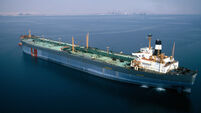
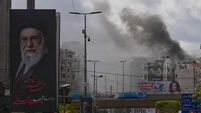
US military deployments signal major escalation in Iran war
It is clear US president Trump is preparing to launch ground operations in the Middle East, writes Dorcha Lee
US military deployments signal major escalation in Iran war

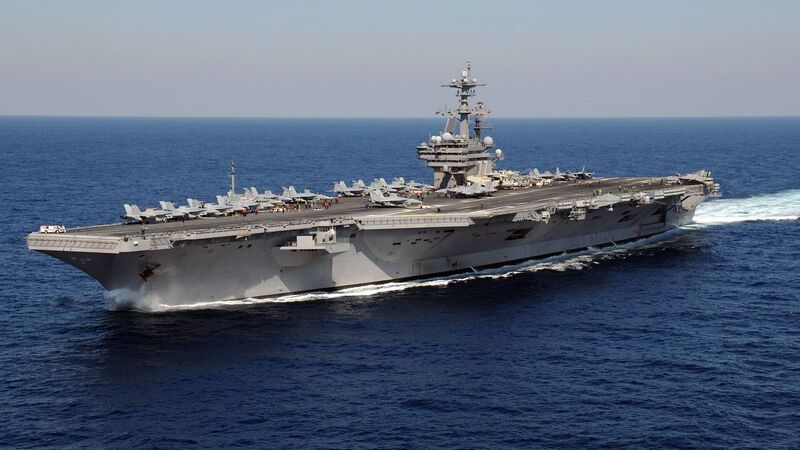
The USS George H W Bush has been deployed from Virginia, USA and is on its way to the Middle East to bolster US operations in Iran. Another aircraft carrier, the USS Gerald R Ford, is currently in Croatia undergoing repairs.
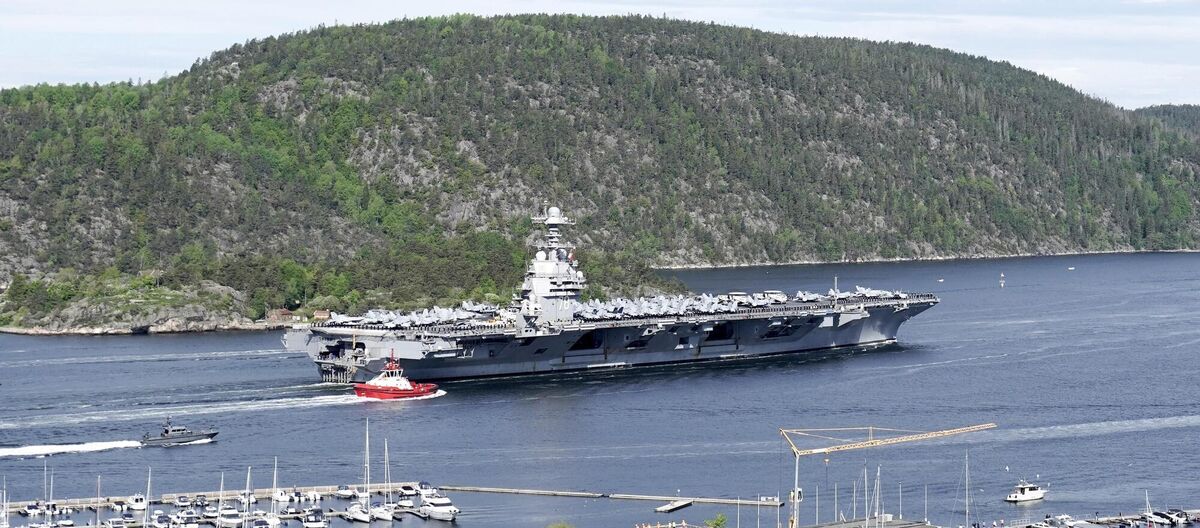
The news that the USS George H W Bush aircraft strike carrier group is being deployed from Norfolk, Virginia to the Middle East, is a major escalation in the war there.

It is now clear that the US is preparing for a substantial ground invasion of Iran, or its islands, probably by the middle of April.

The catalysts for this change are, I believe, not just the Iranian blockade of the Strait of Hormuz, but also the Iranian threat to destroy the desalinisation plants in Saudi Arabia and in the Gulf states. In Saudi Arabia alone, 70% of the population rely on desalination for their drinking water.

Last week, president Trump announced he had reached agreement with Teheran for a five day pause in attacks on power plants and energy infrastructure. Then he gave a two day ultimatum to Tehran if they continued their partial blockade of the Strait of Hormuz. 

Finally, on Thursday, Trump announced a ten day extension, to Easter Sunday, to the pause in attacks on energy infrastructure.

Trump needs a pause in hostilities so that his forces can build up. The USS Gerald R Ford aircraft carrier group has withdrawn temporarily to port in Croatia to replenish its depleted stocks of munitions, and for repairs to fire damage to its laundry room.

The US has sent two marine expeditionary groups (MEUs) to the Arabian Sea. The 31st MEU, on board the USS Tripoli amphibious ready group, left Japan on March 13 and arrived in the Arabian Sea on 28 March 28.

The 11th MEU on board the Boxer amphibious ready group, left California on Saturday, March 19 and is expected to arrive in the Arabian Sea on April 10. Each has a complement of 4,000 to 4,500 marines and sailors. The USS Abraham Lincoln aircraft carrier group is off the coast of Oman.

On Tuesday March 24, 1,000 troops of the 10,000 strong 82nd airborne division, based in Fort Bragg, North Carolina, were tasked to move to the Middle East.

It is now very likely that this is only the advance guard and that the entire division itself may follow and be airlifted to the Middle East, arriving there around Easter Sunday . The US could also put the 101st airborne division at Fort Campbell, Kentucky, on standby.

We must remember that the US has already 50,000 troops in the region.

The only totally secure way to keep the Strait open to all shipping, without the agreement of the Iranians, is by the occupation of the Iranian Northern side, by a large contingent of US forces, starting with marines.

The creation of a UN mandated maritime peacekeeping force to police the Strait could be part of the solution. Such a peacekeeping deal may require the deployment of an international disengagement force on the Northern (Iranian) side of the Strait of Hormuz.

If ceasefire talks are agreed, one logical approach is a three strand diplomatic process. The first strand would ideally require the US to re-engage with the original 2015 JCPOA (Joint Comprehensive Plan of Action) signed by Iran and the P5+1(the five permanent members of the UN Security Council+ Germany). 

The aircraft carrier USS Gerald R Ford The USS Gerald R Ford aircraft carrier group has withdrawn temporarily to port in Croatia to replenish its depleted stocks of munitions, and for repairs to fire damage to its laundry room.File picture: Terje Pedersen/NTB Scanpix/AP

Its purpose was to limit Iran’s nuclear programme. The US withdrew in May 2018. The scope was too narrow but perhaps it could be widened to include limitations on ballistic missile programmes, and an end, or agreed limitations, to Iran’s support of proxy organisations operating in the region.

The second process would address essentially those issues arising from the current conflict in Iran, in the Gulf and other states, with an initial aim of achieving a ceasefire, and reopening the Strait of Hormuz to international maritime traffic. Pakistan has opened contacts with the key stakeholders on this strand.

The third process would be essentially to restore the situation in Lebanon to the status quo ante. France has offered to lead this process and, significantly, Israeli president Isaac Herzog is fully supportive. Israel, which was already demanding control of all of Lebanon South of the Litani River, including UNIFIL’s Area of Operations, now want to extend further into Lebanon.

The stated purpose is to force Hezbollah to withdraw from South Lebanon, south of the Awali River, and from the Bekaa Valley (Eastern Lebanon).

French negotiators will most likely propose an alternate plan to Israel’s proposal to have an Israeli occupied buffer zone in Southern Lebanon. This could be for an enhanced Unifil, or Unifil 2, with an extended Area of Operations from the Awali River down to the Lebanon/Israeli border. Unifil is on course to be withdrawn from Lebanon in December.

Such an agreement could ensure a buffer zone to exclude missile or drone attack on northern Israel. All attacks by the IDF against Lebanon would cease. Hezbollah would decommission all its weapons except personal weapons which would be regulated and registered with the Lebanese authorities. Israel will want to successfully complete its operations in Lebanon before the Israeli general election day on October 27.

According to US sources, they initiated Operation Epic Fury on the basis of achieving their military and political objectives within a short term timeframe of perhaps two to three months. They expressed confidence that this would be achieved without a ground invasion of Iran. However, the US position has changed with the troop movements outlined above. Of course, this may also be a ploy to get the Iranians to the negotiating table.

According to Iranian sources, they have long prepared for surviving overwhelming air attacks on their military infrastructure.

Their preparations for defensive operations involved attacking countries in the region where the US and its allies had military bases, destabilising the international oil trade, and putting its armed forces on a war footing using a fall back decentralised command and control system.

The biggest mistake of the US is that they launched this war without an exit strategy, or at least without a strategy they could reveal to the US public. President Trump keeps shifting the objectives of the operation. Moreover, there is increasing nervousness in both the US senate and congress about the approaching midterm elections.

Several international defence experts are concerned that the US may withdraw leaving the situation in a mess. Iran is already agreeable to let some nation’s ships through.

Given the interests and capabilities of the EU, it should be willing to help out, in the event of an international force being put together to escort ships through the Strait of Hormuz.

  • Dorcha Lee is a retired army Colonel and a defence analyst.

More in this section

Revoiced

Newsletter

Sign up to the best reads of the week from irishexaminer.com selected just for you.

Cookie Policy Privacy Policy Brand Safety FAQ Help Contact Us Terms and Conditions

© Examiner Echo Group Limited