Sarah Harte: Pete Hegseth is like a manic clown compared to sober Colin Powell
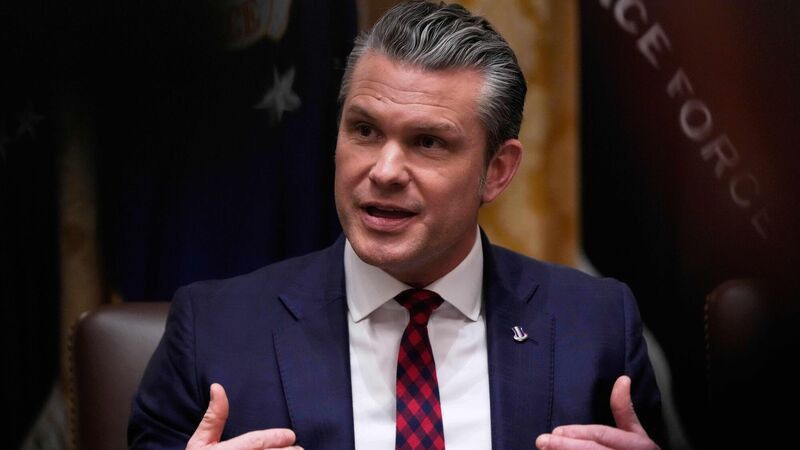
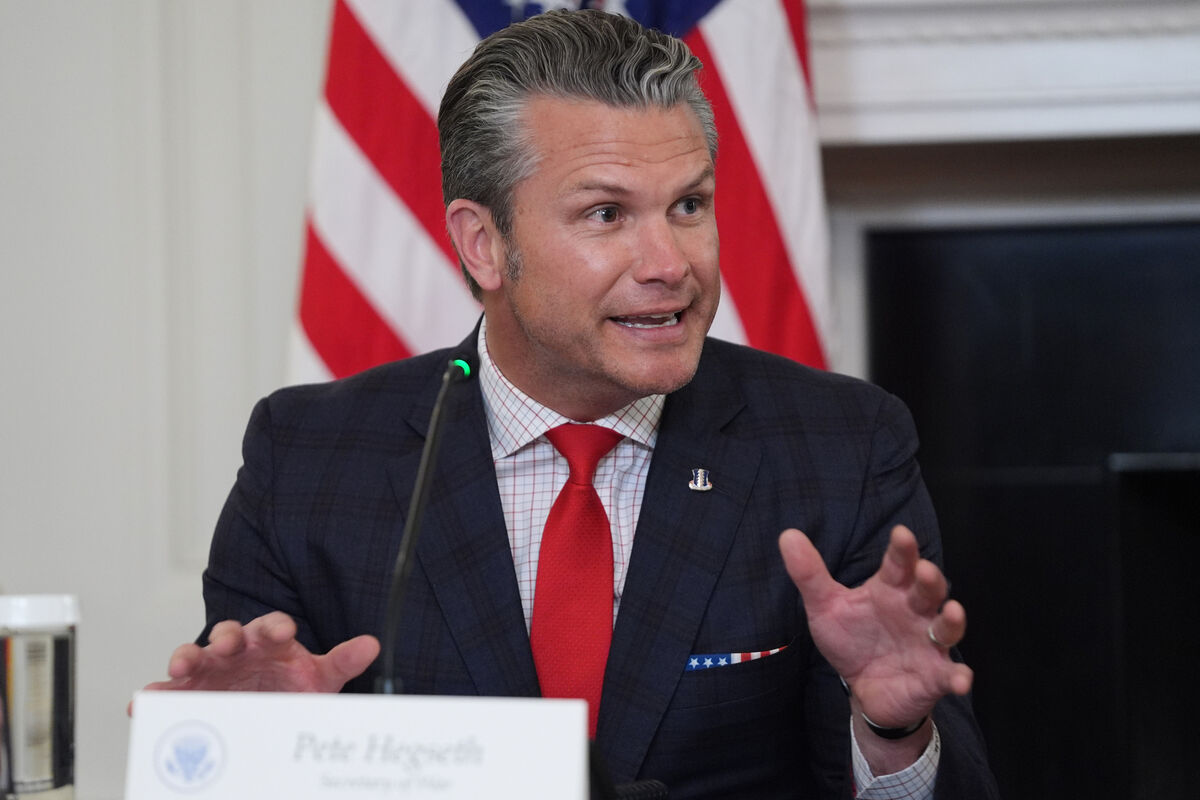
When Defence Secretary Pete Hegseth said the US is "always controlling the throttle" and not being directed by Israel, you immediately wonder. Picture: AP/Julia Demaree Nikhinson
The opening phases of the hyperbolically named ‘Operation Epic Fury’ (like something out of a Mad Max movie) had echoes of the ‘shock and awe’ beginning of ‘Operation Desert Storm’.
With its use of intense, high-volume aerial bombing campaigns and air power pounding targets in Iran.
Operation Desert Storm was a response to Saddam Hussein's invasion of Kuwait.
Watching the footage brought me back, because a family member was located in Saudi Arabia during ‘Operation Desert Storm’ in a key staging area for coalition forces' air operations to destroy Iraqi military infrastructure.
It was therefore a potential target. Its proximity to the Iraqi border was also a concern.
On January 16, 1991, during a brief phone call, he warned that lines of communication were about to go down. We wouldn’t hear from him, but not to worry.
During a total communications blackout, we watched television, read the papers, listened to the radio, and tried to figure out what was happening.
Read More
We didn’t hear from him for weeks, but it felt like an eternity. The Gulf War concluded rapidly once coalition ground forces entered Kuwait and Hussein’s forces collapsed, but it was a tense, surreal time.
As the conflict progressed, there were warnings of potential chemical strikes from Saddam Hussein, which he had used on the Kurds.
Later, we heard how they wore gas masks and how their windows and doors were taped up. They had mounds of tinned food.
So here we are again. Right now, one obvious similarity between both military operations is the Persian Gulf’s strategic importance and its energy reserves.
The 1991 operation to liberate Kuwait was not just about regional stability; it was also about threatened global oil supplies.
But there are also profound differences between the two ‘wars’.
Operation Desert Storm was largely confined to Kuwait and Iraq. This current conflict is far more geographically dispersed.
The current war is not in response to an act of aggression. Hussein gave the two fingers to the international community when they told him to leave Kuwait, a major supplier of oil to the United States.
This war began with pre-emptive strikes against Iran’s military infrastructure. This has sparked debates about international law and the intervention, which lacks an international mandate.
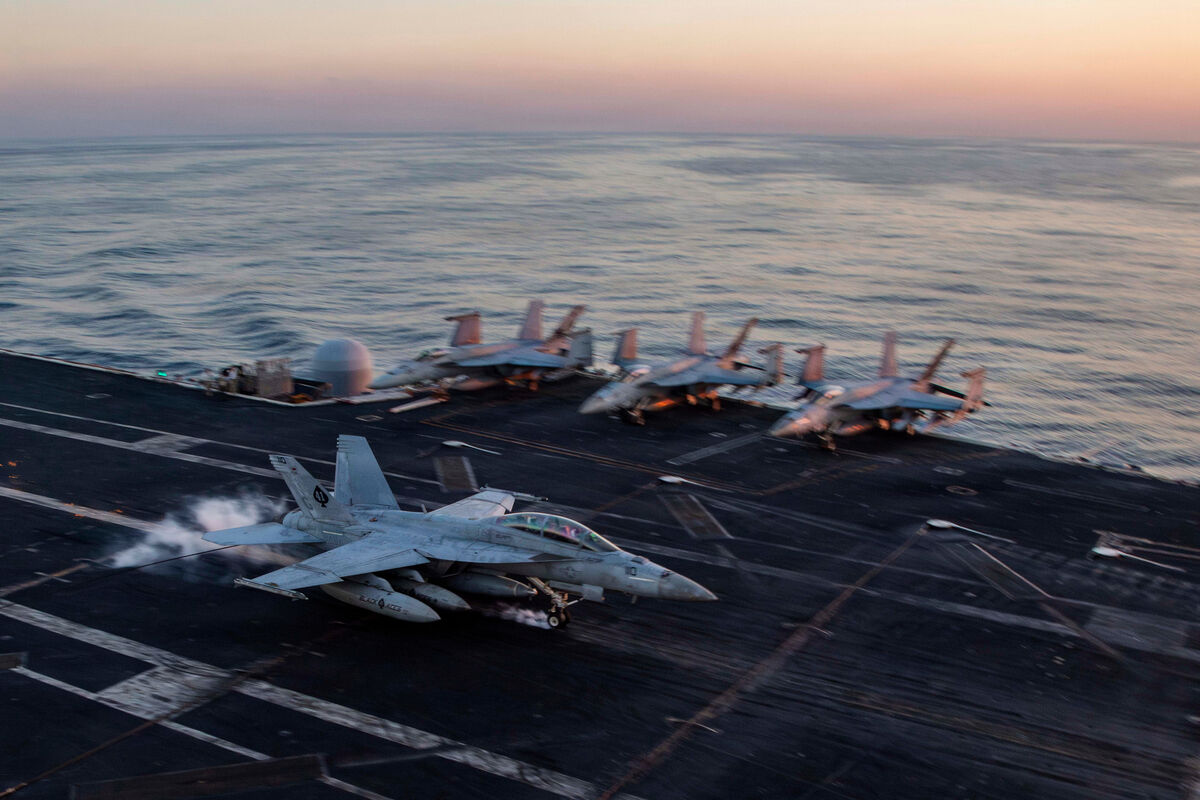
It’s hard to imagine that it will end in a quick, decisive Desert Storm ‘victory’. There seems to be an assumption of controllability that could prove misguided.
Perhaps most pertinently, the military objectives seem fuzzy. Is America fighting to weaken Iran’s military infrastructure? Is it in response to a direct threat? Is it to bring about regime change? Is it to support Netanyahu and Israel?
When Defence Secretary Pete Hegseth said the US is "always controlling the throttle" and not being directed by Israel, you immediately wonder.
However, Karl Rove, the Republican strategist, has warned that the White House's inconsistent messaging risks undermining public support for the war. The polls are mixed. A Reuters/Ipsos poll showed that only 1 in 4 voters supports the war.
Subsequently, two different surveys suggested that support for the war was almost evenly split among American voters. It will be interesting to see how the spike in gasoline prices impacts that support.
Certainly, Donald Trump has executed another volte-face. Previously, he was voluble about his refusal to support or initiate US foreign military incursions. He described the Iraq invasion as a ‘big fat mistake.’
Meanwhile, we see a humanitarian crisis unfold across the Middle East with hundreds of thousands leaving their homes in cars, on scooters, and on foot seeking cover from the war. The UN estimates the current number of those displaced at around 330,000.
Perhaps most strikingly of all, we have "our boys flying bombers", Pete Hegseth, renamed the Secretary of War, telling Iranians that they are "toast".
“We are just getting started. We are accelerating, not decelerating.”
He drew an analogy between Iran’s plight and a football team.
"They don’t know what plays to call, let alone how to get in the huddle and call those plays."
In his briefings, he boasts about death and destruction in a gleeful way that is the opposite of moral seriousness and sober military communication.
I have theories about Hegseth I can’t share. He certainly comes across as addicted to the immediate ‘dopamine hit’ of media attention rather than conveying policy substance.
He gleefully spoke about "punching [Iranians] while they’re down, which is exactly how it should be”.
Hard to believe that Hegseth, whose military career has been criticised for being relatively brief and light by some military figures, is the defence secretary.
He said: “If you kill Americans, if you threaten Americans anywhere on Earth, we will hunt you down without apology and without hesitation, and we will kill you.”
We have fallen far from the days of Colin Powell, who was president George HW Bush’s principal military advisor during the 1991 operation.
Back then, he was visibly troubled by the weight of his decisions. He spoke about restraint, proportionality, and carefully calibrated decisions. He wanted to avoid killing people unnecessarily.
So did George Bush Senior, who said: "I see no reason to keep killing soldiers, either ours or theirs. Remember, they have mothers and fathers too."
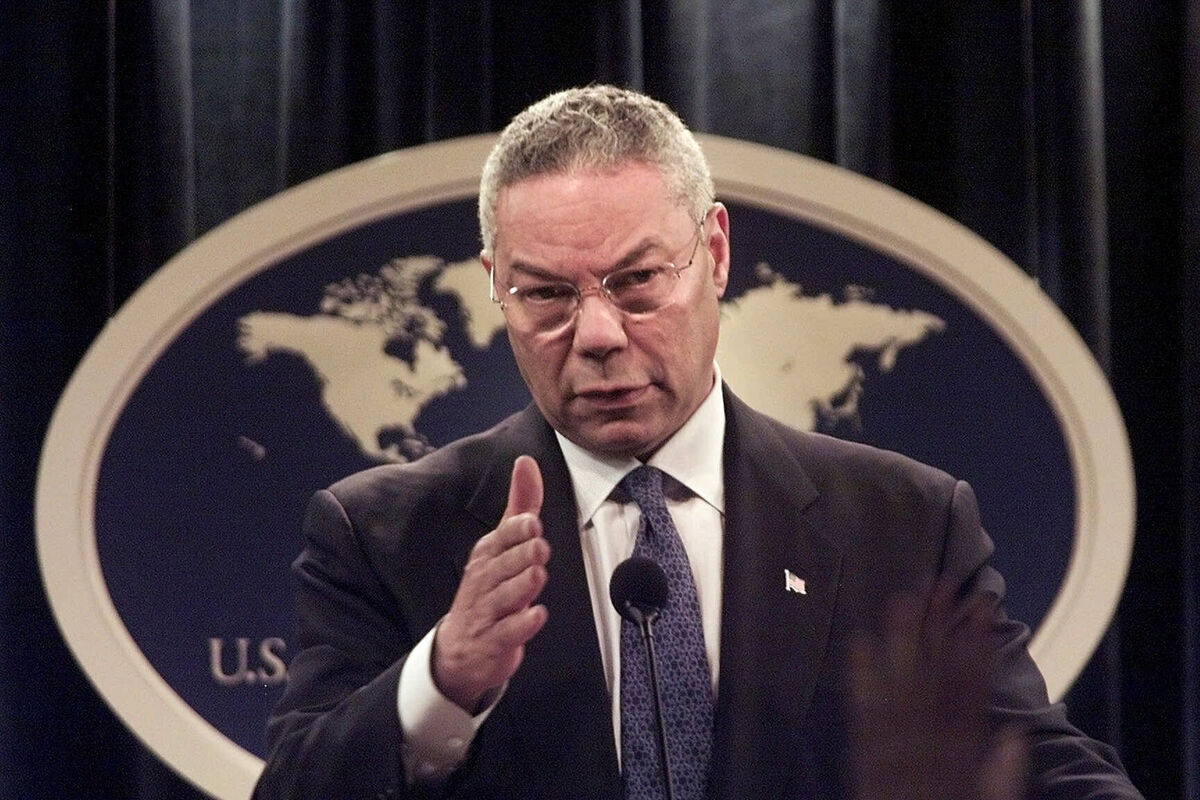
Or as Powell said: "If we’ve accomplished the mission… what’s the point of killing more people?"
Colin Powell died in 2021 from covid.
He was a four-star general who understood the human cost of conflict and brought a comparatively pragmatic, intellectual approach to foreign policy, unlike some members of the current administration, who at certain moments feel like a whimsical, chaotic clown show.
In the end, George Bush Senior didn’t topple Saddam Hussein. They obviously had their critics, but looking back, he and Colin Powell were of the old order.
They may not have been of your political hue, but they were of a certain calibre.
When I see tough-guy Hegseth bouncing around a stage shouting "you are toast", it’s not a warrior-soldier I see.
Rather, I imagine him as a frat boy who guzzled booze, mansplained to women unfortunate enough to be in his orbit, and shouted drivel before vomiting and faceplanting on the quad.
Hegseth has advocated reforming the military by axing the Pentagon’s diversity, equity, and inclusion efforts.
Gen. Colin Powell, as a black man born in Harlem to Jamaican immigrants, rose through the military ranks, surely squashing ‘big thinker’ Hegseth’s belief that diversity is the enemy of meritocracy.
What does this latest Middle Eastern war say about the times we live in? What is the calibre of politicians in charge of ‘the war’?
At the highest echelons of our political echelons, performance and extreme rhetoric seem to have replaced competence, integrity and governance.
A declaration of this war was made on Truth Social. Last Friday, the White House posted a video on X blending clips from movies including , , and with real footage of the attacks in Iran.
It included an image of former Fox News host Hegseth, arguably a clue as to where the tasteless idea came from.
People like Powell were committed to ideals and language that reflected the responsibilities of a democratic nation.
Goals that at least attempted to align with the principles of necessity and proportionality under international law and involved UN co-operation.
Ironically, the United States shaped many of the norms of international law now being dismantled.
Political strength included the ability to work across divides and earn broad respect.
Not now, baby. All that has gone up in smoke.
CONNECT WITH US TODAY



Be the first to know the latest news and updates