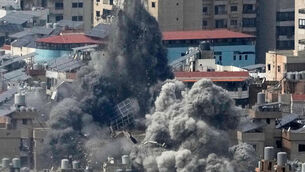
Colin Sheridan: Dubai’s influencer calm after Iranian missile strikes exposes the fragile illusion
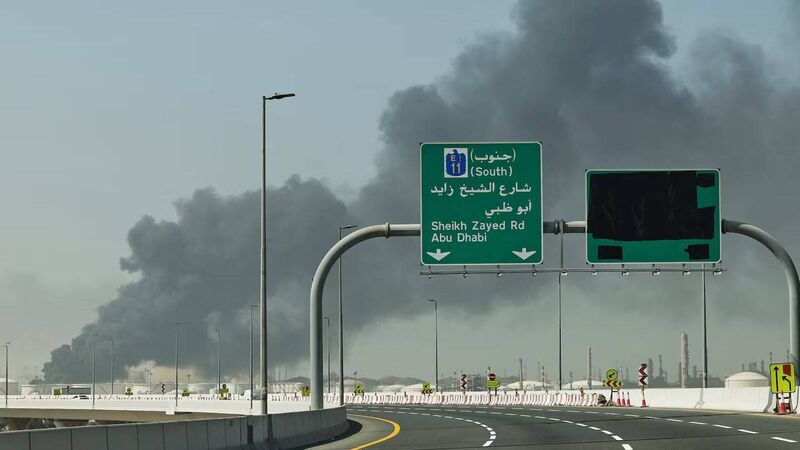
An Iranian strike hits the port of Jebel Ali in Dubai on Sunday. Iranian missiles flying across the Gulf are not the sort of thing that fits easily into a real estate brochure. Picture: Fadel Senna/AFP via Getty Images

It was the reels that told us. In the early hours after Iranian missiles targeted American military facilities in the Gulf, a small army of Dubai-based influencers took to their phones to calm the nerves of the watching world.
Speaking like Stormin' Norman Schwarzkopf on the eve of Desert Storm, they insisted, smoothie in hand, that the missile defence systems were working perfectly. The bottomless brunches were proceeding uninterrupted. The infinity pools were shimmering under an obedient sun.
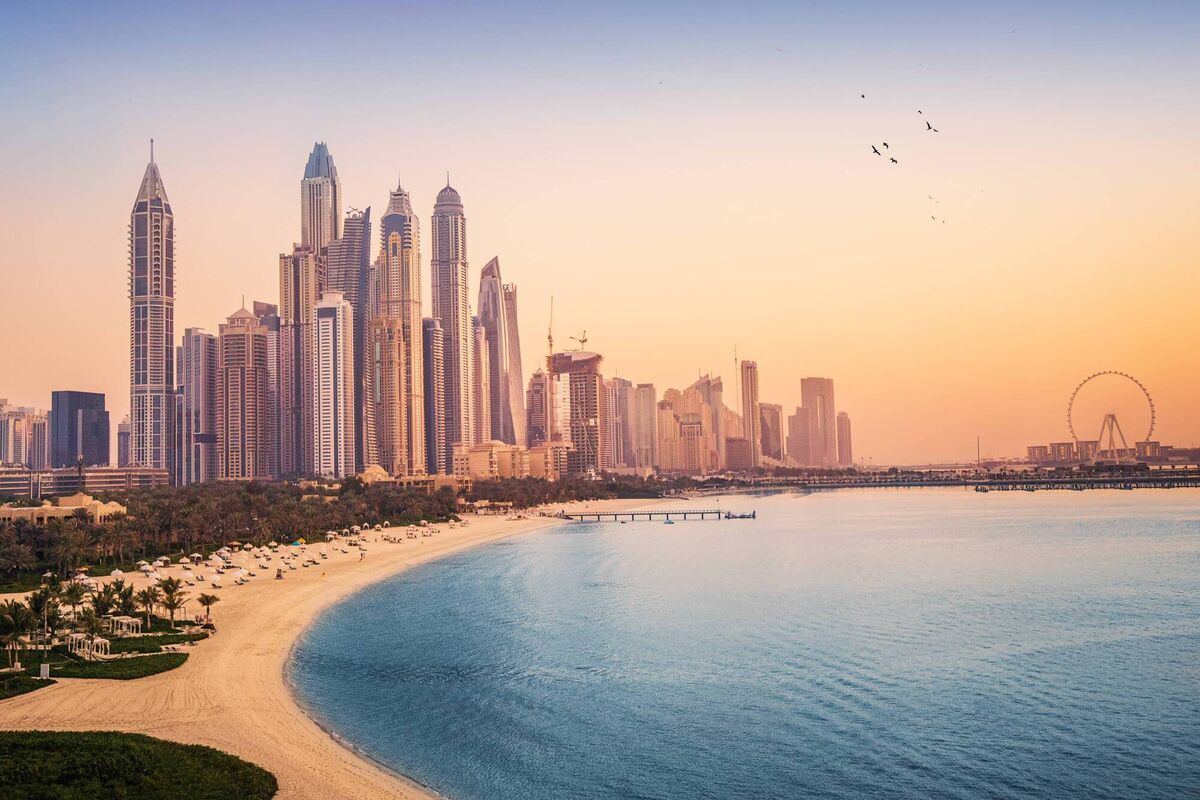
One trendsetter, framed tastefully against the skyline of the marina, explained that the whole thing was “quite exhilarating”. Another, speaking with the assured confidence of a visiting fellow at Chatham House, reassured her followers that Dubai was “the most prepared city in the world”.
You could practically feel the sponsored relief radiating through the ring lights.
Read More
And why not? The illusion had to be maintained. Because if Dubai — the carefully assembled fantasy playground of the global wealthy and the aspirational middle classes — cannot promise safety and serenity, then what exactly is it selling?
For decades the emirate has functioned less as a place to live than as a brand to promote.
Luxury property developments shaped like palm trees. Indoor ski slopes in a climate that melts the tarmac. Influencers posing in front of Lamborghinis that they don’t own outside restaurants owned by chefs who don’t cook.
Where other societies at least attempt to disguise their excesses with culture, history or civic life, Dubai dispenses with the awkward middle steps.
It is a place where wealth itself becomes the attraction — the spectacle, the entertainment, the organising principle. The skyline is a graph of global inequality drawn vertically.
But like all brands, Dubai’s power depends on perception. The moment the fantasy cracks, the whole enterprise becomes harder to sustain.
Which brings us to the small, awkward matter of war.
Iranian missiles flying across the Gulf are not the sort of thing that fits easily into a real estate brochure.
Nor do evacuation flights and “shelter in place” advisories blend particularly well with the promise of endless brunches and beachfront property investments.
War is bad for Instagram.
And Dubai, above all else, is an economy that depends on people believing that nothing bad can ever happen there.
But behind the shimmering skyline and the social media gloss lies another, much older truth about the emirate, one that rarely appears in the promotional videos.
Dubai’s glittering cityscape did not rise from the sand by magic.
It was built, largely by migrant workers imported from South Asia and Africa under conditions that human rights organisations have spent decades describing in terms that are difficult to read without throwing up in your mouth.
Roughly 90% of the UAE’s population consists of migrants, and much of the manual labour that constructed the roads, towers and shopping malls was carried out by men from India, Pakistan, Bangladesh, and Nepal.
Many arrived under the kafala sponsorship system, a framework that ties workers’ legal residency directly to their employer.
In practice, this has often meant confiscated passports, withheld wages, cramped labour camps on the outskirts of the city and a workforce with little practical ability to leave abusive employment without risking deportation.
It is a system that has been repeatedly likened by experts to modern-day slavery.
The summer temperatures regularly exceed 40 degrees. Construction sites continue to operate. The skyline continues to climb.
The nannies and domestic workers — many of them just out of their teens — continue to sleep atop kitchen appliances in the utility room.
The promotional videos rarely pan the camera in that direction.
Instead we are shown rooftop bars, desert safaris and the curious modern ritual of the “influencer brunch”, where young Europeans film themselves celebrating a life of apparent abundance.
None of this is the fault of young teachers, nurses, and cabin crew who flock there by their thousands, not to sell something, but to service those doing the selling.
They sit above the indentured servants on the pecking order, privileged enough to be so close to the real money they can smell it, but never touch it.
Dubai was designed precisely to produce this effect — a place where the machinery of wealth is hidden just far enough out of sight that visitors can indulge the fantasy that prosperity simply exists.
But every stage set has its limits. And the arrival of real geopolitical danger introduces something Dubai has spent decades trying to eliminate. Risk.
This matters because the city’s entire economic model depends on the absence of it.
The expatriates who populate its high-rise apartments are famously mobile. They are there because the tax regime is generous, the weather predictable, and the lifestyle curated to within an inch of its life.
If those conditions change, they will simply go somewhere else. The property market will deflate. The Lamborghinis will be shipped home.
Dubai cannot afford that outcome.
And this is where an odd possibility begins to emerge.
For years, the emirate has happily co-existed with the geopolitical tensions of the region so long as those tensions remained comfortably distant from the beachfront developments and the shopping malls.
But missiles crossing the Gulf represent something different. They threaten not only infrastructure or military bases but the carefully constructed narrative that Dubai sells to the world.
If the emirate becomes associated with instability, if videos of panicked expatriates boarding repatriation flights replace the usual parade of infinity pools, the brand begins to unravel.
And once the brand unravels, the economic model goes with it.
Which, in these times of existential peril, raises the absurd possibility that Dubai might finally be good for something.
If its leadership believes that a widening regional war will destroy the illusion on which its prosperity depends, what exactly is it going to do about it?
Dubai sits within a network of political and economic relationships that stretch from Washington to Tel Aviv and beyond. It is a partner, an investor, a facilitator of business and diplomacy.
In other words, it has access. And if the survival of the desert resort depends on convincing certain allies that the temperature needs to be lowered, the incentives suddenly become very clear indeed.
For decades, Dubai has served as a kind of mirror held up to the modern world, reflecting back many of the qualities we claim to dislike but quietly reward — excess, spectacle, the relentless pursuit of wealth for its own sake.
It is the global economy distilled into a single skyline, the maintenance of which comes at an unquantifiable human cost.
But perhaps, just perhaps, the place may yet stumble into a useful purpose.
If the fear of empty penthouses and deserted beaches pushes the emirate to lean on its friends in Washington and Tel Aviv — to whisper that a wider war will frighten away the tourists and investors — then the consequences could extend far beyond the Palm.
Because the alternative is grimly predictable.
A widening conflict will not be fought in luxury hotels or rooftop bars, but in cities across Iran and Lebanon, among people who have never tasted gold-flecked cappuccinos.
And if the unlikely intervention of the world’s most extravagant sandcastle helps prevent that outcome, it would represent one of the strangest moral reversals in modern geopolitics.
Dubai would not be acting out of compassion, but out of self-preservation.
But history is full of moments when the pursuit of self-interest accidentally produced something resembling the common good.
The great unintended consequence of Dubai — a place that has long embodied the more grotesque excesses of our age — may yet be this: In trying desperately to save itself, it might save a great many others as well.
CONNECT WITH US TODAY



Be the first to know the latest news and updates