Paul Hosford: The State should not be absolved of its role in the public's mental health
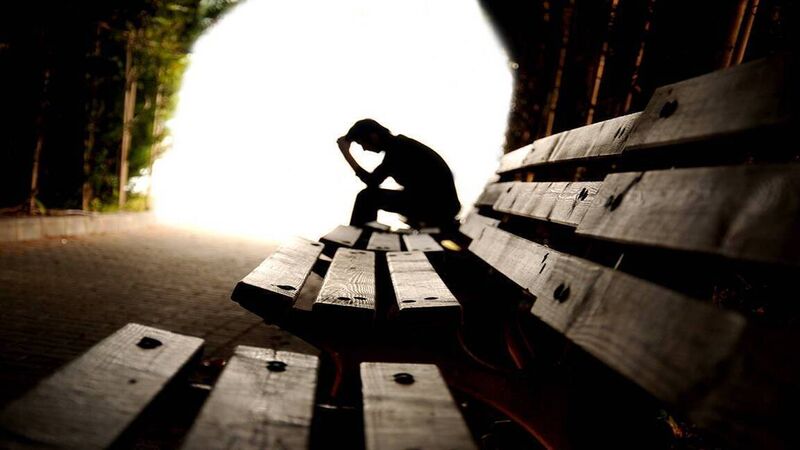
Every one assured me of something I already knew: That I could speak to them. But I knew that. With the greatest respect in the world to each and every one, none of the people in my life was equipped to handle it — nor should they be.
I remember where I was when I turned the car around. In fact, every time I drive past the apartment buildings at the foot of Knockmaroon Hill in Chapelizod, I remember it. I had dropped a colleague home and happened to glance at my emails.
There, I found a response to an email I had sent 12 hours earlier as a panic attack subsided — leaving me drained and scared. The counselling service I had emailed, one of many, had a free slot at 5.30pm, did I want it?
I toyed with the idea of just heading home. I had gotten through the work day, so surely I was ok now?
But the intrusive thoughts had been there for too long and were becoming too loud, so I turned the car around and headed back to town where a very calm and nice woman spoke to me softly and may have saved my life.
Across the Oireachtas this week, mental health was a talking point.
In both the Dáil and Seanad, as well as the Oireachtas children’s committee, the issues with the system were laid bare, as well as an attempt to overhaul the frameworks around it.
On Tuesday, Sinn Féin put forward a motion that would require every model three and model four hospital in the country to have a dedicated mental health emergency room, located separately from chaotic emergency departments.
The party’s spokesperson on mental health, Sorca Clarke, told the Dáil that more than 50,000 people in mental health crisis present annually to emergency departments, but she added that eight emergency departments do not have appropriate spaces for mental health crisis assessments.
Her colleague, Johnny Guirke, told the Dáil that many people in distress don’t stay in emergency departments because they take too long to be seen.
Cork East TD Liam Quaide raised the case of Adam Loughnane who, aged just 34, ended his life in the River Corrib shortly after he presented himself to medical staff at University Hospital Galway on February 11 last year.
TD after TD spoke of constituents or members of the public who sought help in moments of crisis, and the Government did not oppose the motion.
On Wednesday, the Oireachtas health committee heard of major issues with the Child and Adolescent Mental Health (Camhs) system from the group Families for Reform of Camhs.
“We have since doubled in size and are now made up of over 1,500 members from across the country,” the group’s opening statement said.
What remains the same, however, is our call for urgent reform of Camhs
The group’s spokesperson, Hannah Ní Ghiolla Mhairtín, said to TDs and senators: “Imagine promising your child you will get them help and keep them safe, only to have the door closed repeatedly in your face.
“Imagine seeing your child lose more of themselves each day, and being unsure whether support will come too late. This is the heart-breaking reality of many families across Ireland.”
She added that a survey the group carried out 18 months ago with its then 736 families highlighted the difficulties faced by parents, and their children, at every stage of the process.
“First of all, trying to get through the referral process which, for 44% of families, takes multiple referrals before being accepted,” it said.
“We have families telling us that their child with suicidal ideation or [who] self-harm have been turned away without any discussion or their child being met. And all families can do is to make another referral.
“Three quarters of our families said that their child’s mental health deteriorated while on the waiting list. And 39% ended up having to go to A&E.”
From a whisper to a scream
Those are the same emergency departments which the Dáil had been told just the previous evening were not fit for the purposes of mental health crisis.
I have spoken before of my own mental health experiences, and one of the things I am always keen to get across is that, to all intents and purposes, I was fine.
I did not wish to end my life. I had and still have a wonderful family, partner, and friends. I was not materially deprived or under financial strain. However, I had become certain that I would end my life, and the thoughts of how and when had grown from a whisper to a scream in my brain, and I was lucky to have the means to find a private therapist who had had a cancellation that day because, when I spoke to a locum GP a week later, I was told there would have been an 18-month wait to see a public doctor.
Having taken the steps to access therapy, I was struck by how supportive people in my life were but also their reflexive near-guilt.
Every one assured me of something I already knew: That I could speak to them. But I knew that. With the greatest respect in the world to each and every one, none of the people in my life was equipped to handle it — nor should they be.
The Dáil and committee sessions this week underline now what I knew then: Mental health isn’t just about talking to your friends, and the State should not be absolved of its role therein.
We are often told that mental health is health and that you wouldn’t walk around on a broken leg. But you wouldn’t ask a friend to set the leg either.
You’d expect that there would be a place for you to go when seeking medical attention. An appropriate place
On Thursday, minister for mental health Mary Butler welcomed the passage through the Seanad committee stage of the long-awaited Mental Health Bill.
It will include an updated involuntary admission and detention process for people with severe mental health difficulties, including a revised set of criteria for admission and an overhauled approach to consent to treatment for involuntarily admitted people.
Ms Butler is someone who regularly speaks well on the challenges involved in her role, and she genuinely seems to understand that there are many steps at which the state can intervene. She is a hard worker who genuinely wants to improve the system.
On Thursday, in the Seanad, she spoke of the work of suicide crisis assessment nurses who support GPs to provide rapid assessments for people in crisis, of which there are 22 and another 12 have been budgeted for.
Ms Butler also spoke of a €2m programme that she launched in August of last year to provide therapies and counselling supports specifically tailored for men. She said that from September 1, 2025, to January 27, some 300 men reached out for free counselling supports for the first time.
The days of the mental health debate being one about removing stigma or simply leaning on those around you are largely over.
Of course, there is ongoing work on mental health understanding and awareness and, of course, the maintenance of mental health through connection, friendships, hobbies, and exercise is absolutely vital.
But the focus of the discussion must shift now to staffing levels, to facilities, to ensuring that children don’t have to languish on waiting lists because of a lack of staffing.
Talk to your mates, absolutely. But also talk to the State
I don’t take my mental health for granted, and I don’t know if I will be in crisis again. I hope not. But, if I do need help, I hope the person setting the leg has at least seen an X-ray before.
- Paul Hosford is the Acting Political Editor with the Irish Examiner.

Continue reading for €5
Unlock unlimited access and exclusive benefits
Already a subscriber? Sign in
Cancel anytime
CONNECT WITH US TODAY
Be the first to know the latest news and updates