Culture was passed down for most of history, now it moves laterally
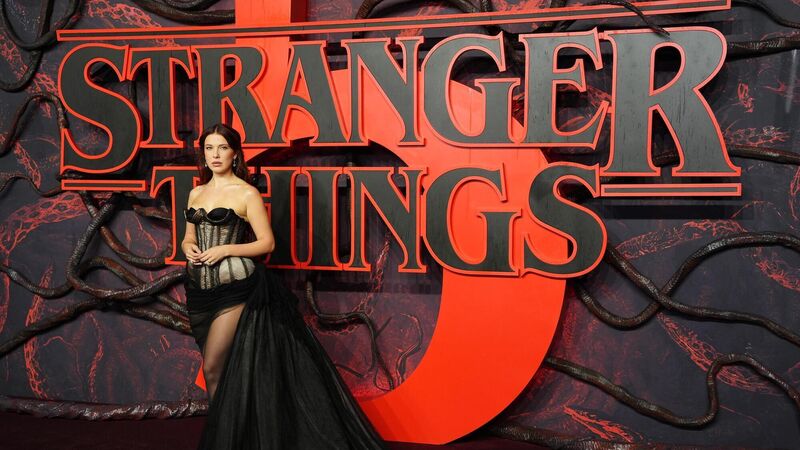
Millie Bobby Brown attends the ‘Stranger Things 5’ special screening in London; the streaming show has brought 1980s culture and music to modern audiences. Picture: Nicholas T Ansell
Lecturing your kids about how life was somehow harder and better back in the good old days is a birthright of parenthood.
Children understand very little of what you repeat ad nauseum by way of instruction, yet somehow, they tolerate this little quirk of ego and forgive it.
They roll their eyes and sigh deeply. They issue long, theatrical “here-we-go-agains”. They know the choreography. So do you.
And yet, within their performative cynicism there is something reassuring. A rhythm and a ritual.
As if, if you didn’t interrupt their despairing at the existence of homework to lecture them on how you once went to school — barefoot — across open fields (in 1994, aka the bronze age), they might worry.
Afraid you weren’t present. Afraid you weren’t listening. Afraid — worst of all — that you didn’t care. It’s a delicate dance. A card you can’t overplay, lest it loses its value.
Sure, you’re embarrassing them, but sometimes they want you to be the person who embarrasses them. Just a little.
My little girl recently told me she had only recently figured out that the world wasn’t black and white in her dorky dad’s day. She meant black and white in the literal sense, not the philosophical one.
She’s nine. I don’t quite believe her, but I love the charm of the story. The innocence.
I also love that she knows it’s funny, and that she knows I think it’s funny too. There was pride in her delivery, like someone who had cracked a long-standing mystery about civilisation.
Which brings us, improbably, to the cultural character of the moment, .
My daughter is too young for it. My 11-year-old son probably is too, and admitting he watched it at all likelihood represents some kind of parenting failure that will someday land him on a therapist’s couch.
But watch it he did. All four seasons, in about two months. A pace of consumption that feels very of this time: immersive, solitary, and total.
Content concerns aside, what has been most interesting is not whether the show frightened him or not, but what it quietly gave him.
It has been genuinely refreshing to listen to him and his friends talk about it. To hear theories being formed and traded.
To watch him grow anxious as a season climax approached, as if the outcome might ripple into his own life.
Even though I’ve never watched a full episode, he kept asking had I heard anything — “in media circles” — about how it was all going to end. As if I might quietly be on first-name terms with everybody in the Upside Down.
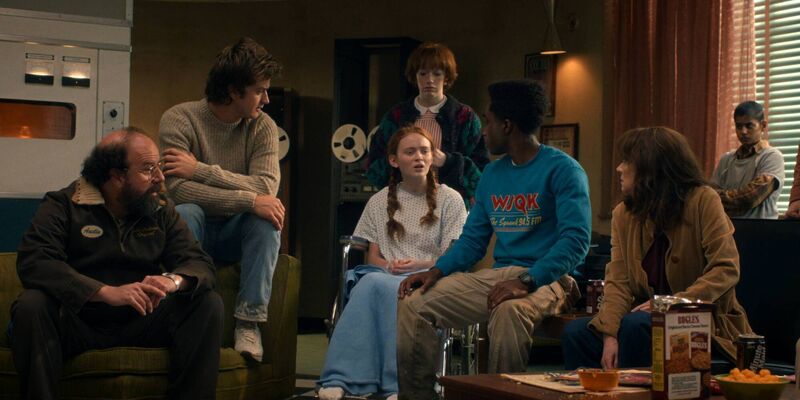
But the most revealing by-product of his viewing hasn’t been his tolerance for soft horror. It has been music.
Specifically, great, old music. Music that , set in the late 1980s, has planted into the minds of children raised not on radio, but on recommendation engines.
Music I could never have delivered to him with the same effect. I know this because I tried. For years. Nothing devalues a song faster than a parent insisting it matters.
Now, when we’re in the car, he takes control. And suddenly the school run is soundtracked by Kate Bush. The Chordettes. The Clash. Journey.
Not as “oldies”. Not as “your dad’s stuff”. But as living things. Present-tense. Part of the texture of his days.
Selfishly, it’s a nice feeling, watching your child fall in love with art that predates their existence by decades. Songs that were old when even we were young. Music that collapses time.
Suddenly, the past is no longer something you point their distracted little heads towards. It’s something they inhabit, unaware. And that, perhaps, is the cultural shift worth noticing.
For most of modern history, culture was passed down. Stories, music, references, even boredom itself, arrived through parents, siblings, neighbours, local radio, television.
Taste moved vertically. Now it moves laterally. Through platforms. Through franchises. Through worlds.
Our children’s relationship with screens is often framed in terms of loss: of attention, of innocence, of imagination and silence. And there is truth in all of that.
But what reveals is something else as well: that culture now reaches children not as inheritance, but as environment.
It doesn’t say, “this mattered to us, so it must matter to you”. It whispers, “this is where you are now, enjoy it”.
And inside that world are analogue artefacts smuggled in like contraband: mixtapes, walkie-talkies, arcade machines, synth lines, power ballads, the slow burn of waiting for someone to arrive.
A pre-internet way of being is not presented as worthy or wholesome. It’s simply presented as real.
Which is crucial. Because children are exquisitely sensitive to moralising. They can smell a lesson before it’s even unpacked.
But they will accept a universe, not necessarily one spoon-fed to them, but one they discover themselves.
, then, never argued for the past. It built one. And through that door walked objects and moods no lecture could carry.
A time when entertainment didn’t follow you, and being unreachable was not a problem to be solved.
There are soft horrors in the show, yes, but there is also a softness to its pace. Rooms where nothing is happening except conversation. Time that is not yet monetised. Fear that arises from darkness rather than data.
Some may be appalled that my son was ever allowed to watch a show I’ve never tried to fully understand. Fair enough. I’m kind of appalled myself.
But it has opened a dimension of culture to him — and, passively, to his sister — that he would never have taken from me, no matter how carefully I curated it.
Because children rarely want their parents’ past, they want a world they discover themselves, and a world they can share with their friends.
And sometimes, thankfully, a television show can build one sturdy enough that they wander into it on their own and emerge singing Kate Bush in the car.
Which, all things considered, feels like a pretty good outcome.
CONNECT WITH US TODAY



Be the first to know the latest news and updates