Colin Sheridan: US foreign policy arrogance in Lebanon is a warning sign for Ireland
A US envoy’s scolding of Lebanese journalists reveals a deeper truth: Ireland too risks humiliation if it remains overdependent on America
Colin Sheridan: US foreign policy arrogance in Lebanon is a warning sign for Ireland

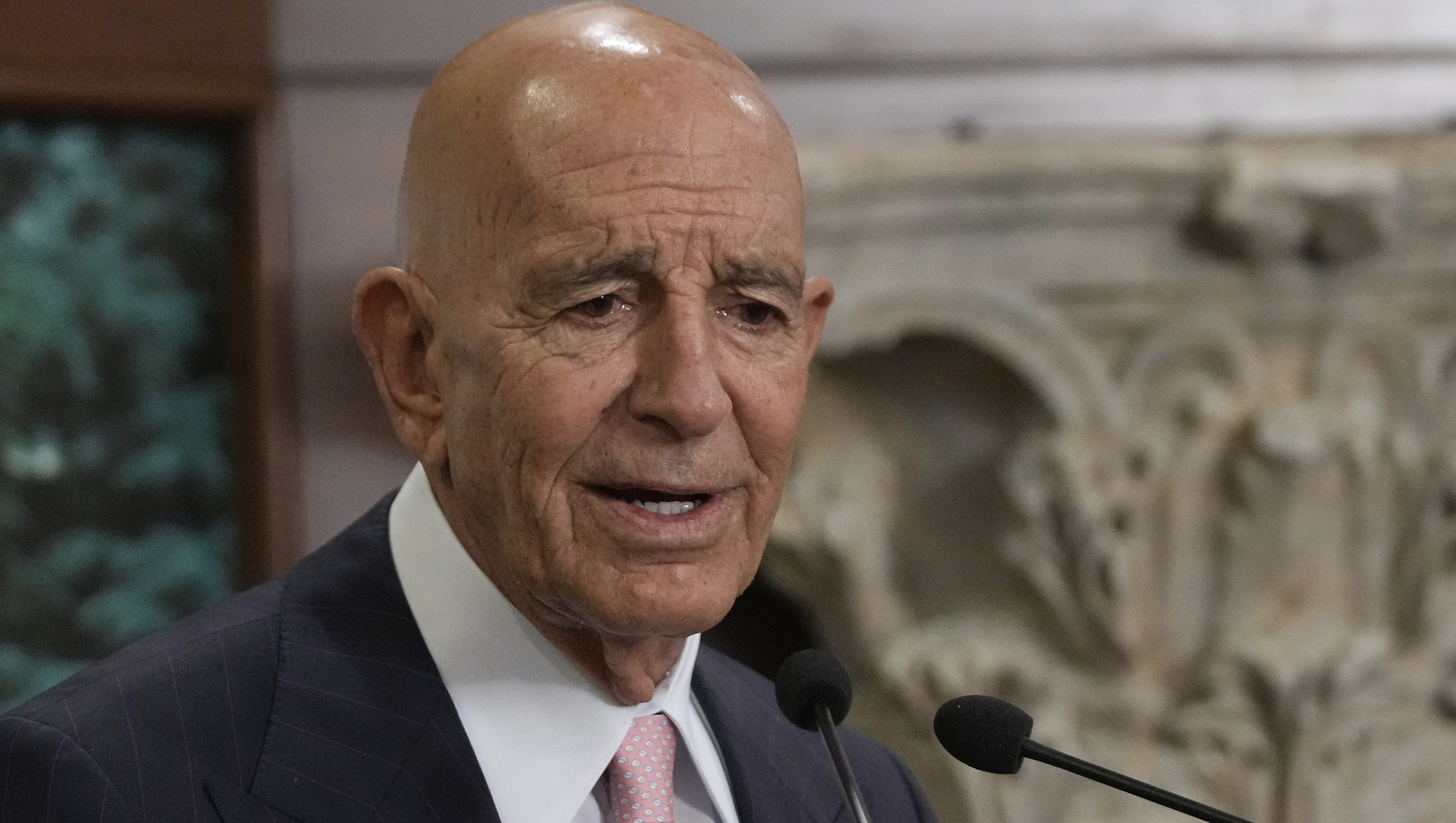
US special envoy Tom Barrack acted in a superior fashion befitting the foreign policy of the country he represents last Tuesday when he ordered a room full of Lebanese journalists in Beirut to — I kid you not — “behave'. File photo: AP/Hussein Malla

When I first arrived in Lebanon, I did so armed with one simple piece of advice: Never advise a Beiruti how to dress. Now, I’d never be so stupid as to do such a thing to anyone from anywhere, but I quickly understood the broader sentiment.

When in the Levant, and Lebanon in particular, it is wise not to tell your hosts what to wear, how to speak, what to eat. You are, after all, a guest in their home, and as a people they possess a culture, language, and self-confidence so rich it would shame Solomon. 

So, I kept my mouth shut. I listened as they taught me how to work, eat, drink, run, sleep, lose weight, and fatten up, habibi! As an Irish man stuck in a perpetual purgatory of self-doubt, I appreciated the direction.

It was with some amusement then, that I observed the US special envoy Tom Barrack commit the most American sin of all last Tuesday when he told a room full of Lebanese journalists in Beirut to — I kid you not — “behave”.

“Act civilised,” he barked, wagging his entitled finger. “Don’t be animalistic.” He even threw in a theatrical “goodbye”, storming off like a Hollywood starlet who’d lost patience with the dolly grip.

In doing so, he briefly accomplished what years of American strategising never could: A rare unity among Lebanon’s fractious media. If you come to the centre of the civilised world and tell your hosts how to prepare tabbouleh, you better know how to make damn fine tabbouleh yourself.

Barrack, in a superior fashion befitting the foreign policy of the country he represents, said the quiet part out loud; Tabouleh/Shamooleh — we don’t care. Obey, or else.

Now, you might say: What’s it got to do with us, sitting here in Ireland, where the most dangerous thing a diplomat usually encounters is a dodgy prawn in Iveagh House? Quite a lot, actually. 

Because if the US talks down to Lebanon while calling itself a “partner”, what do you think it really thinks of Ireland: The nation it has slowly turned into an addict reliant on the opioids it pedals?

The US apologists here increasingly tell us how well Ireland has done out of the US. But dependence has a way of eroding dignity, especially if that dependence masks a more pernicious coercive control. 

American behaviour in the Middle East

The US feigns to prop up Lebanon while openly bankrolling Israel’s criminal devastation of the country and its people. 

Then it threatens with an ominous “behave”.

Almost 4,000 people have been killed in Lebanon by the US-backed Israeli military in the last 18 months. 

Lebanese officials have cited over 2,740 violations of the ceasefire agreement that was supposed to end the slaughter last November. The US simply does not care.

Barrack’s outburst is not some exotic sideshow. It’s a trailer for the main feature: When the US “helps”, they expect grovelling thanks. When they “invest”, they demand compliance. 

And when they are displeased, they don’t hesitate to remind you of your place. That, in essence, was the subtext of Barrack’s lecture: We’ll bankroll you, Arabs, but we’ll also treat you like animals if you forget who’s boss.

Irish dependence

Sound familiar? It should. For years, successive Irish governments have pretended that our 12.5% corporate tax rate was a badge of sovereignty, when in fact it was an insurance policy against annoying Silicon Valley. 

When the Organisation for Economic Co-operation and Development muscled us into raising it, we nodded along, while nervously tracking Washington’s reaction like tenants watching the landlord’s mood.

It’s humiliating, frankly. A country that bled and starved for independence now bows and scrapes for the favour of foreign boardrooms. 

We are told it’s just pragmatism, just the price of globalisation. But pragmatism starts to look a lot like servility when you depend on the mood swings of an abusive drunk for your livelihood.

US foreign affairs

And here’s the rub: The US doesn’t do sentimentality in its foreign affairs. If it suits them to pull jobs back to Ohio, they’ll do it. If it suits them to pivot their investments to Poland, they’ll do it. 

And when it happens, don’t expect the courtesy of a civilised conversation. Expect what Barrack delivered in Beirut: A lecture, a sneer, and a swift exit.

The lesson is staring Ireland in the face. Diversify or die. Build an economy that doesn’t pee it’s pants every time a US ambassador catches a cold. 

Invest in our own capacity, in partnerships with appropriate partners, in industries not tethered to the whims of egotistical billionaires. 

US superiority

The day has already come when the same tone Barrack used on Lebanese journalists is being used on us — it’s just we only read about it in leaks.

Ireland (and Lebanon) deserves better. We deserve to be more than a branch office, more than a playground for multinational accountants. 

But we won’t get there by hoping the US will suddenly discover humility. They won’t. 

It was once said that war was God’s way of teaching Americans geography. But teaching infers a willingness to learn.

Take a good, hard look at Barrack’s smirk in Beirut and you’ll find only superiority and ignorance.

That’s not just Lebanon’s problem. It’s the future waiting for any nation foolish enough to believe US money comes without an invisible virus that will corrupt and sabotage you the moment it’s challenged.

And that means us.

x

More in this section

Revoiced

Newsletter

Sign up to the best reads of the week from irishexaminer.com selected just for you.

Cookie Policy Privacy Policy Brand Safety FAQ Help Contact Us Terms and Conditions

© Examiner Echo Group Limited