Sarah Harte: Do new Irish citizens need to know more about what it means to be Irish?
What it means to be Irish, of course, is open to a wide variety of interpretations
Sarah Harte: Do new Irish citizens need to know more about what it means to be Irish?

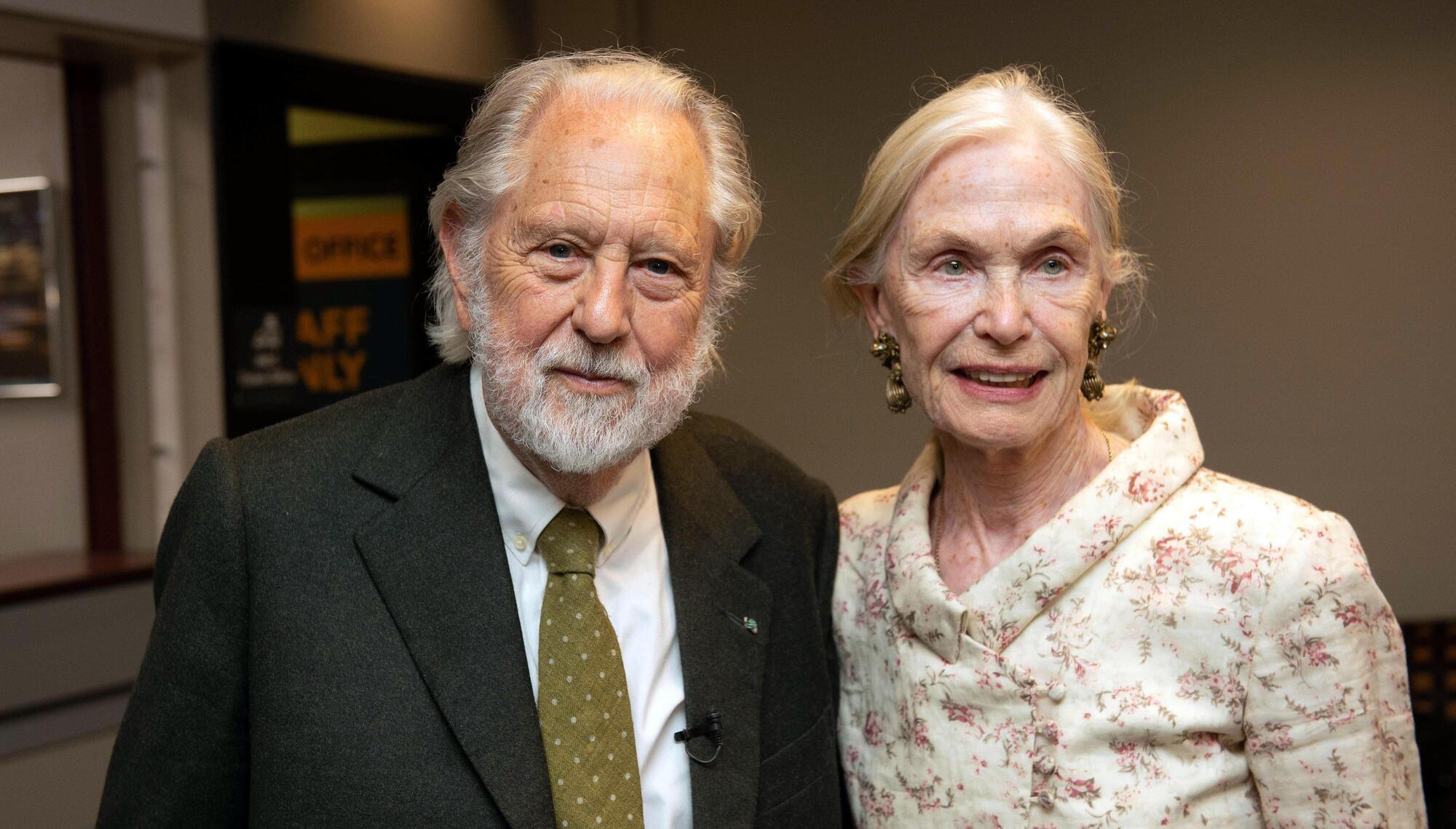
David Puttnam after receiving his Irish Citizenship along with his wife Patsy in Killarney. Picture: Sally MacMonagle

When words like ‘crackdown’ and ‘fester’ are hanging in the ether, it’s hard not to feel depressed. At least our public discourse hasn’t been degraded to the extent that senior politicians feel able to compare migrants, as former American president and card-carrying idiot Donald Trump did at the weekend, to Hannibal Lecter, claiming that they’re all escaping from ‘insane asylums’. 

But it was a relief last Friday to hear Public Expenditure and Reform Minister Paschal Donohoe, say that we should not lose sight of the positives of openness and people coming here.

He pointed out that around 166,000 people came to Ireland last year legally on work visas, and that these people who work in our health services, nursing homes, and big companies are wanted, needed, and form a valuable part of our economy and society. He also pointed out that some become Irish citizens.

According to government figures, since 2011 around 175,000 people have received citizenship from 180 different countries. Four citizenship ceremonies are planned for next month, two in Killarney, and two in Dublin.

In February, 1,200 new Irish citizens were granted Irish citizenship. They are from 105 countries and live in 31 counties. As Ireland becomes more of a melting pot, we need to foster a sense of cohesion while allowing new citizens to preserve their cultural heritage. Actually, the term melting pot arguably brings difficulties because it suggests developing a monoculture, so maybe we should be aiming for a tossed salad with a nice dressing to cover us all.

We don’t require new citizens to renounce their original citizenship as some other countries do which is a good thing, but without invoking nationalistic paranoia, surely some level of compromise must be struck between integration and maintaining cultural difference.

In February, in advance of the citizenship ceremonies, Justice Minister Helen McEntee said: “Citizenship ceremonies are always a joyous celebration of what it means to be Irish. I would like to warmly congratulate and welcome our newest citizens on this milestone in their lives.”

What it means to be Irish, of course, is open to a wide variety of interpretations, but certain mainstream cultural norms act as binding cement which should be communicated to those seeking to be naturalised as Irish citizens.

Two years ago, an academic friend of mine became an Irish citizen, sending happy photos from Killarney where Minister McEntee gave a short, upbeat speech. On that day, film producer David Puttnam and his wife Patsy, long of my parish, also both became citizens. What jumped out to me from the beaming images of men and women in that one room was a sense of hope and belonging.

Encouraging that sense of belonging and helping people to integrate is important for them as they become us. When I asked my friend if he had to sit any test demonstrating basic knowledge of Irish culture, history, and social attitudes, the answer was ni shea. Many countries wisely require a level of civic knowledge for citizenship.

My relative who became a Canadian citizen had to sit a test that took about 45 minutes, based on 20 multiple-choice questions addressing facts about history, geography, laws, the economy, and symbols. You could argue that learning facts and reciting them from memory doesn’t give you an in-depth knowledge of culture, people, and country which can only be gained from living somewhere but it’s a start. Most applications for naturalisation are processed within 19 months which is a good chunk of time to learn some basic facts.

The Netherlands has a test that seems to be centred around giving information that is useful to get started, like how to apply for their equivalent of a PPS number, but it also gives information on traditions and public morals that might be particularly helpful for people coming from countries with less liberal regimes.

It’s not simply a question of being more helpful. New citizens must understand what we expect in terms of broad attitudes to women, domestic abuse, the LGBTQI community, people with disabilities, and ethnic minorities. If you grew up somewhere like Saudia Arabia, your social norms would likely be radically different on many of these topics, and there should be an element of when in Rome.

It seems entirely reasonable that if you want to gain citizenship you should learn some basic facts about a country because becoming a citizen is an important right bestowed on you. Currently, to become a citizen you have to be of good character and have been living here for five years, with some exceptions. For example, refugees can apply for citizenship after three years but regardless of the circumstances, there is no test.

New citizens give a Declaration of Fidelity to the Irish Nation and Loyalty to the State, swearing that they will observe the laws of Ireland and respect its democratic values. But aspirant Irish citizens should know what kind of country they are pledging allegiance to, how and when it was set up, its history, its evolution to a liberal democracy, its traditions.

Basic knowledge

I wrote a letter for somebody who got citizenship. She was hard-working and of good character, and I was happy to oblige but I was unhappy that she displayed a complete ignorance of the most basic facts about Ireland. We give new citizens information packs with the words to Amhrán na bhFiann, advice on how to register to vote and how to obtain a passport, but it’s not enough.

I’m not suggesting that in some version of coercive assimilation or sinister Irishisation programme, we force people to demonstrate a reasonable knowledge of how many of her family fell over a cliff (most Irish-born citizens wouldn’t have a clue) but for starters, you should know who the president and the Taoiseach are, that we have a written constitution, that Irish is the official language of the country, the cultural context for why bells gong on the national airwaves daily at noon and 6pm.

And should people not demonstrate a basic proficiency in English? (Let’s agree to park the obvious Irish language aspect to this question for today). Most EU countries require one. 

The idea of a language test was floated by the Department of Justice six years ago, but so far it hasn’t been implemented, although supposedly language skills are sometimes tested when being interviewed during the process. It’s not about raising a bar to keep people out, it’s about better integrating people. Naturally, there are plenty of theorists who regard these tests as illiberal but common sense dictates that the nexus between language and citizenship is important to encourage positive social participation, maintain order and minimise social strains.

In the absence of an official test, I submitted my friend to an online one including questions like, ‘Fill in the blank, “roll it there
?”, What does a Cork person mean when they say, “I will yeah!”, “Mammy is gone to get the messages. Explain”. Impressively, he passed all questions except the tricky sucker: who did Biddy’s niece have an affair with in Glenroe? I guess even when you’re an academic and a proud, newly-minted Irish citizen still can’t know everything.

x

More in this section

Revoiced

Newsletter

Sign up to the best reads of the week from irishexaminer.com selected just for you.

Cookie Policy Privacy Policy Brand Safety FAQ Help Contact Us Terms and Conditions

© Examiner Echo Group Limited