Clodagh Finn: French girl guides’ miracle crash-landing on a Wicklow mountain
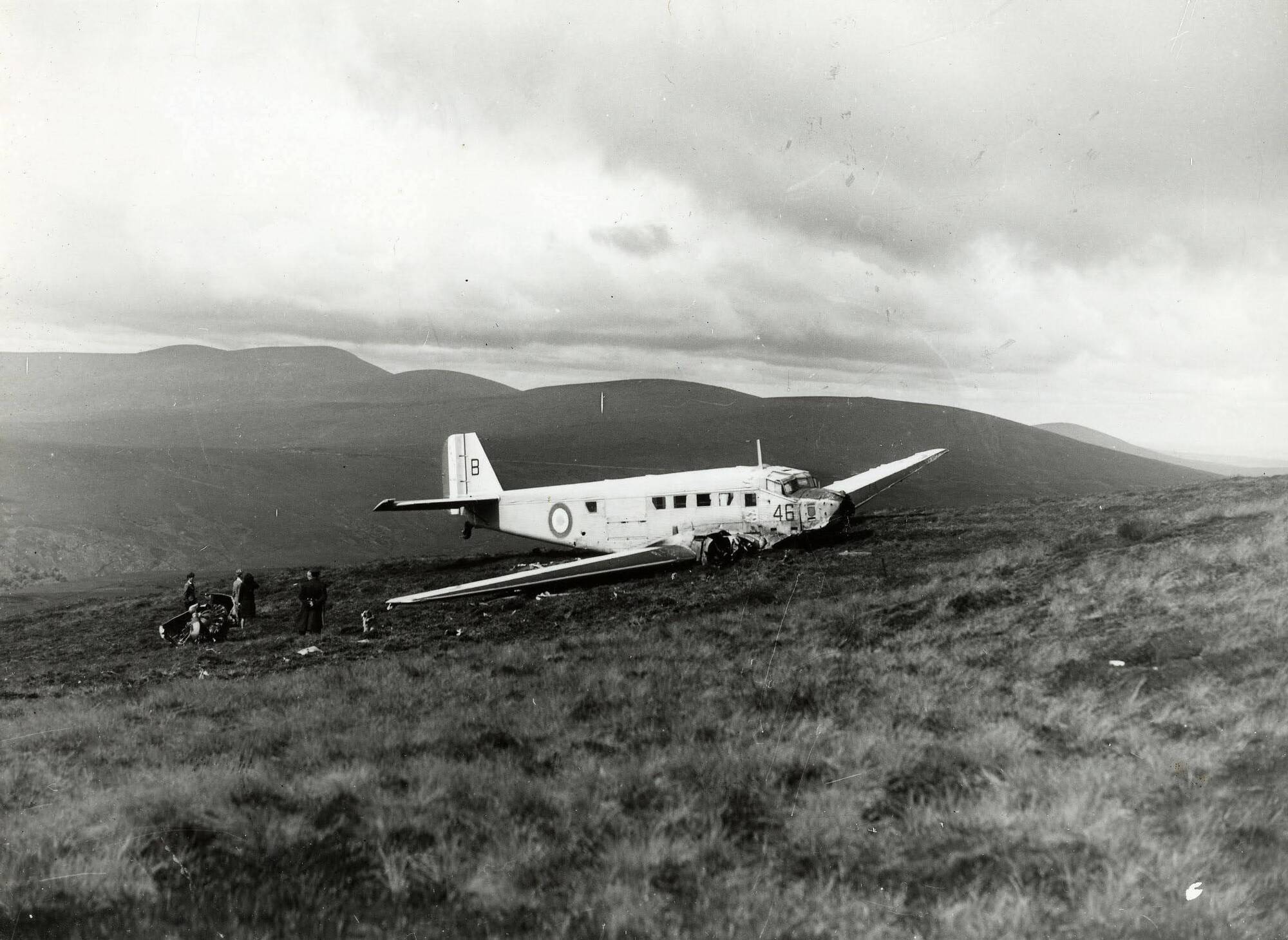
The wreckage of the plane that crash-landed in Wicklow in 1946 carrying 21 French girl guides. If it had gone 50 yards further it would have crashed into heavy boulders, which would almost certainly have resulted in many deaths.

Chantal de Vitry is in her late 90s now, but today she is likely to recall August 12, 1946, when she and 20 other French girl guides travelling to a holiday camp in Ireland on board an old military plane crashed into a mountain in Wicklow.
Mlle de Vitry, the leader of the group, managed to scramble out of the wreckage of the Junker 52 and make her way down the side of Powerscourt waterfall, with broken ribs, to get help. Hours later, she “stumbled, drenched through and injured, into the Mount Maulin Hotel, five miles from Enniskerry”, as one newspaper reported at the time.
“By a curious stroke of fortune,” it continued, “the injured girl was met by a Fraülein Frances Widmen, who could speak French.”
She was then able to communicate the extraordinary events that had just unfolded. A group of 21 French girl guides had set out in bright sunshine from Le Bourget airport in Paris at around 9am that morning. They had been invited by their Irish counterparts to spend a holiday in Ireland in the aftermath of World War ll.
The trip was supposed to be an escape from the trauma of the recent past. Many of those on board had witnessed bombings, wartime shortages and endless air-raid sirens during the war. One of them, a young Jewish woman Lilette Levy-Bruhl, had even been part of the French Resistance.
They must have been excited when they set out that morning. It was their first time to fly and their first time abroad. The plane, a German model requisitioned during the war, could seat only 16, but five of its young passengers thought nothing of squatting on the floor. Those in seats were not belted in.
The plane was due to land in Dublin around noon, but it lost contact with Ireland during a blinding rainstorm, described as the worst in 20 years.
Visibility was nil when the pilot Christian Habez hit Djouce mountain in Co. Wicklow after 1pm. Due to an extraordinary set of circumstances — and a large measure of luck — all passengers and crew survived the impact.
The pilot had no idea where he had landed. He wasn’t even sure if he was in Ireland. When Mlle de Vitry made her way down the mountain, covered in cuts and mud, she couldn’t pinpoint the location of the plane either, other than to say she had been walking for about five hours.
The Hogans, owners of the Mount Maulin Hotel, immediately raised the alarm. Theirs was the only phone for miles around, Suzanne Barnes, author of When our Plane Hit The Mountains, explains, and yet a search-and-rescue operation got under way very quickly.
The search party made its way through atrocious conditions, “plunging in darkness through waist-high heather and sedge pitted with bog holes to reach the plane,” to quote one report. Around midnight, they found the plane with all the girls inside, many of them unconscious or semi-conscious and appearing to be gravely injured.
Meantime, Lady Oranmore and Browne had set up a temporary refuge at a ruined stone house above Luggala, known as the Sheepbank House, while army ambulances, the Red Cross and St John’s Ambulance Brigade had assembled to bring the wounded to hospital.
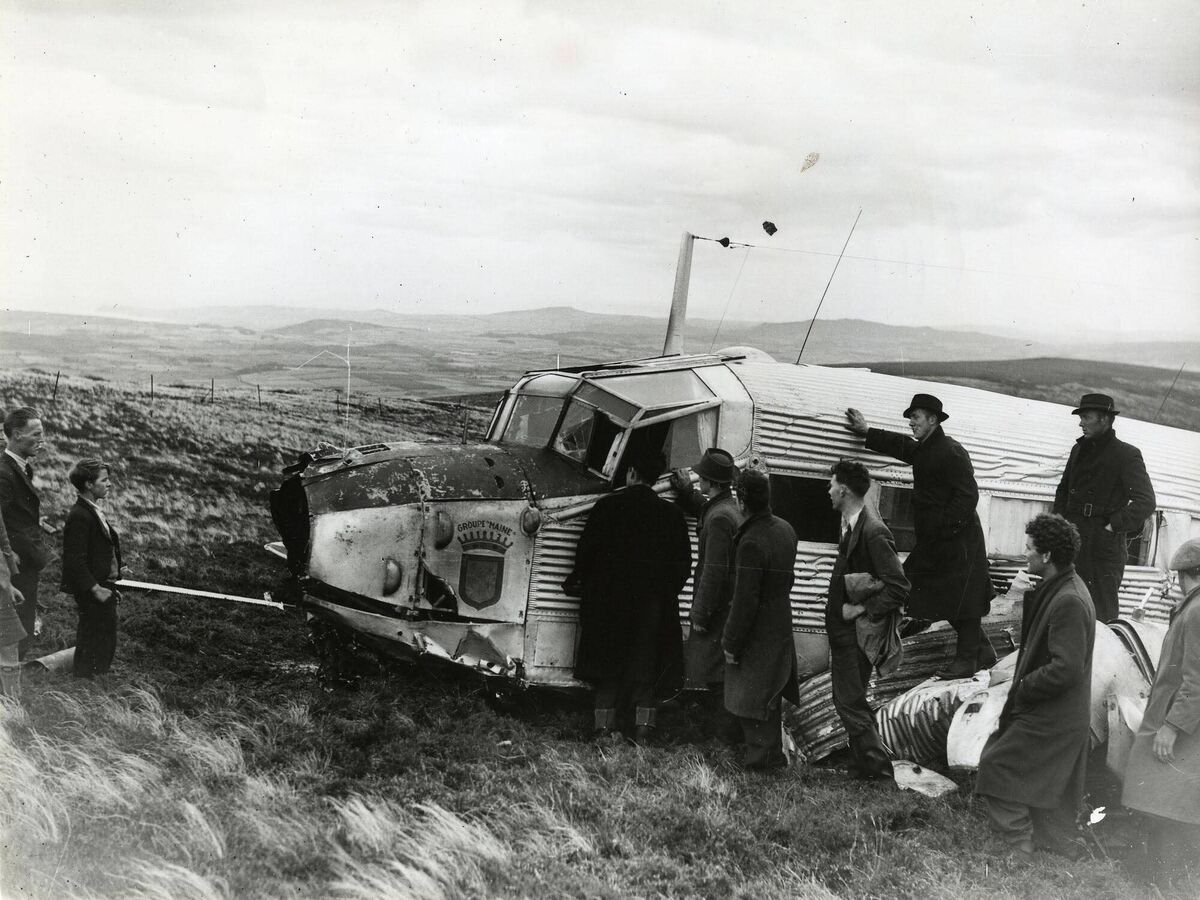
As well as their injuries — ranging from serious head injuries and broken limbs to shock — all of the passengers and crew were suffering from exposure. One poignant report describes how Lady Oranmore and Browne spent two hours giving little sips of brandy to one injured girl in an attempt to rally her strength.
An unnamed reporter from this newspaper also took part in the all-night rescue mission. This is part of the story that appeared on 14 August: “As the sun broke through the mountain mist at 7.30 a.m. yesterday, I watched the last of the 22 French girls [there were, in fact, just 21] being placed in an ambulance to be conveyed to St. Michael’s Hospital, Dun Laoghaire.
"Thus ended twelve hours of herculean work by ambulance workers, army personnel, civilians and Garda.”
The report also explained how disaster had been averted.
The engines had also been thrown clear of the fuselage by the force of the impact, which meant it had not burst into flames.
There was intense media interest in the days and weeks that followed. The press catalogued the presents of chocolate and cigarettes that came from well-wishers as well as the steady progress being made by the injured girl guides and crew. In one newspaper, a report on a shortage of plasma was assessed in terms of the effect it would have on the treatment needed for the girl guides.
In late October 1946, the last girl guide Geneviève Bétrancourt returned home when several operations on her legs were complete. She remarked that she had spent three months in Ireland but had never once put her foot on the ground.
That same sense of humour is evident in footage recorded several years later at a reunion of the girl guides. Geneviève recalled her bewilderment at being wheeled into a room called ‘theatre’ and seeing capped and gowned people within. She realised it was an operating theatre, rather than a stage, and knew then that she must be in a foreign country.
The miraculous survival was remembered and written about locally by Bill Nelson and others, but it was soon largely forgotten nationally.
In 2002, Suzanne Barnes, a hillwalker who came across a piece of the wreckage on Djouce mountain, wrote a piece for Sunday Miscellany on RTÉ. It got such a huge response that she set out to trace the girl guides.
She discovered that many of them had never spoken about the crash until they returned to Wicklow in 1998 — again on the invitation of the Irish Girl Guides — to revisit the scene of the crash.
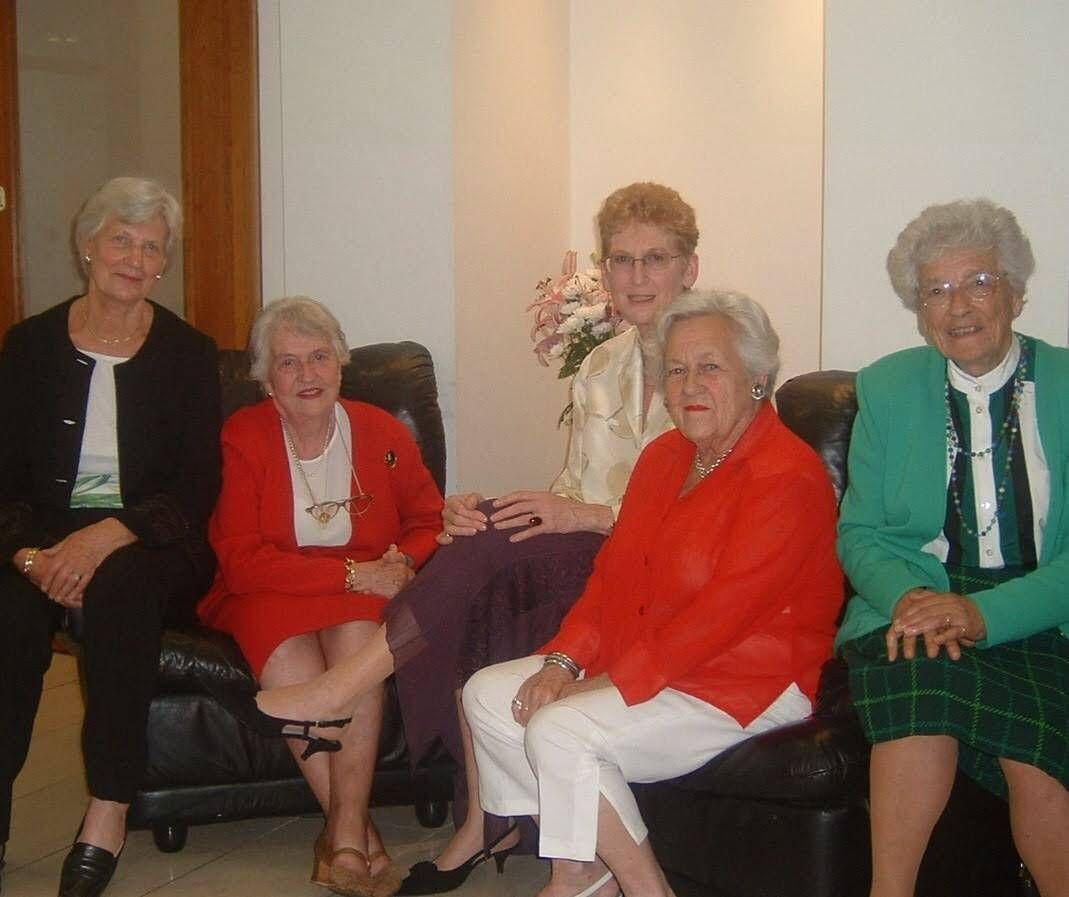
While researching her book, Suzanne travelled to Paris, Nantes, Le Havre and Lille and met most of the survivors. “For years they hadn’t spoken about it but when they got together, they were like schoolgirls again and full of stories. They were an amazing group of women, strong and feisty. They left me gasping.”
After their initial reunion in 1998, they gathered at regular intervals until covid hit. Chantal de Vitry is now the only surviving girl guide in France but here, Suzanne Barnes, the Hogans, Bill Nelson and others will recall the crash on this anniversary weekend.
Over the years, there have been a number of unsuccessful attempts to erect a discreet commemorative plaque on the crash site. Maybe it’s time to rekindle that campaign now as many hillwalkers are unaware of the incredible events that took place on this day in 1946 and the bravery, fortitude and courage of the girl guides who survived it.
CONNECT WITH US TODAY



Be the first to know the latest news and updates