Elaine Loughlin: Roads or rail? Time to get on the right track
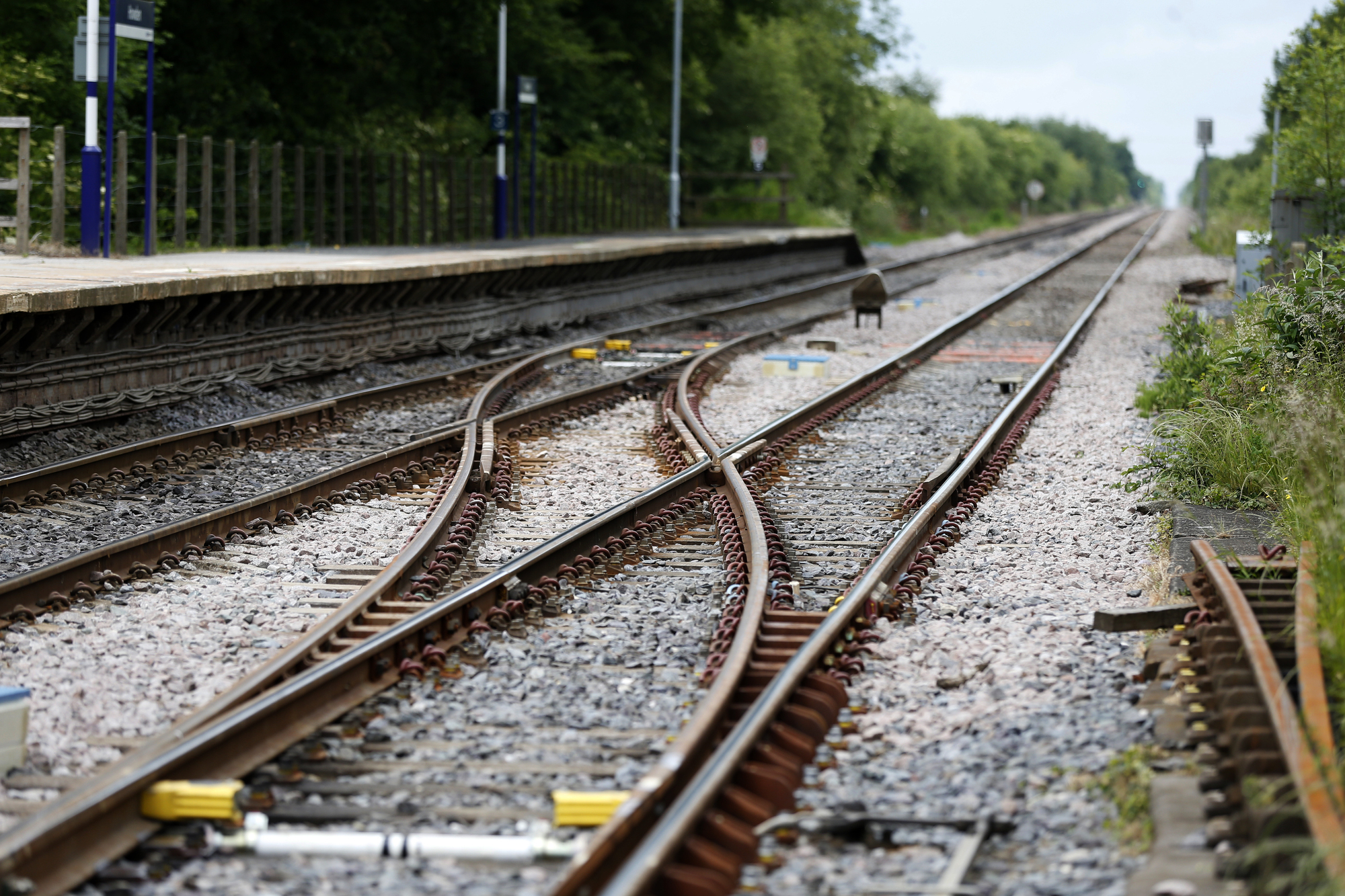
CHANGING TRACK: An all-island railway blueprint sets out plans to increase the frequency and speed of trains to make them a more attractive option to commuters.
In 2019, Green Party leader Eamon Ryan was ridiculed for suggesting that rural towns and villages should operate car-pooling systems.
But with parts of Europe now literally burning, it is the Taoiseach who should be attracting opprobrium for continuing to promote car use.
Just a few hours after Cabinet had signed off on an ambitious €36 billion all-Island railway expansion plan this week, Leo Varadkar made a bizarre intervention undermining the sustainable theme, claiming that, if anything, the strategy makes the case for investing more in our roads network. With three out of four citizens, on average, opting to travel by car on a daily basis, current mobility patterns in Ireland are incompatible with the country’s greenhouse gas reduction targets.
Politicians and the public need to get real: our over-reliance on the car must end.
This is an ask that is currently impossible for many as transport habits centre around other factors that tend not to change. Where a person lives, their social life and activities, how they work as well as the distance from friends and family are considerations that often do no align with the availability of public transport.
The all-island railway blueprint sets out plans to increase the frequency and speed of trains to make them a more attractive option; it identifies old routes that should be reopened and outlines how more haulage can be taken off our roads by creating rail links to ports in Limerick, Cork, Rosslare, and Dublin.
Nonetheless, the Taoiseach warned that in a country the size of Ireland there are "limitations" to what can be done in relation to rail expansion.
Our ambitions around rail may have progressively shrunk in the decades since the foundation of the State, but the size of our island certainly hasn't reduced since 1920 when, at its peak, the public was serviced by more than 5,500 km of railway.
Today, the island of Ireland has about 2,300km of public rail lines.
Mr Varadkar stated that even if all the projects outlined in the review are delivered, just 10% of freight will go by rail and only 6% of passenger journeys will be by train.
"So that makes the case to me for more road investment, because 90% of freight will still be by road and 94% of passenger journeys will still be by road, even if we do all of those things by 2050," he told reporters.
Mr Ryan later insisted that these estimates are on the conservative end of the scale and stressed that where public transport is provided, people will use it.
Of course, Mr Varadkar has previous form in pushing a pessimistic narrative when it comes to rail.
Last year, after the Government approved Dublin's long-anticipated MetroLink he warned that an "extreme-case scenario" could see the cost of the project hit €23bn, up from €3bn when it was first proposed back in 2005.
Mr Varadkar's comments this week will undoubtedly have gone down well with Fine Gael backbenchers, who have not been shy in venting their anger around the lack of delivery on road projects.
But now is not the time to be pandering to party colleagues who, with an election on the horizon, are clearly prioritising short-term constituency gains over the existential global threat posed by climate change.
"The Taoiseach may be speaking to his backbenchers, but he risks being on the wrong side of history," said Brian Caulfield, Professor in Transportation at Trinity College Dublin.
Transport represents about 18% of Ireland’s carbon emissions, with road transport and private car usage carrying the most significant carbon footprint.
Under sectoral emission targets agreed last July, the transport sector must reduce its emissions by 50% by 2030.
The Government has now been consistently warned that even if every single proposed carbon reduction measure is fully implemented, we will not meet our targets in the area of transport.
In the same week as Mr Varadkar was lobbying for further investment in roads, the Climate Change Advisory Council identified 2023 as a critical year for the delivery of Ireland’s national climate action.
The Council warned that at the current rate of policy implementation, Ireland will not meet the targets set in the first and second carbon budget periods unless urgent action is taken immediately, and emissions begin to fall much more rapidly.
“Strong leadership from Government is required to make the difficult decisions that are needed to deliver systemic change throughout our economy and society," chair of the Council Marie Donnelly said.

But Mr Varadkar's approach seems to be more of the same, except make it electric.
Of course, electric vehicles are part of the equation, but just like improvements in rail networks, they are only going to get us to a certain place along the overall journey.
A report published by the OECD last October stated that decarbonising the system via private vehicle improvements is unlikely to lead to substantially different patterns of behaviour, rapid emissions reductions, or large well-being improvements.
The report added that currently prioritised policies, such as electric vehicle incentives, also reinforce car dependency, further locking the country into a system that fosters growing car use and emissions by design.
If we are to get anywhere near the 50% reduction target, it will require a complete rethink in approach that every single member of the Government, and the opposition, gets thoroughly on board with and promotes.
Old proposals should now be reconsidered and new ideas welcomed.
Back in 2019 as an opposition TD, Mr Ryan came up with his car-polling suggestion, which was instantly dismissed as impractical and absurd.
"There is no reason in rural Ireland that we couldn't have a scheme, let's say in a local village where there are 200 or 300 families, they have 30 cars that they share," Ryan said at the time, pointing to the fact that most family cars are parked up for the majority of the time.
Such was the level of fury and public outrage, that a few days later he was forced to admit that he regretted floating the idea as it was interpreted as a "mad thing".
But we have got to the stage where policies previously deemed "mad" must be considered in order to achieve carbon reduction targets.
Now is not the time for playing to a gallery of backbenchers, the Taoiseach should know that. He should also know that even if every motorist changes to electric, it will still not reduce emissions nearly enough.
He should know that protecting the planet means making uncomfortable and unpopular decisions.
He should know that real leadership is now required if he and his Government want to be on the right side of history.
CLIMATE & SUSTAINABILITY HUB