Mick Clifford: We are selling our children down the river on housing
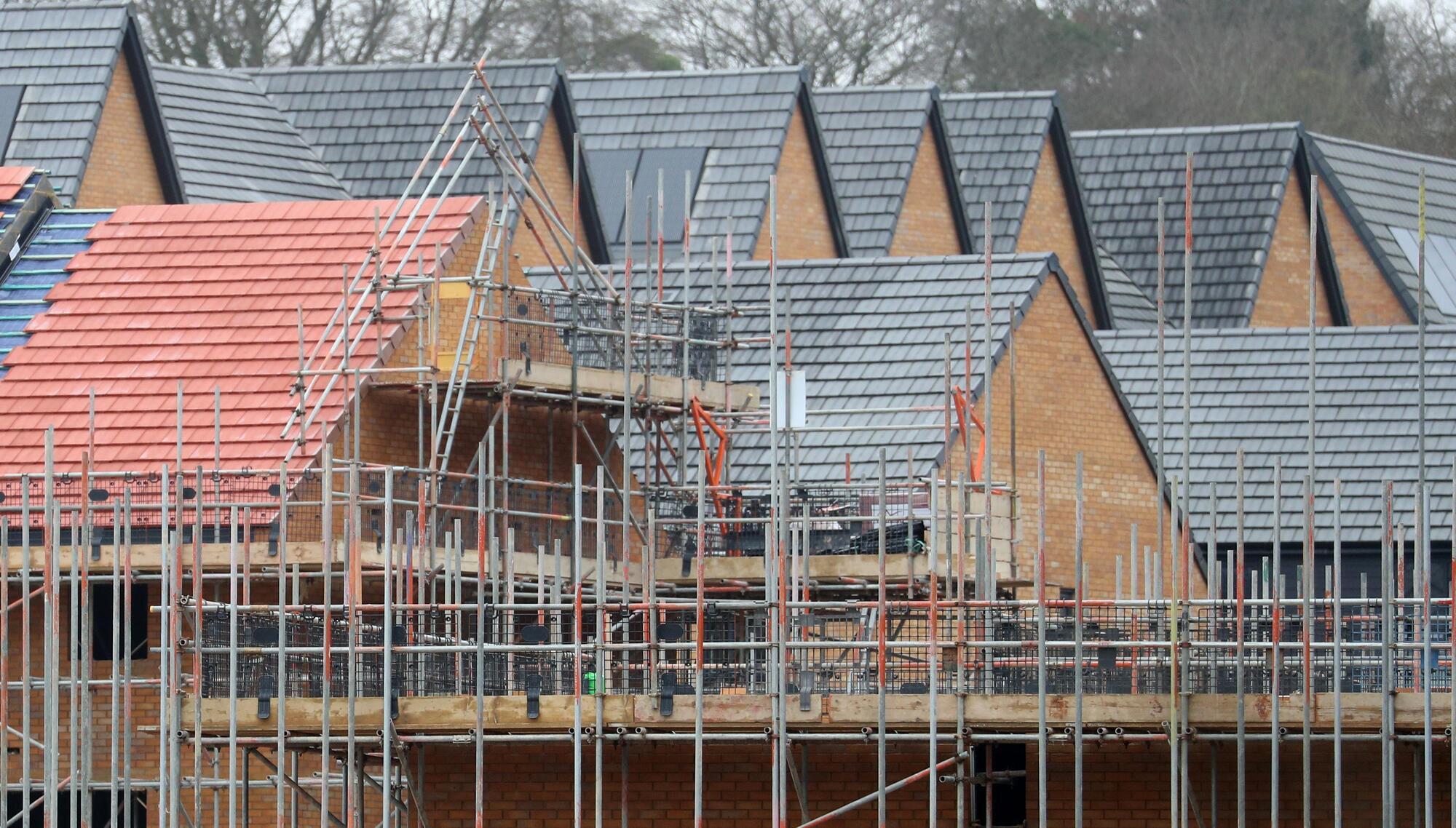
An ESRI report presented the latest proof that younger people are disproportionately bearing the brunt of the housing crisis: 80% of people over 40 own their own homes while for those under 40, just a third of adults have their own abode Picture: Andrew Matthews

This is no country for young men or women. Whether it be trying to move out of home and find a place of their own, worrying about what shape the planet will be when they are in their prime, or the prospect of keeping their elders in the style to which they have become accustomed, the young are getting it in the neck.
This week an ESRI report presented the latest proof that younger people are disproportionately bearing the brunt of the housing crisis.
The report found that 80% of people over the age 40 own their own homes. That is a major achievement by any standard.
To a large extent that cohort is insulated from the worst of the housing crisis.
For those under 40, just a third of adults have their own abode. For the majority who don’t, the reality is extortionate rents or living at home with their parents all the way up to middle age.
In 2019, one in four adults between the ages of 25 and 34 were still living at home with their parents. There isn’t a scintilla of evidence that the situation has improved in the last four years.
The gaping difference between the generations is the second widest in 15 Western European countries surveyed. The only one to fare worse is Greece, which is still going through some major economic difficulties.
By contrast, Ireland is the best girl in the class in terms of our economy.
The housing crisis is the most enduring problem dating from the economic crash of 2008. Coincidentally or otherwise, the opening up of unfairness between the generations also dates from that time.
In the aftermath of the crash, youth unemployment soared to around 25% when the overall jobless rate hit rock bottom at 14%.
For those leaving education at the time the only way up was on a plane the hell out of here. So they emigrated in their droves not out of a lifestyle choice but in order to earn a living.
For those who remained and sought to get a State job, there were other problems. One of the austerity measures was to lower terms of conditions for those entering the public service, creating a two-tiered system.
Trade unions didn’t like the deal, but they learned to live with it because the alternative would have been more pain for their existing members.
While many of those measures were eventually rolled back, the message was clear. What we have we hold and those coming after us will just have to learn to live with it.
When the pandemic arrived, it was more of the same.
Mary Murphy, professor of sociology at Maynooth University, wrote at the time that there was a clear generational dynamic with young generations making economic and social sacrifices to protect the lives of older generations.
“Most do so willingly, but Ireland has a reciprocal obligation to ensure the young do not again pay a disproportional cost for this second crisis in a decade of their young lives,” she wrote.
Emerging from the pandemic the Irish economy did much better than expected, but all the indications are that the fruits of this success are being enjoyed disproportionately by the older generations.
If no existential crises were lurking on the horizon, a case could be made it has always been thus, and when the years pile up the young will find themselves in the same relatively comfortable situations which their parents enjoy.
Get in line and wait your turn.
That, unfortunately, is not how things are panning out. Numerous studies have suggested this current younger generation will be the first to be financially worse off than their parents. And if that wasn’t bad enough, those existential crises are going to make it a lot worse.
Take the long-term fall-out from the housing crisis. One of the big problems that will crystalise in the coming decades will be that those entering their pension years will still be paying rent.
This will have a major impact on poverty among the elderly. And how will these pensioners of tomorrow be faring apart from having to shell out for rent when they are no longer working?
Dr Eddie Casey of the Irish Fiscal Advisory Council touched on this in a paper that was published in during the week.
He suggested there was an “iceberg ahead” in terms of demographics and climate which will present “monumental challenges” to the Irish economy between now and 2050.
He pointed out that for every five workers per one pensioner today, there will just be two for each pensioner in 2050.
“In 1950, a 65-year-old could expect to live to about 78, 13 years after retiring. Now it is closer to 85 (20 years after retiring). By 2050 (the average lifespan) will be almost 90. But the pension age has increased by one year since the 1980s, now at 66.”
Dr Casey suggested that the burgeoning corporate tax receipts should be put towards making plans for tackling both the climate and the aging demographic, but it remains to be seen whether the government is willing to think long-term.
On those figures, it is impossible to envisage a pension system resembling anything like that which exists today.
There is some poverty among the elderly today, but that is only a small fraction of what can be expected unless something drastic happens to arrest the direction of the demographics.
All of this is against a backdrop in which there was such fierce resistance to raising the pension age to make the system a bit more sustainable that any such move is now completely off the agenda.
Today’s voters are obviously far more important than tomorrow’s existential crisis.
As things stand, the other existential crisis might dwarf everything else.
This week large tracts of the globe baked in the latest manifestation of how the climate is being run ragged. Despite that, there is unlikely to be any further urgency attached to tackling the matter in a meaningful way.
After all, the unmanageable aspect of climate change will not become apparent for another decade or two and like so much else can therefore be long-fingered.
If today’s decision-makers and electorate — which is disproportionately made up of the older generations — are unwilling to make provision for the youth and those not yet born, at the very least everybody should come clean and admit that the problems are not being addressed because such change would represent too much discomfort.
If we’re not willing to think of the children, let’s at least be honest enough to tell them that their futures are of little concern.
CLIMATE & SUSTAINABILITY HUB
CONNECT WITH US TODAY



Be the first to know the latest news and updates