Sarah Harte: Do we need a nanny state to curb our love of booze?
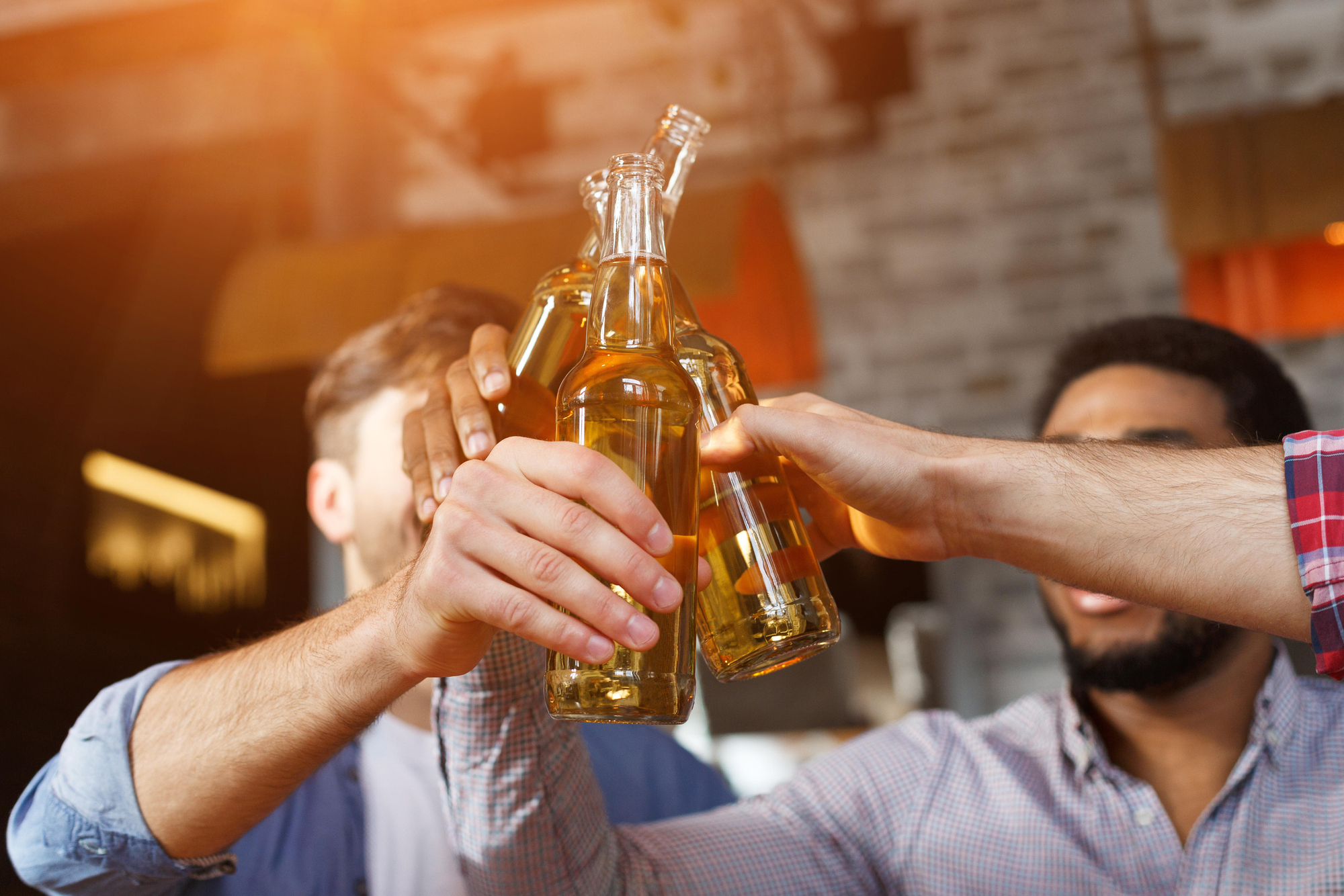
Ireland’s heavy episodic or binge drinking also ranks among the top 10 EU countries.
We’re fond of a drink in this country, not a crime in itself but alcohol abuse is a significant public health issue.
On Sunday, gardaí cleared a mass brawl of teenagers on the Burrow beach in Sutton, Co Dublin. It led to Labour councillor Brian McDonagh calling for gardaí to be “proactively seizing alcohol” on beaches. The beach was cleared again the following night after reports of a public order incident.
Drinking leads to multiple societal stresses, including hospital admissions, accidents and injuries, domestic violence, suicide, homicide, public intoxication, and street violence.
Last week, it was reported that nine of the 10 countries that drink the most in the world are in the European Union. Out of the top 10 European countries with the highest alcohol consumption, Ireland came joint sixth with Spain (although in bad news for Irish women Spanish women drink way less than their male counterparts).
Ireland’s heavy episodic or binge drinking also ranks among the top 10 EU countries. If you were on Burrow Beach last weekend, this fact would probably be confirmed.
The Government could not be accused of taking a light touch on public health, particularly where alcohol or indeed tobacco are concerned.
A fortnight ago, Health Minister Stephen Donnelly signed into law new alcohol labelling regulations that will require calorie counts and additional health warnings relating to fatal cancers, liver disease, and the risks of drinking during pregnancy to be printed on the labels of alcohol bottles.
We will be the first country in the world to put such explicit health warnings on alcohol.
In light of these new measures is Mr Donnelly really ‘a zealot’ as some drink makers and commentators have claimed?
Companies will have to create labels specific to the Irish market, which could have cost implications for SMEs and may influence their decision to supply to Irish retailers, although realistically the laws of supply and demand mean that other companies would likely fill the gap.
It's safe to say however that Mr Donnelly and the Government are off some people’s Christmas card lists.
Italy’s biggest farmers' association Coldiretti, described the “terrifying” warnings as a “direct attack”.
Several wine, beer, and spirits producers requested that the European Commission launch infringement proceedings against Ireland for undermining the single market, claiming it would distort trade.
France, Italy, Spain, and 10 other member states formally objected to or raised concerns about the measures to the European Commission. And the UK, the USA, New Zealand, Australia, Mexico, and Cuba complained to the World Trade Organisation (WTO) that the move was a barrier to international trade.
However, the European trade and competition authorities and those at the WTO level declined to block Ireland’s measures.
The Government has said that the measures are designed to tackle alcohol abuse in Ireland and lighten the load on the public health system.

This isn’t our first outing as top-of-the-class world public health pioneers.
In 2004, we became the first country in the world, to bring in a general workplace smoking ban. There was an outcry. Naysayers warned that the pub industry would be destroyed. People vowed not to obey the ban. To the immense surprise of all concerned, neither of these things happened and many other countries followed suit.
Tánaiste Micheal Martin, then health minister, got the measures over the line in the face of tough opposition.
The ban was a success in helping some people to help themselves. Some 7, 000 people gave up smoking in the first year after the ban came into effect.
Figures vary as to how many Irish people smoke but it is thought to be approximately about 14% of the population, although we are less likely than many of our European counterparts to light up.
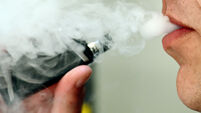
However, disappointingly for the first time in 25 years, the rate of smoking in children has increased. The increase is linked to e-cigarette use with children twice as likely to smoke if they vape. Tobacco companies behind many major vaping brands are criticised for what is perceived as their targeting of children with juicy flavours and colourful packaging to hook more nicotine addicts presumably as existing customers die off.
Last week, the Tánaiste said that new laws to be enacted this summer will ban the sale of vapes to those under 18 and will help improve the lives of younger people.
“Ireland has made great strides in respect of tobacco use, reducing tobacco use among young people since the smoking ban,” he said.
In the wake of the new labelling measures, some alcohol producers and sellers have said that alcohol does not deserve to be treated like tobacco but is there a difference between smoking and drinking?
An argument sometimes made is that those who drink a modest amount are in a different category from smokers, who don’t like smoking but who need to smoke making smoking an entirely negative addiction.
It doesn’t stack up given that the World Health Organisation (WHO) classifies alcohol as a carcinogen and has said there is “no safe amount” of alcohol consumption.
Committed drinkers are unlikely to be stopped from reaching for the bottle by dire warnings about cancer and liver disease but warnings about calories might give some drinkers, in particular female ones, pause for thought.
And there is concrete evidence that laws driven by public health initiatives have an impact and not just where smoking is concerned.
In 2022, warnings about drink or drug driving didn’t stop 9, 000 people being arrested on suspicion of driving while intoxicated.
But over time, drink driving has become stigmatised with a significant drop in the number of intoxicated people driving among what we’ll broadly speaking call ‘the conforming population’ indicating that cultural change can come through legislation.
Paternalistic government dictates extending into the reaches of our private lives won’t please those of a firmly libertarian bent of mind who believe that the substances the citizenry consume, whether it is alcohol, tobacco, saturated fat, or a nice big juicy steak is a matter of individual choice.
Last weekend, a libertarian friend told me in forceful terms that she thought the regulations on alcohol were ‘a disgrace’. That’s the printable version.
To paraphrase the mantra of the 90s Primal Scream song that became an anthem for a generation of clubbers, some libertarians “wanna be free, free to do what they wanna do, and they wanna get loaded…and have a good time. And that’s what they’re gonna do.”
So, okay then but are the new regulations on alcohol really denting this freedom? Surely state-encouraged behaviour modification is not the same as prohibition. It’s spurious to claim that some ancient liberty is being infringed.
We can still smoke or vape, but clearly there’s a moral imperative to preventing tobacco companies from profiting from the potentially long-term addictions of children.
And if we so choose, we can simply drink ourselves to death just as better-informed booze hounds with clearer information for making bad choices.
Don’t expect this all to go off without a hitch, though. Now, in the irony of all ironies, some wine-producing nations are exploring legal avenues to stop what has been described by Italy’s foreign minister as Ireland’s “dangerous” plan. Sláinte!